
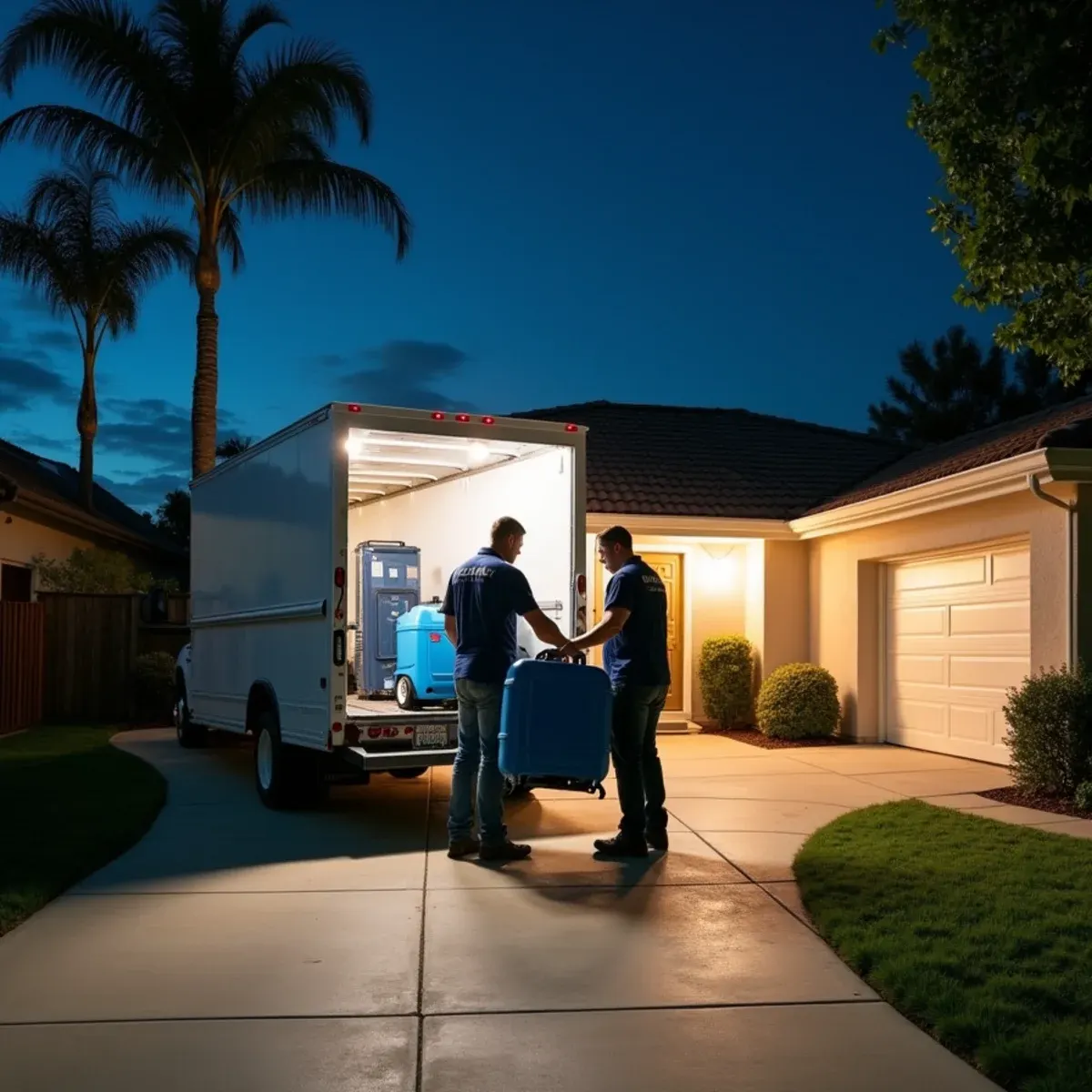
Signal Hill is a 365-foot hill completely surrounded by the City of Long Beach, and the terrain drives nearly everything about an emergency call here. On flat ground, water finds a low spot and sits. On these slopes it arrives at a house with velocity, gets under a threshold or behind a retaining wall in seconds, and keeps coming as long as the source upslope is running. Extraction that begins before the inflow is interrupted is wasted, so on hill calls we work uphill first and set equipment second.
The building stock is genuinely mixed. The 1921 Alamitos No. 1 discovery well started one of the most productive oil booms in American history, and the field is still working, so active wells and oilfield infrastructure sit intermixed with housing. Older single-family homes near Hilltop Park carry 1920s piping, while much of the newer hillside townhome and condo development around Panorama and Crescent Heights was built on former oil land after 1990, on engineered lots with retaining walls and terrace drains. Marine air off Long Beach keeps humidity up. We are about sixteen minutes east.
What Signal Hill Changes About Emergency Restoration
1Interrupt the flow before extracting
On a steep lot, the first walk is uphill: terrace drains, v-ditches, retaining-wall weeps, downspout discharge points and any irrigation that could be feeding the slope. Water moving with momentum will refill a room faster than a truck-mount can empty it. Once the inflow is stopped or diverted, the extraction and drying we do actually holds, and the equipment plan stops being a guess.
2Multi-level townhomes stack the damage
The hillside townhomes and condos built on former oil land are typically three levels with a tuck-under garage at the bottom. A failure on the top floor travels through two floor assemblies before it reaches concrete, wetting joist bays, stair stringers and shared walls on the way. We meter every level rather than just the one with the stain, and involve the HOA early because so much of what gets wet is common-area assembly.
3Former oil land and its limits
A good deal of the newer housing sits on ground with an industrial history, and homeowners sometimes ask whether water coming out of a slope carries anything from that. We are restoration contractors, not environmental consultants. We will document what we see, contain the area conservatively, and tell you plainly when a question needs an environmental firm rather than guessing at an answer that is outside our certification.
How the Work Runs
The method is the same one we use on every emergency restoration job, documented to the IICRC S500:2025 standard. Here it is in short — the full emergency water damage restoration process explains each stage in detail.
- Call answered and crew dispatched
- Arrival, safety check, and moisture mapping
- Documentation before anything is touched
- Extraction
- Controlled structural drying
- Cleaning, sanitizing, and final verification
The Signal Hill Background Worth Knowing
On these lots the drainage is engineered rather than natural. Terrace drains catch water partway down a slope, v-ditches carry it around a pad instead of across it, and retaining walls have weep holes with a gravel drain behind them so pressure never builds in the soil. All of that works until something clogs. Then a retaining wall stops being a wall and starts being a dam, and saturated soil pushes water through the joints and into whatever sits on the other side, which is usually a garage, a storage room, or the back of a lower level.
There is more on the housing stock, drainage and plumbing history of this city on our water damage restoration in Signal Hill page.
Signal Hill at a glance
- Dominant construction era
- 1920–2005
- Foundation type
- mixed on grade
- Supply piping found here
- original 1920s piping, galvanized steel, modern PEX in newer hillside builds
- Drain line materials
- cast iron, ABS
- Terrain and water table
- hillside-mixed, deep water table
- Most common local failure
- slope drainage and retaining-wall failures on steep lots, where water arrives with velocity rather than ponding
- Highest-value local prevention
- keeping terrace drains, v-ditches and retaining-wall weeps clear before the first storm
What It Costs in Signal Hill
We do not quote a number over the phone before seeing the property — anyone who does is guessing. The variables that actually move the price on a emergency restoration job are water category, affected square footage and number of rooms, how many days of equipment, and they are broken down in full on the emergency water damage restoration page. The assessment and the written estimate are free anywhere in Signal Hill, day or night, with no obligation.
Emergency Restoration Questions from Signal Hill Homeowners
It might be the wall, but more often it is the drainage behind it. Retaining walls on Signal Hill rely on weep holes and a drain line at the base to relieve hydrostatic pressure, and when those plug the wall starts passing water through. We dry the garage and meter the framing, then look at whether the weeps are flowing and whether the terrace drain above is open. If the wall itself has moved or cracked structurally, that is an engineer's call and we will say so.
We commit to being on-site within 60 minutes of a confirmed emergency call anywhere in Cypress, and we credit $100 off your invoice if we miss it. Most of the time we are there in 30 to 45 minutes because our trucks stage on Katella Avenue, right here in the city.
No. The emergency assessment and written estimate are free, 24 hours a day. You are not obligated to hire us after we walk the property, and we will tell you plainly if we think the damage is small enough to handle yourself.
Start uphill. On this hill the cause is almost never at the place the water got in. Walk the slope above your pad and check the terrace drains, the v-ditch and the retaining wall weep holes. A weep that has been painted or stuccoed over is common and completely disables the drain behind the wall. Then look at where the uphill property discharges. Fixing the entry point without finding the redirect just moves the problem a few feet.