
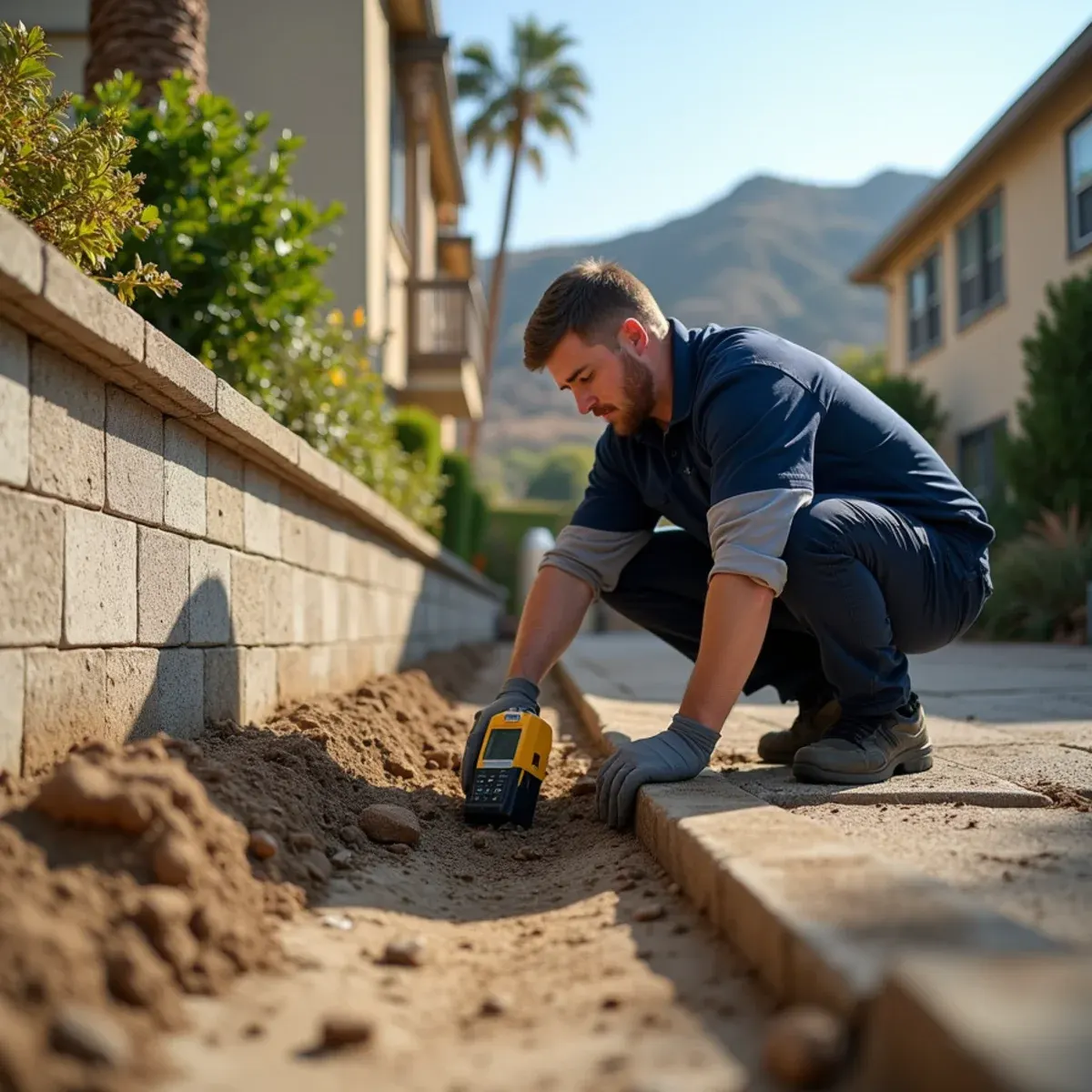
Signal Hill has the lowest flood risk of anywhere we work, and that is exactly why the losses here can be so severe. Nothing ponds on a 365-foot hill. Water moves, and it picks up speed on the way down. A terrace drain packed with leaves does not create a puddle you notice on the walk to the car. It redirects a moving sheet of water into the next thing downhill, which is usually a garage cut into the slope, a lower-level unit, or the uphill wall of somebody's house. Velocity, not accumulation, is the problem on this hill.
The hill is roughly a square mile completely surrounded by Long Beach, and it is still an oil field. Alamitos No. 1 came in during 1921 and set off one of the most productive booms in the country, and the field still produces, with working wells and pipeline infrastructure sitting closer to houses than newcomers expect. Much of the newer housing above Hilltop Park and along the Panorama Promenade went up on land the oil companies released, on engineered pads where retaining walls, terrace drains and v-ditches do the drainage work that flat ground handles on its own.
The result is the least uniform building stock in our service area. There are 1920s cottages down toward the Willow Street corridor and the California Heights edge, sitting on raised floors over crawl spaces and still running some original piping. A few hundred feet uphill there are stacked townhomes from the late 1990s and 2000s with PEX supply, ABS drains, HOA-governed walls and three interior levels. Those are not the same job. The marine layer then applies to both, because we are close enough to the water that overnight humidity stays high most of the year.
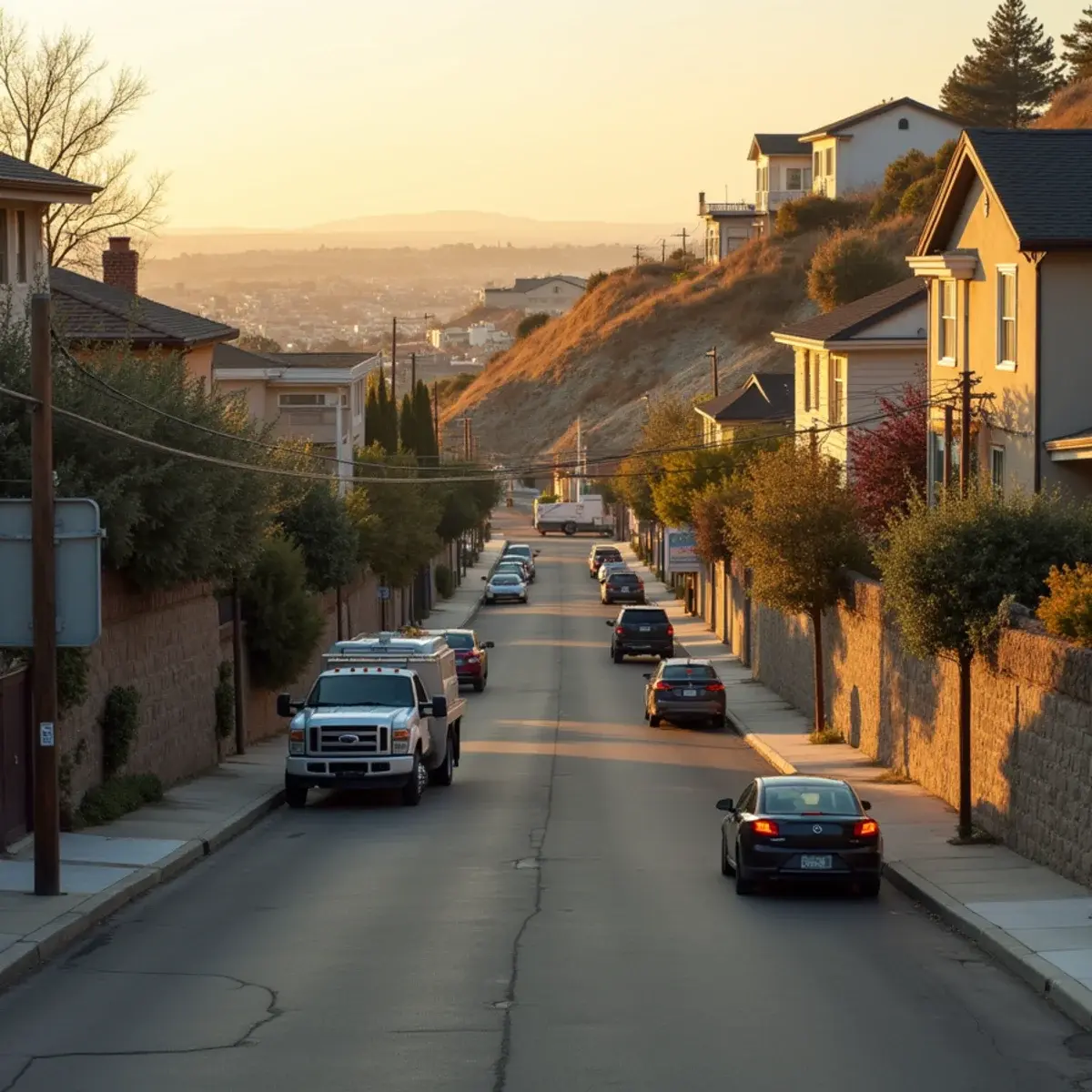
Slope Drainage Is the Whole Story Here
On these lots the drainage is engineered rather than natural. Terrace drains catch water partway down a slope, v-ditches carry it around a pad instead of across it, and retaining walls have weep holes with a gravel drain behind them so pressure never builds in the soil. All of that works until something clogs. Then a retaining wall stops being a wall and starts being a dam, and saturated soil pushes water through the joints and into whatever sits on the other side, which is usually a garage, a storage room, or the back of a lower level.
Because the water is moving, it clears thresholds that would stop it on flat ground. We see it come over a garage lip, under a side door, through a light well, and down an exterior stair into a below-grade storage space. It arrives carrying debris, which then plugs the next drain downstream and makes the following storm worse. Unlike a slow interior leak, the whole thing happens inside twenty minutes, so the difference between a swept-out garage and a real loss is often just whether anyone was home.
There is an awkward truth about a hillside city: your water problem frequently starts on somebody else's property. Runoff from an uphill pad that has been re-landscaped or re-paved can arrive at your wall with nowhere else to go, and that becomes a conversation between neighbors, and sometimes between insurers. We stay out of that argument, but we do document the direction of flow and the exact point of entry carefully, because that record is what everyone ends up relying on months later. We are about sixteen minutes from our Cypress base and we move as fast as conditions allow, which during a real storm means running several of these at once across the hill.
- Clear terrace drains, v-ditches and swales completely before the first storm of the season
- Check that retaining wall weep holes still run, and poke them rather than just looking
- Find out where the uphill property's downspouts and area drains actually discharge
- Keep light wells and exterior stairwell drains free of leaf litter year round
- Photograph where water genuinely ran during the last storm, while you still remember
Two Vintages, Two Completely Different Jobs
The older houses down the flanks of the hill sit on raised foundations over a crawl space, and that changes where water goes. A supply leak under a 1920s floor does not run out where you can see it. It drips into the crawl space and sits on soil, and with the humidity here it evaporates slowly or not at all. The first symptom is usually smell, then a soft spot, then joist and subfloor damage that has been developing for months. If a floor in an older Signal Hill house feels different underfoot, the answer is underneath it.
The hillside townhomes are the opposite problem. They are tall and narrow, garage at the bottom with living space stacked above, sharing walls with neighbors on the other side. A failed angle stop on the top floor passes through two floor assemblies before it reaches the garage, spreading sideways along the joists at each level, and it does not respect the line between your unit and the one next door. Getting equipment up three flights of a stairwell that turns twice is part of planning the job, not a surprise discovered on the day.
The ownership line matters as much as the construction. In most associations here the structure and common walls sit with the HOA while the owner handles everything inside the finished surface, but the documents vary and the split gets disputed after any loss that crosses units. We scope and photograph by unit and by assembly so the association, both owners and both carriers are looking at the same facts. That saves real time when three parties have to agree before repairs can start.
The Marine Layer Changes the Drying Plan
Open the windows and let it air out is the standard advice, and this close to the water it is often wrong. When the marine layer sits over the hill overnight, outdoor air can hold more moisture than the air already inside the house, and ventilating with it adds water to the building. IICRC S500:2025 points to a closed drying system instead: seal the space, run dehumidification to pull moisture out of the air, and use air movers to keep releasing it from wet materials. The dehumidifier does the drying. The fans only feed it.
Crawl spaces are the hardest version of this. A vented crawl space under an older house sits at outdoor humidity by design, which means it may never dry on its own after a leak, no matter how long you wait. We contain it, dehumidify it as its own zone, assess the vapor barrier and usually replace it, and monitor the joists and subfloor directly rather than trusting the air readings, because crawl space air can read acceptable while the wood above it is still wet.
It is also fair to say some jobs here simply take longer. Through a stretch of gray, humid days, a crawl space or an old plaster wall on this hill needs more equipment days than the same job would inland, and we would rather tell you that on day one than quietly extend the rental. We monitor daily and pull equipment when the readings say to, not when the schedule would prefer it. If the readings plateau because the outdoor air will not cooperate, we add dehumidification capacity rather than quietly add days, and we tell you which one we are doing.
Neighborhoods and Landmarks We Cover in Signal Hill
We work throughout Signal Hill — every neighborhood, every street, residential and commercial. If your address is in the city, we cover it.
Neighborhoods & corridors
- Hilltop
- Panorama
- Crescent Heights
- Willow Street corridor
- Cherry Avenue area
Landmarks nearby
- Hilltop Park
- Discovery Well Park
- Panorama Promenade
- the Signal Hill oil field
- Signal Hill Library
Why Signal Hill Residents Call Us First
Any restoration company can put Signal Hill on a service-area list. What matters at 2 a.m. is how far the truck has to come and whether the crew has opened a wall in a house like yours before.
About 16 minutes west
We dispatch from 6122-6182 Katella Ave in Cypress — not from a regional depot and not from a call centre that sells your job to whoever bids for it. That is the whole reason the 60-minute commitment is one we can put in writing.
Water arrives with velocity on these slopes
Steep lots mean runoff does not pond, it runs. Terrace drains, v-ditches and retaining-wall weeps are the whole defence.
1920s oil-era and modern hillside builds
Original piping and modern PEX on the same hill. The era of the house decides the approach.
- 20+ years restoring Orange County homes
- IICRC Certified Firm
- Licensed, Bonded & Insured
- We bill your insurance company directly
- IICRC S500:2025 compliant on every job
- 100% satisfaction guarantee — in writing, on every job
Signal Hill Water Damage Questions
Start uphill. On this hill the cause is almost never at the place the water got in. Walk the slope above your pad and check the terrace drains, the v-ditch and the retaining wall weep holes. A weep that has been painted or stuccoed over is common and completely disables the drain behind the wall. Then look at where the uphill property discharges. Fixing the entry point without finding the redirect just moves the problem a few feet.
That depends on your CC&Rs, and honestly it is often disputed. The common arrangement puts structure and common walls with the association and finishes inside the unit with the owner, but the wording varies building to building on this hill. What we can control is the record. We document by unit and by assembly, photograph before anything is removed, and log readings separately, so the association, both owners and both carriers work from the same set of facts.
Smell, first. A crawl space under an older Signal Hill house is vented to outdoor air, and with the marine humidity here water that gets under the floor may never evaporate on its own. A slow supply leak can run for months with nothing visible upstairs. Musty air at floor level, a soft spot underfoot, or hardwood that starts to cup are all reasons to have someone go under there with a moisture meter rather than a flashlight.
Usually not, and we want to be clear about the boundary. Ordinary clean-water and storm losses on properties near the field get handled the same way they would anywhere else. What we do not do is oilfield fluid, produced water, or contaminated soil remediation, which is a licensed environmental specialty. If that is what you are looking at, we will say so and point you toward the right people rather than work outside our scope.