
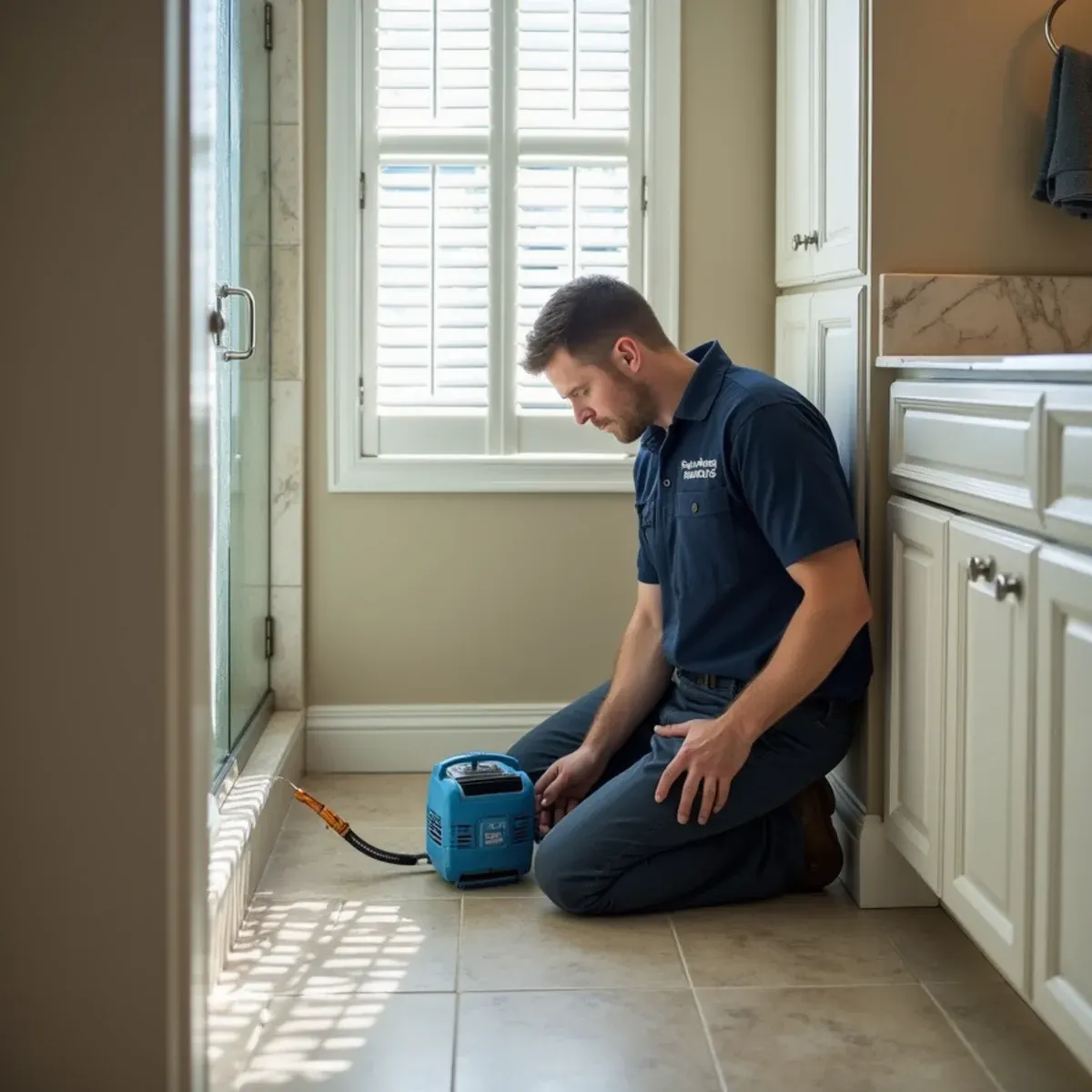
Signal Hill is a 365-foot hill completely surrounded by Long Beach, and the grade governs everything about this work. Much of the newer housing was built on former oil land on steep engineered lots with retaining walls and terrace drains, in stacked multi-level plans and townhome-style construction where a bathroom sits above a bedroom which sits above a garage. When a pan liner or a curb fails in that arrangement, the water does not sit and soak one spot. It follows the slope of the framing and drops out two levels down, several feet horizontally from where it started. Homeowners point at a ceiling stain and are looking at the wrong bathroom.
The city's other defining features shape the rest. The 1921 Alamitos No. 1 discovery started one of the most productive oil booms in American history and the field is still moderately productive, so active wells and oilfield infrastructure sit intermixed with housing, and access on some lots is tighter than the address suggests. Older stock from the 1920s onward is mixed in among the newer hillside homes. Marine influence off Long Beach keeps humidity up, which slows passive drying in enclosed floor assemblies. Water arrives here with velocity rather than ponding, indoors and out.
What Signal Hill Changes About Shower Pan Leaks
1Multi-level plans move the evidence downhill
In stacked Signal Hill construction a shower leak travels along the slope of the floor assembly before it exits. The stain you see may be one floor down and a room over. We map the ceiling cavity from the lowest visible damage upward and flood-test each candidate shower, rather than opening drywall directly under the mark.
2Marine humidity in closed assemblies
With the marine layer keeping outdoor air damp, a wet floor assembly between levels has no natural path to dry. We dry those cavities with directed equipment and monitor to a target, because the enclosed space between two finished floors does not respond to opening a window the way an inland attic might.
3Tight hillside access and oilfield lots
Steep driveways, retaining walls, narrow side yards and neighboring oilfield infrastructure limit where equipment and hoses can go. That affects how fast we can set up and how we route drying. We look at access as part of the assessment so the plan we give you is one we can actually execute on your lot.
How the Work Runs
The method is the same one we use on every shower pan leaks job, documented to the IICRC S500:2025 standard. Here it is in short — the full shower pan & bathroom leak repair process explains each stage in detail.
- Map the moisture first
- Flood test the pan
- Isolate the actual failure
- Open only what has to open
- Dry the structure to standard
- Rebuild the waterproofing correctly
The Signal Hill Background Worth Knowing
On these lots the drainage is engineered rather than natural. Terrace drains catch water partway down a slope, v-ditches carry it around a pad instead of across it, and retaining walls have weep holes with a gravel drain behind them so pressure never builds in the soil. All of that works until something clogs. Then a retaining wall stops being a wall and starts being a dam, and saturated soil pushes water through the joints and into whatever sits on the other side, which is usually a garage, a storage room, or the back of a lower level.
There is more on the housing stock, drainage and plumbing history of this city on our water damage restoration in Signal Hill page.
Signal Hill at a glance
- Dominant construction era
- 1920–2005
- Foundation type
- mixed on grade
- Supply piping found here
- original 1920s piping, galvanized steel, modern PEX in newer hillside builds
- Drain line materials
- cast iron, ABS
- Terrain and water table
- hillside-mixed, deep water table
- Most common local failure
- slope drainage and retaining-wall failures on steep lots, where water arrives with velocity rather than ponding
- Highest-value local prevention
- keeping terrace drains, v-ditches and retaining-wall weeps clear before the first storm
What It Costs in Signal Hill
We do not quote a number over the phone before seeing the property — anyone who does is guessing. The variables that actually move the price on a shower pan leaks job are how long the shower kept running, what sits under the shower floor, whether the framing is compromised, and they are broken down in full on the shower pan & bathroom leak repair page. The assessment and the written estimate are free anywhere in Signal Hill, day or night, with no obligation.
Shower Pan Leaks Questions from Signal Hill Homeowners
On these multi-level hillside homes it is normal. Water leaving a shower pan enters the floor assembly, runs along the framing following the building's slope, and exits at the first low point or penetration it finds — a can light, a duct boot, a seam. That point can be well away from the shower and a full level down. We trace upward from the stain, flood-test the showers above it, and confirm with moisture readings before opening anything.
Timing is the cleanest clue. A pan leak only produces water when the shower is running, so the symptom appears within hours of use and dries out between uses. A pressurized supply line leaks around the clock, and the damage grows steadily whether anyone is home or not. Shut off every fixture and watch the water meter's low-flow indicator. If it still moves, you have a supply leak, not a pan. We confirm it with a flood test either way.
Sometimes, and we will tell you honestly which case you are in. A leak at the drain clamping ring, or a failed seal where the surround meets the pan, can occasionally be handled with a limited opening. A split or perforated liner cannot. Liquid-applied products sold as pan sealers can buy a few months on a pinhole, but they will not repair a membrane that has failed at a fold or a corner, and we are not going to sell you that as a fix.
Start uphill. On this hill the cause is almost never at the place the water got in. Walk the slope above your pad and check the terrace drains, the v-ditch and the retaining wall weep holes. A weep that has been painted or stuccoed over is common and completely disables the drain behind the wall. Then look at where the uphill property discharges. Fixing the entry point without finding the redirect just moves the problem a few feet.