
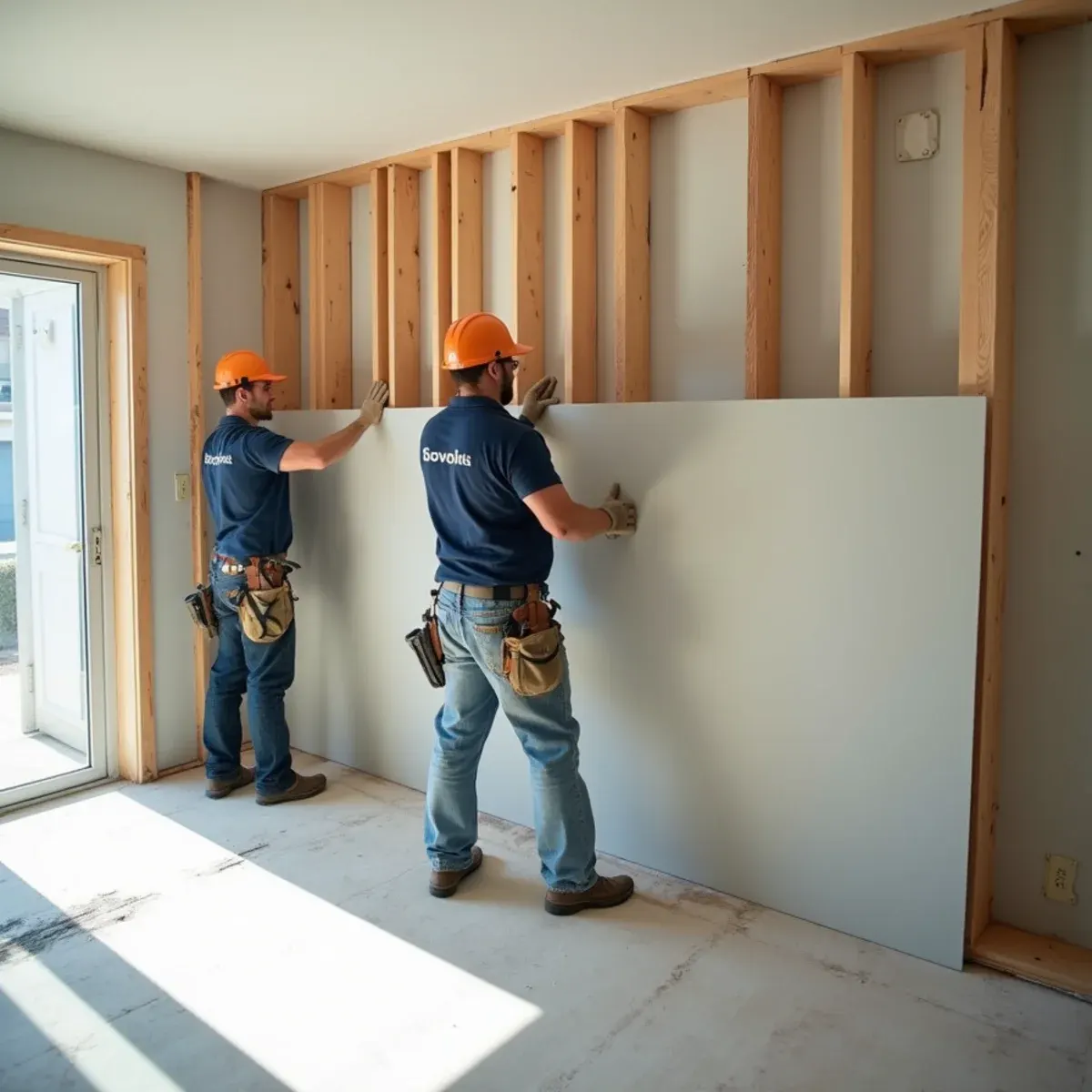
Before we write a scope in a Signal Hill townhome, we find out who owns what. Much of the newer housing on the hill — Panorama, Crescent Heights, the developments built on former oil land in the nineties and two-thousands — is attached or common-interest property. The association usually owns the exterior wall, the roof and the drainage; you own the finishes inside. When water arrives through a retaining wall or a terrace drain that belongs to the association, that line decides who pays for what, and getting it wrong stalls a job for weeks.
The hill itself is 365 feet of engineered slope surrounded entirely by Long Beach, with active oil infrastructure still threaded between the housing. On grades like these water doesn't pond, it runs — it arrives at a wall with velocity and finds the weakest point in the waterproofing rather than seeping in. That means reconstruction often starts at a retaining wall, a below-grade wall or a stair landing. The older 1920s houses up near Hilltop Park are a different job entirely: original piping, plaster, and strong marine air that slows every finish we apply.
What Signal Hill Changes About Repair & Reconstruction
1Below-grade walls and waterproofing repair
On a stepped hillside lot part of the lower level sits against soil. Rebuilding a wall that leaked there means dealing with the waterproofing membrane, the drainage board and the footing drain outlet, not just the drywall on the inside. Closing an interior wall over a failed exterior membrane guarantees the same repair next winter, and we won't quote it that way.
2Multi-level units and vertical damage paths
Water on the top floor of a three-story townhome travels down through floor assemblies, into stair stringers and along the shear wall framing. Reconstruction ends up spanning three levels for a single failure, and the drying has to be verified at every one before finishes go back. We map the vertical path with a moisture meter and thermal imaging first, so the scope reflects the whole route.
3Association approvals and shared scheduling
Most hillside associations here require approval for exterior work, contractor insurance certificates on file, and working hours that respect neighbors sharing a wall. We handle that paperwork alongside the estimate, and where the association's own contractor is repairing the exterior we coordinate so the interior finish work follows rather than getting torn back out.
How the Work Runs
The method is the same one we use on every repair & reconstruction job, documented to the IICRC S500:2025 standard. Here it is in short — the full water damage repair & reconstruction process explains each stage in detail.
- Scope and estimate while mitigation finishes
- Agree the scope with you and the carrier
- Material selection
- Rough work and inspections
- Finishes
- Walkthrough and warranty
The Signal Hill Background Worth Knowing
On these lots the drainage is engineered rather than natural. Terrace drains catch water partway down a slope, v-ditches carry it around a pad instead of across it, and retaining walls have weep holes with a gravel drain behind them so pressure never builds in the soil. All of that works until something clogs. Then a retaining wall stops being a wall and starts being a dam, and saturated soil pushes water through the joints and into whatever sits on the other side, which is usually a garage, a storage room, or the back of a lower level.
There is more on the housing stock, drainage and plumbing history of this city on our water damage restoration in Signal Hill page.
Signal Hill at a glance
- Dominant construction era
- 1920–2005
- Foundation type
- mixed on grade
- Supply piping found here
- original 1920s piping, galvanized steel, modern PEX in newer hillside builds
- Drain line materials
- cast iron, ABS
- Terrain and water table
- hillside-mixed, deep water table
- Most common local failure
- slope drainage and retaining-wall failures on steep lots, where water arrives with velocity rather than ponding
- Highest-value local prevention
- keeping terrace drains, v-ditches and retaining-wall weeps clear before the first storm
What It Costs in Signal Hill
We do not quote a number over the phone before seeing the property — anyone who does is guessing. The variables that actually move the price on a repair & reconstruction job are how much came out during mitigation, finish level and material availability, texture and finish matching difficulty, and they are broken down in full on the water damage repair & reconstruction page. The assessment and the written estimate are free anywhere in Signal Hill, day or night, with no obligation.
Repair & Reconstruction Questions from Signal Hill Homeowners
Usually both, in different parts. In most Signal Hill associations the retaining wall, the slope drainage and the exterior waterproofing are common area, while the drywall, flooring and cabinets inside your unit are yours. That means two scopes and often two carriers. We document the entry point clearly enough that the association's engineer and your adjuster are reading the same evidence, then sequence our interior reconstruction to follow the exterior repair so nothing we install gets opened again.
Both, under one contract. The same team that documented and dried your loss handles the rebuild — drywall, texture, flooring, cabinetry, trim, and paint — so you are not managing multiple contractors or explaining the scope twice.
A single-room repair is typically one to two weeks after drying finishes. Kitchen or multi-room rebuilds run three to six weeks, and jobs requiring permits and inspections take longer because of the inspection windows. You get a written schedule before work starts.
Start uphill. On this hill the cause is almost never at the place the water got in. Walk the slope above your pad and check the terrace drains, the v-ditch and the retaining wall weep holes. A weep that has been painted or stuccoed over is common and completely disables the drain behind the wall. Then look at where the uphill property discharges. Fixing the entry point without finding the redirect just moves the problem a few feet.