
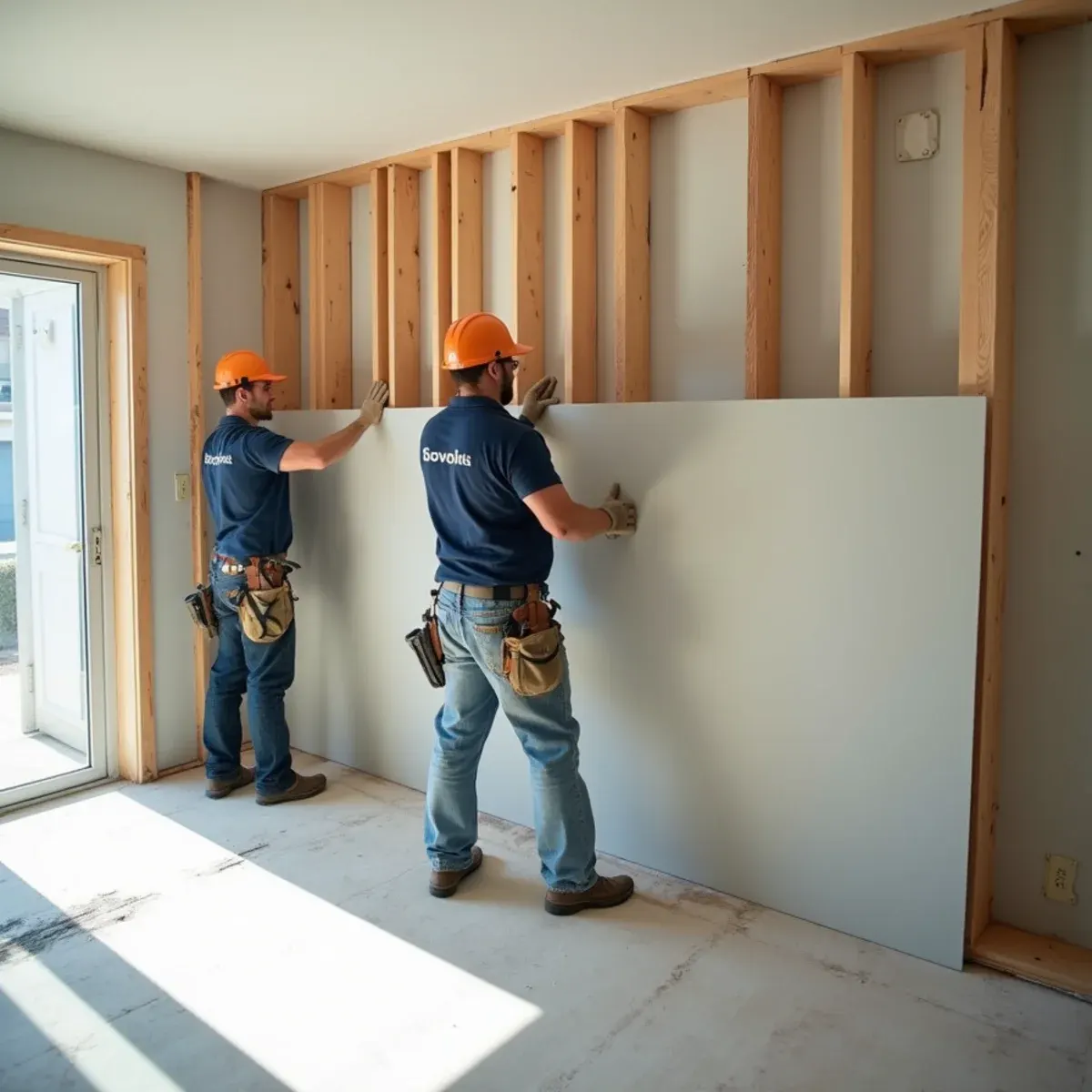
Lakewood houses were built to a plan that clusters the kitchen, bathroom and laundry around a shared plumbing wall. It saved the developer money in 1951, and it means that today, when a galvanized line lets go inside that wall, you're not opening one room — you're opening three. Homeowners brace themselves for a bathroom repair and are then surprised by a scope that reaches the back of the kitchen cabinets and into the laundry. The upside is real: everything a plumber needs is exposed at once, in a house where seventy-year-old original galvanized is the rule rather than the exception.
Roughly 17,500 homes went up between 1950 and 1953, on some days at a rate near a hundred. An entire city's plumbing shares not just a decade but a three-year installation window, and galvanized fails on a predictable path: zinc wears through, steel corrodes, scale narrows the bore, velocity climbs, and a fitting finally gives up. Around Mayfair Park and Bolivar Park we've opened enough of these walls to know what's behind them before the drywall comes off. The right time to repipe is while that wall is already open for a covered repair, not as its own project two years later.
What Lakewood Changes About Repair & Reconstruction
1One wall, three rooms of scope
The clustered wet core means a single failure exposes plumbing serving the kitchen, the bath and the laundry. Expect the scope to include the back of base cabinets, tile or surround on the bath side, and floor covering in the laundry. It reads as scope creep on paper. It's actually the geometry of the house, and pretending otherwise leads to a second demolition.
2Repipe while the wall is already open
Your policy pays to repair the damage, not to replace aging pipe, so a repipe is generally out of pocket. But demolition, access and patching are already happening and already covered. Doing the pipe now means paying once for the opening rather than twice. In a city where every house shares the same original galvanized and the same install window, that's the most useful money you'll spend during a claim.
3Small original kitchens with built-in cabinetry
Many of these kitchens still have cabinetry that was assembled in place rather than set as boxes, so you cannot pull one damaged base unit and drop in a replacement. Where the carcass is sound we dry and rebuild in place. Where it isn't, we replace a full run and match the adjoining doors, because a single new cabinet among originals never stops looking new.
How the Work Runs
The method is the same one we use on every repair & reconstruction job, documented to the IICRC S500:2025 standard. Here it is in short — the full water damage repair & reconstruction process explains each stage in detail.
- Scope and estimate while mitigation finishes
- Agree the scope with you and the carrier
- Material selection
- Rough work and inspections
- Finishes
- Walkthrough and warranty
The Lakewood Background Worth Knowing
Galvanized steel supply piping was standard when Lakewood was built, and it fails in a specific and predictable way. The zinc coating protecting the steel wears through from the inside, the steel corrodes, and scale builds up on the interior wall — narrowing the pipe over decades. As the diameter shrinks, water velocity and turbulence increase, which accelerates the erosion at elbows and fittings until a thin spot lets go.
There is more on the housing stock, drainage and plumbing history of this city on our water damage restoration in Lakewood page.
Lakewood at a glance
- Dominant construction era
- 1950–1953
- Foundation type
- slab on grade
- Supply piping found here
- original galvanized steel
- Drain line materials
- cast iron
- Terrain and water table
- flat, moderate water table
- Most common local failure
- seventy-year-old galvanized supply lines letting go at a scaled, eroded fitting
- Highest-value local prevention
- repiping while walls are already open for a repair, rather than as a separate project later
What It Costs in Lakewood
We do not quote a number over the phone before seeing the property — anyone who does is guessing. The variables that actually move the price on a repair & reconstruction job are how much came out during mitigation, finish level and material availability, texture and finish matching difficulty, and they are broken down in full on the water damage repair & reconstruction page. The assessment and the written estimate are free anywhere in Lakewood, day or night, with no obligation.
Repair & Reconstruction Questions from Lakewood Homeowners
Because in a Lakewood house that's usually the same wall. These homes were designed with kitchen, bath and laundry plumbing stacked into one core to save pipe, so water inside that cavity reaches the back of the kitchen base cabinets and the laundry wall at the same time it reaches your bathroom. Moisture meter readings on the kitchen side will confirm it before we cut anything. Leaving that cavity closed because the stain isn't visible there is how mold shows up three months later.
Both, under one contract. The same team that documented and dried your loss handles the rebuild — drywall, texture, flooring, cabinetry, trim, and paint — so you are not managing multiple contractors or explaining the scope twice.
A single-room repair is typically one to two weeks after drying finishes. Kitchen or multi-room rebuilds run three to six weeks, and jobs requiring permits and inspections take longer because of the inspection windows. You get a written schedule before work starts.
Have it assessed. Seventy-year-old galvanized has exceeded any reasonable service life, and declining pressure or rust-colored water means it is well along. If a repair is already opening walls, that is the cheapest moment you will ever get to repipe — the demolition and patching are already in the scope.