
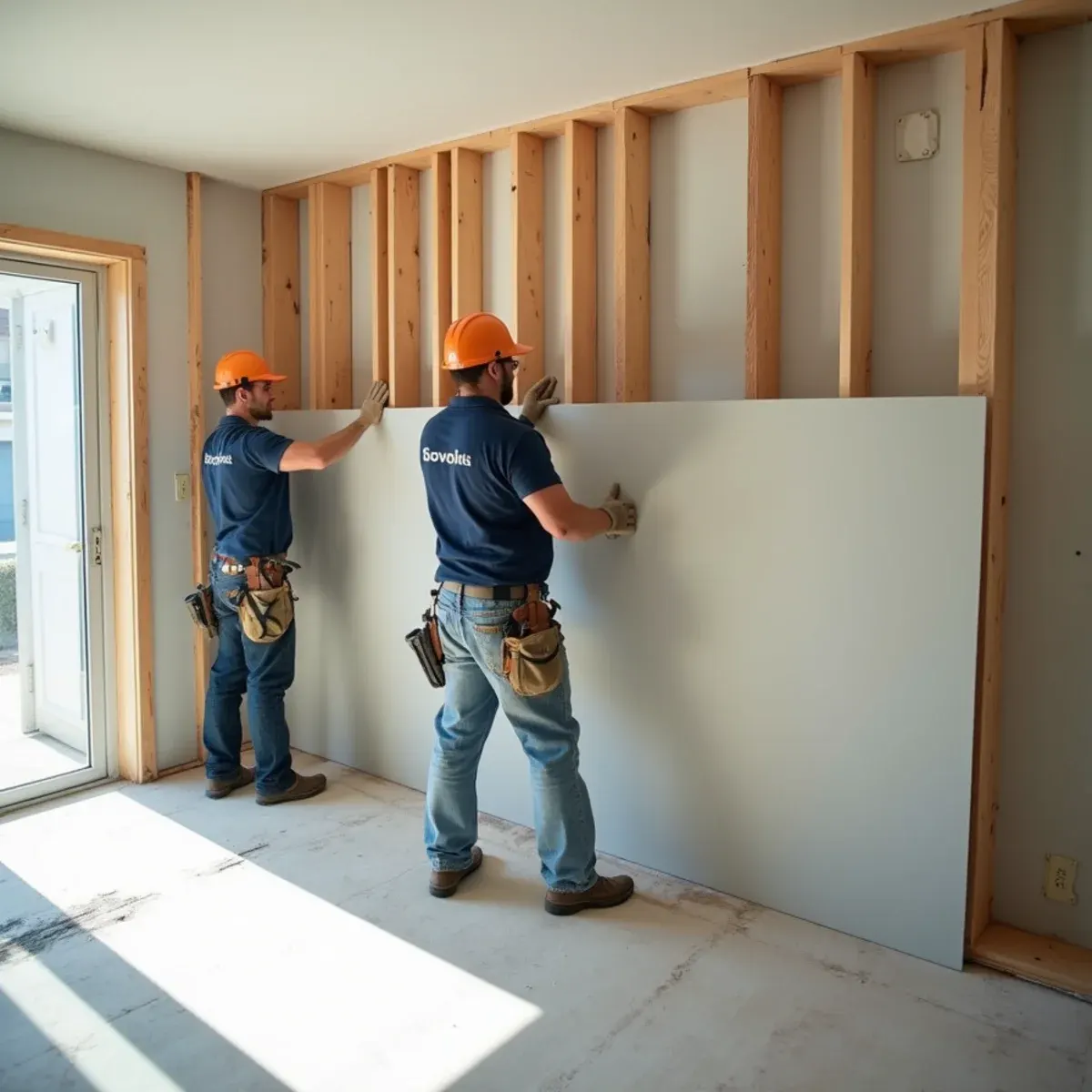
The ceiling in a ground-floor unit starts sagging at six in the evening. The leak is two floors up, in an apartment whose tenant hasn't noticed anything wrong, and the stack it's traveling down passes through every unit in between. That's the standard loss in a city smaller than a square mile with some of the densest housing in Los Angeles County. The reconstruction is never one apartment. It's a ceiling here, a wall cavity there, insulation inside a chase, and a sequence built to get families back into their own homes as fast as the drying honestly allows.
Most residents here rent, which changes who we talk to and when. A tenant can report the loss and let us in, but the rebuild is authorized by the owner or the management company, and the split between the building's policy and a renter's policy determines who pays for what's inside the walls versus what was sitting on the floor. Around the Carson Street corridor and near Lee Ware Park we spend real time on that in the first hours, because in a stacked building the delay does more damage than the water did.
What Hawaiian Gardens Changes About Repair & Reconstruction
1Rebuild sequenced unit by unit
Units don't dry or rebuild at the same rate, and families need their own homes back on some kind of schedule. We work top down where the source allows, close each unit's assembly as soon as its readings hold, and give management a written order of return. That way relocations get planned around real dates instead of everyone waiting on the slowest apartment in the stack.
2Owner authorizes, tenant reports
Tenants are usually the ones who find the damage and the ones living with it, but they can't authorize reconstruction on someone else's building. We take the report, start emergency drying to stop the spread, and get the owner or management company on the scope immediately. Tenants get told plainly what's happening in their unit and what belongs to their own renters policy.
3Shared stacks mean shared assemblies
Opening a plumbing chase in a stacked building means working across floor assemblies that separate one household from another. Those penetrations have a job beyond holding pipe — they're part of how the building resists fire and sound. Rebuilding them means restoring the assembly properly, with the right firestopping at each floor line, not just closing the drywall over the hole.
How the Work Runs
The method is the same one we use on every repair & reconstruction job, documented to the IICRC S500:2025 standard. Here it is in short — the full water damage repair & reconstruction process explains each stage in detail.
- Scope and estimate while mitigation finishes
- Agree the scope with you and the carrier
- Material selection
- Rough work and inspections
- Finishes
- Walkthrough and warranty
The Hawaiian Gardens Background Worth Knowing
In a multi-story apartment building, plumbing runs vertically through shared chases connecting stacked units. When a supply line or drain fails in that chase, water follows it downward through every unit below — and it does not stop politely at unit boundaries.
There is more on the housing stock, drainage and plumbing history of this city on our water damage restoration in Hawaiian Gardens page.
Hawaiian Gardens at a glance
- Dominant construction era
- 1950–1975
- Foundation type
- slab on grade
- Supply piping found here
- galvanized steel, copper, shared vertical stacks
- Drain line materials
- cast iron
- Terrain and water table
- flat, moderate water table
- Most common local failure
- stack failures that travel down through every unit below, expanding by one unit for roughly every extra hour of delay
- Highest-value local prevention
- immediate written notice to management, because in a stacked building the clock does more damage than the water
What It Costs in Hawaiian Gardens
We do not quote a number over the phone before seeing the property — anyone who does is guessing. The variables that actually move the price on a repair & reconstruction job are how much came out during mitigation, finish level and material availability, texture and finish matching difficulty, and they are broken down in full on the water damage repair & reconstruction page. The assessment and the written estimate are free anywhere in Hawaiian Gardens, day or night, with no obligation.
Repair & Reconstruction Questions from Hawaiian Gardens Homeowners
We can start emergency work that limits damage — water removal, drying equipment, making the space safe — because that protects the building and everyone in it. Reconstruction needs authorization from the owner or management company, since it's their building. Call us and call your manager in the same hour. What's in your unit that belongs to you, furniture and belongings, generally falls under your own renters policy rather than the building's, and we'll document your losses separately so you have the record.
Both, under one contract. The same team that documented and dried your loss handles the rebuild — drywall, texture, flooring, cabinetry, trim, and paint — so you are not managing multiple contractors or explaining the scope twice.
A single-room repair is typically one to two weeks after drying finishes. Kitchen or multi-room rebuilds run three to six weeks, and jobs requiring permits and inspections take longer because of the inspection windows. You get a written schedule before work starts.
Photograph and video everything before moving anything, notify your property manager in writing immediately, and move belongings out of the affected area if it is safe to do so. Do not wait for the neighbor upstairs to act — the damage compounds every hour and the written timeline protects you.