
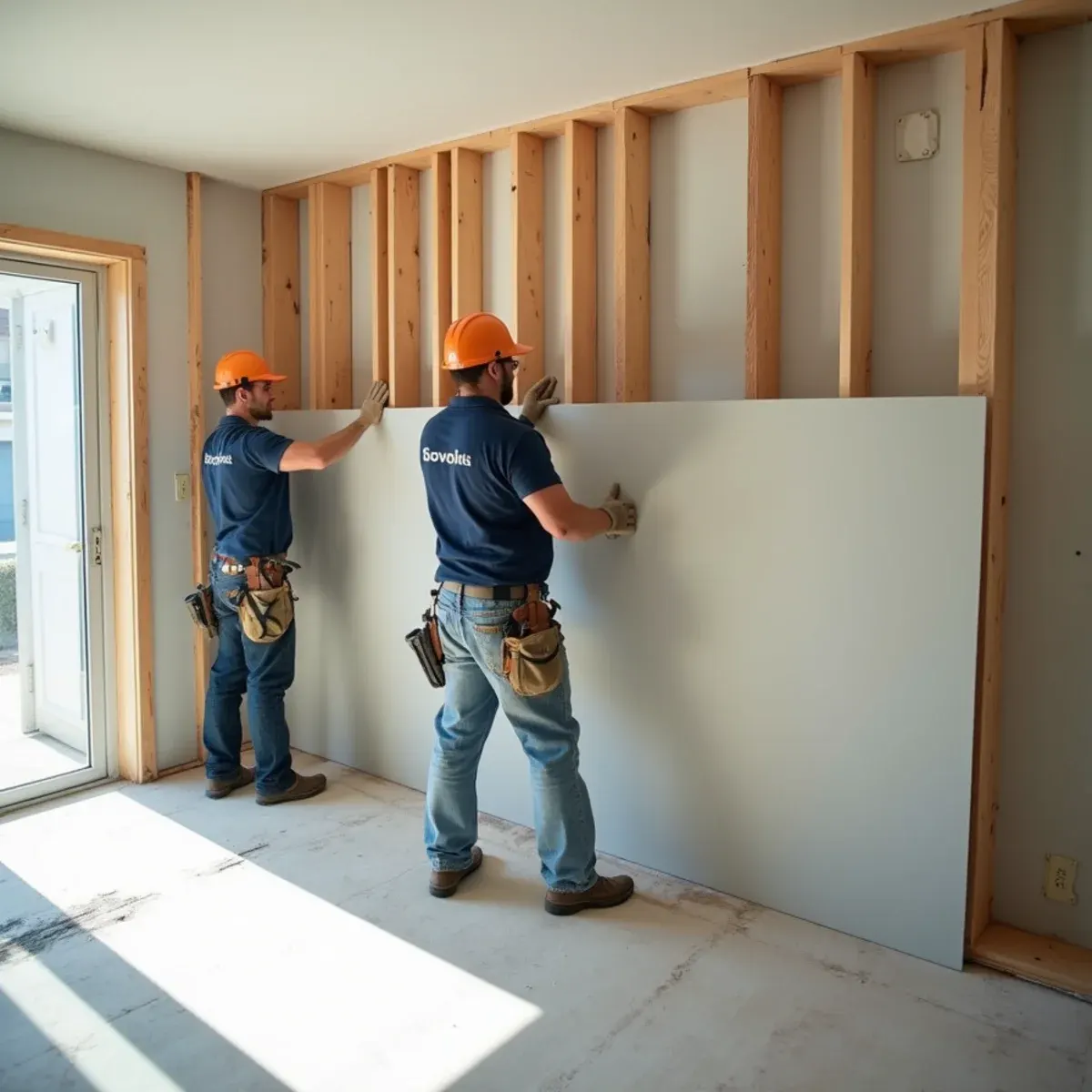
There is no single Anaheim rebuild. A 1908 house in the Colony Historic District, a 1958 tract home in West Anaheim and a 1985 three-level in Anaheim Hills are three different reconstruction problems that happen to share a city name. The Colony work is plaster: wood lath, brown coat, finish coat, and a hand-troweled surface no drywall patch imitates. Cutting it out and hanging rock is faster and cheaper. It is also how a hundred-year-old room stops looking like itself, permanently, in exchange for a few saved days.
In the Hills the losses travel. Multi-level homes on engineered pads send water down stairwells and through floor assemblies, so the rebuild spans levels — stair skirt, landing, the ceiling below, and the flooring transitions that tie them together. Down near the Resort District, hotels and restaurants measure the same failure in rooms and covers rather than square feet. We scope those three the way we'd scope three separate cities, because pretending one estimate template covers Anaheim is how homeowners end up quietly paying the difference themselves.
What Anaheim Changes About Repair & Reconstruction
1Colony plaster dries on a different clock
A drywall wall in West Anaheim can be dry in three days. A plaster wall two miles away in the Colony holds far more water and gives it back slowly, so the same equipment on the same schedule leaves it wet behind a dry-looking surface. We meter into the assembly rather than reading the face, and we plan for a longer drying phase before any reconstruction is scheduled.
2Hillside losses rebuilt across levels
In Anaheim Hills, a second-floor failure rarely stays there. Water follows the stair stringer and the floor assembly down, so the reconstruction covers a landing, a stair skirt, a ceiling one level below and the transitions between three different floor coverings. We map the full path with moisture readings before writing scope, because an estimate that stops at the wet carpet misses most of the job.
3Resort-area properties rebuilt around occupancy
Hotels and restaurants near the Resort District can't close a floor during a full house. We work overnight, keep hard containment between guests and the work zone, and bring revenue space back before back-of-house finish work. Materials get selected partly for cure time, because a room that smells like fresh paint at check-in is a complaint whether or not the repair was perfect.
How the Work Runs
The method is the same one we use on every repair & reconstruction job, documented to the IICRC S500:2025 standard. Here it is in short — the full water damage repair & reconstruction process explains each stage in detail.
- Scope and estimate while mitigation finishes
- Agree the scope with you and the carrier
- Material selection
- Rough work and inspections
- Finishes
- Walkthrough and warranty
The Anaheim Background Worth Knowing
The Anaheim Colony Historic District and the older streets around downtown contain homes built from the early 1900s through the 1930s, and they are constructed differently in ways that matter enormously during a water loss.
There is more on the housing stock, drainage and plumbing history of this city on our water damage restoration in Anaheim page.
Anaheim at a glance
- Dominant construction era
- 1900–2000
- Foundation type
- mixed on grade
- Supply piping found here
- galvanized steel, under-slab copper, original early-century piping in the Colony
- Drain line materials
- cast iron, clay
- Terrain and water table
- hillside-mixed, moderate water table
- Most common local failure
- lath-and-plaster assemblies that hold several times the water drywall does and release it far more slowly
- Highest-value local prevention
- acting immediately on any plaster-wall loss, because wet plaster keys soften and release from the lath
What It Costs in Anaheim
We do not quote a number over the phone before seeing the property — anyone who does is guessing. The variables that actually move the price on a repair & reconstruction job are how much came out during mitigation, finish level and material availability, texture and finish matching difficulty, and they are broken down in full on the water damage repair & reconstruction page. The assessment and the written estimate are free anywhere in Anaheim, day or night, with no obligation.
Repair & Reconstruction Questions from Anaheim Homeowners
It can match, and the decision gets made in the first hours. As long as the keys behind the lath are still gripping, we dry hard and repair the surface in layers until it sits level with the original. Then we work the finish coat with the same trowel motion, tested on a sample board, before touching your wall. Where a section is beyond saving it comes out to a stud line and goes back as plaster on lath, not a drywall panel floated to look close.
Both, under one contract. The same team that documented and dried your loss handles the rebuild — drywall, texture, flooring, cabinetry, trim, and paint — so you are not managing multiple contractors or explaining the scope twice.
A single-room repair is typically one to two weeks after drying finishes. Kitchen or multi-room rebuilds run three to six weeks, and jobs requiring permits and inspections take longer because of the inspection windows. You get a written schedule before work starts.
Yes, and we approach them differently. Lath and plaster holds much more water than drywall and dries far more slowly, so it needs more equipment and considerably more patience — but it can usually be saved in place, and original plaster is not something a repair can replace.