
Plenty of companies will dry a mobile home and then decline the rebuild. The materials aren't standard, the assemblies aren't standard, and a crew that only hangs drywall has nothing to put back. Stanton has one of the larger manufactured-home populations in this part of the county, so we hear that story regularly. The floor in these homes is particleboard decking over a belly wrap that holds water against the underside for months without evaporating. Once it fails, it fails in whole sections, and the repair is decking, insulation and wrap, not a patch and a piece of vinyl.
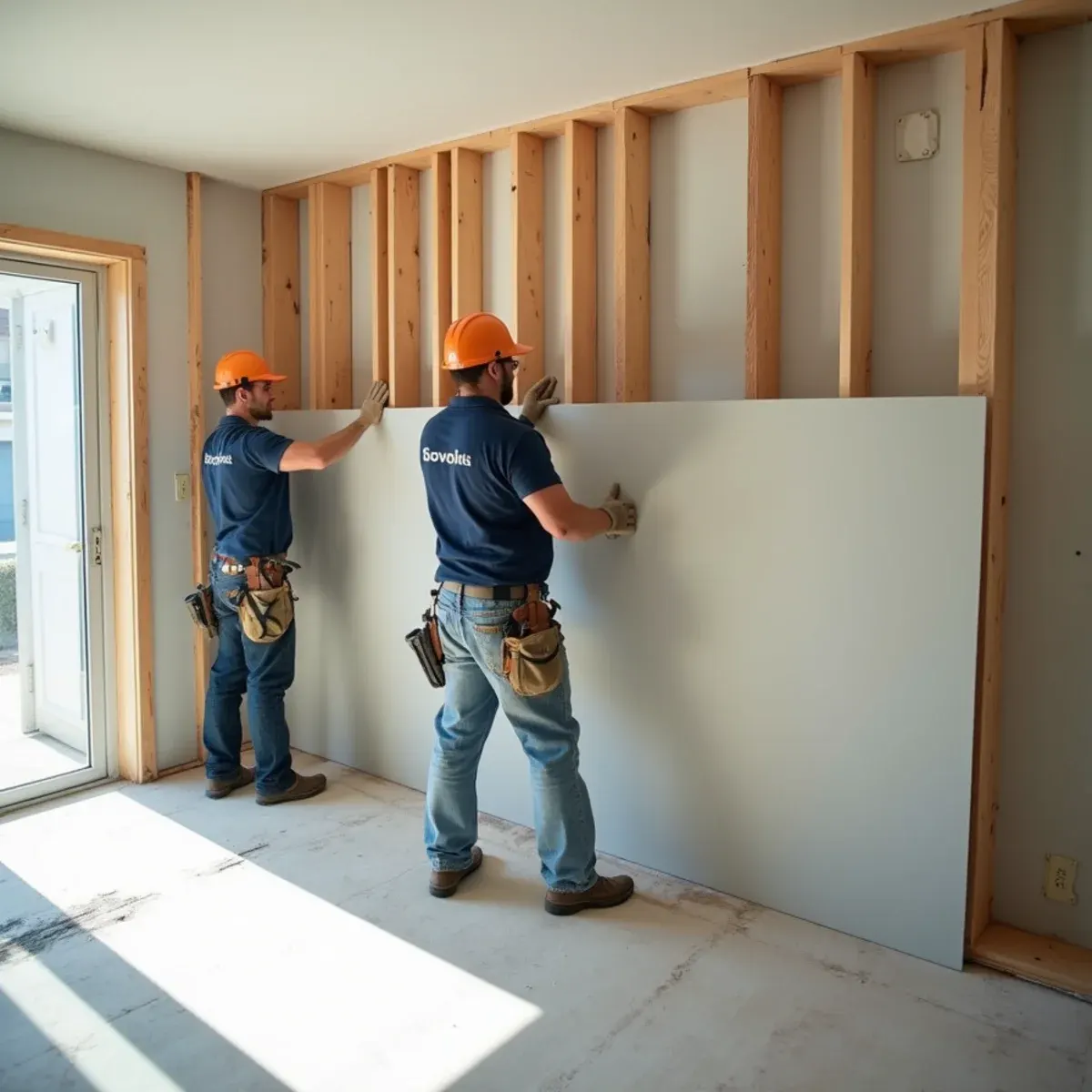
The walls are their own problem. Interior panels are usually gypsum with a printed vinyl face and batten strips covering the seams, so you cannot tape, mud and texture them like drywall and expect the repair to vanish. We either source matched panel and batten or replace a full wall plane so the room reads correctly. Stanton also carries dense older apartment stock near the Beach Boulevard corridor and Stanton Central Park, where the rebuild is conventional but the constraint is identical: families are living there while we work.
What Stanton Changes About Repair & Reconstruction
1Belly wrap and decking replaced in sections
Water trapped between the subfloor and the belly wrap has nowhere to go, so it soaks the particleboard from underneath and softens it long before anyone sees a stain. Proper reconstruction means opening the wrap, removing the saturated decking back to sound material, drying the framing and insulation, then re-decking and resealing the wrap. Patching over the top just hides the failure for another season.
2Vinyl-faced panels and batten seams
Manufactured-home interior walls aren't drywall and don't finish like drywall. Taping and texturing a vinyl-faced gypsum panel leaves a repair that stands out under any side light. We match panel and batten where the pattern is still available, and where it isn't, we replace to the nearest inside corner so the room has one consistent surface instead of an obvious rectangle.
3Different policies, different approval path
Manufactured-home coverage often reads differently than a standard homeowners policy, and park management may have its own rules about work on the unit and access underneath it. Alterations also follow a separate state permitting path from stick-built construction. We sort that out before demolition rather than mid-job, because a stalled approval leaves you living in a home with an open floor.
How the Work Runs
The method is the same one we use on every repair & reconstruction job, documented to the IICRC S500:2025 standard. Here it is in short — the full water damage repair & reconstruction process explains each stage in detail.
- Scope and estimate while mitigation finishes
- Agree the scope with you and the carrier
- Material selection
- Rough work and inspections
- Finishes
- Walkthrough and warranty
The Stanton Background Worth Knowing
Mobile and manufactured homes need a genuinely different restoration approach, and the reason is what they are built from. The floor system is typically particleboard or OSB over a wood frame with insulation and a vapor barrier belly wrap underneath — and particleboard exposed to water swells, loses structural integrity, and does not recover. It cannot be dried back to serviceable the way plywood often can.
There is more on the housing stock, drainage and plumbing history of this city on our water damage restoration in Stanton page.
Stanton at a glance
- Dominant construction era
- 1950–1975
- Foundation type
- mixed on grade
- Supply piping found here
- galvanized steel, copper, manufactured-home PEX and poly
- Drain line materials
- cast iron
- Terrain and water table
- flat, moderate water table
- Most common local failure
- underfloor leaks in manufactured homes, sealed inside the belly wrap where they cannot evaporate
- Highest-value local prevention
- checking for soft spots underfoot, because a manufactured-home floor gives no other warning
What It Costs in Stanton
We do not quote a number over the phone before seeing the property — anyone who does is guessing. The variables that actually move the price on a repair & reconstruction job are how much came out during mitigation, finish level and material availability, texture and finish matching difficulty, and they are broken down in full on the water damage repair & reconstruction page. The assessment and the written estimate are free anywhere in Stanton, day or night, with no obligation.
Repair & Reconstruction Questions from Stanton Homeowners
Yes, and it's a common call here. We can pick up a job after another company's drying, though we'll verify moisture levels ourselves first, including under the belly wrap, since that's where water hides in these homes. We'll document what we find independently so there's a clear record if the previous scope missed something. Then we rebuild with the right materials — decking, wrap, insulation, matched wall panel and batten — rather than substituting standard residential drywall.
Both, under one contract. The same team that documented and dried your loss handles the rebuild — drywall, texture, flooring, cabinetry, trim, and paint — so you are not managing multiple contractors or explaining the scope twice.
A single-room repair is typically one to two weeks after drying finishes. Kitchen or multi-room rebuilds run three to six weeks, and jobs requiring permits and inspections take longer because of the inspection windows. You get a written schedule before work starts.
Yes, and we say so explicitly because a lot of companies will not. Manufactured homes need a different approach — opening the belly wrap to dry the floor cavity, removing saturated insulation, and honestly assessing particleboard decking, which usually cannot be dried back to serviceable.