
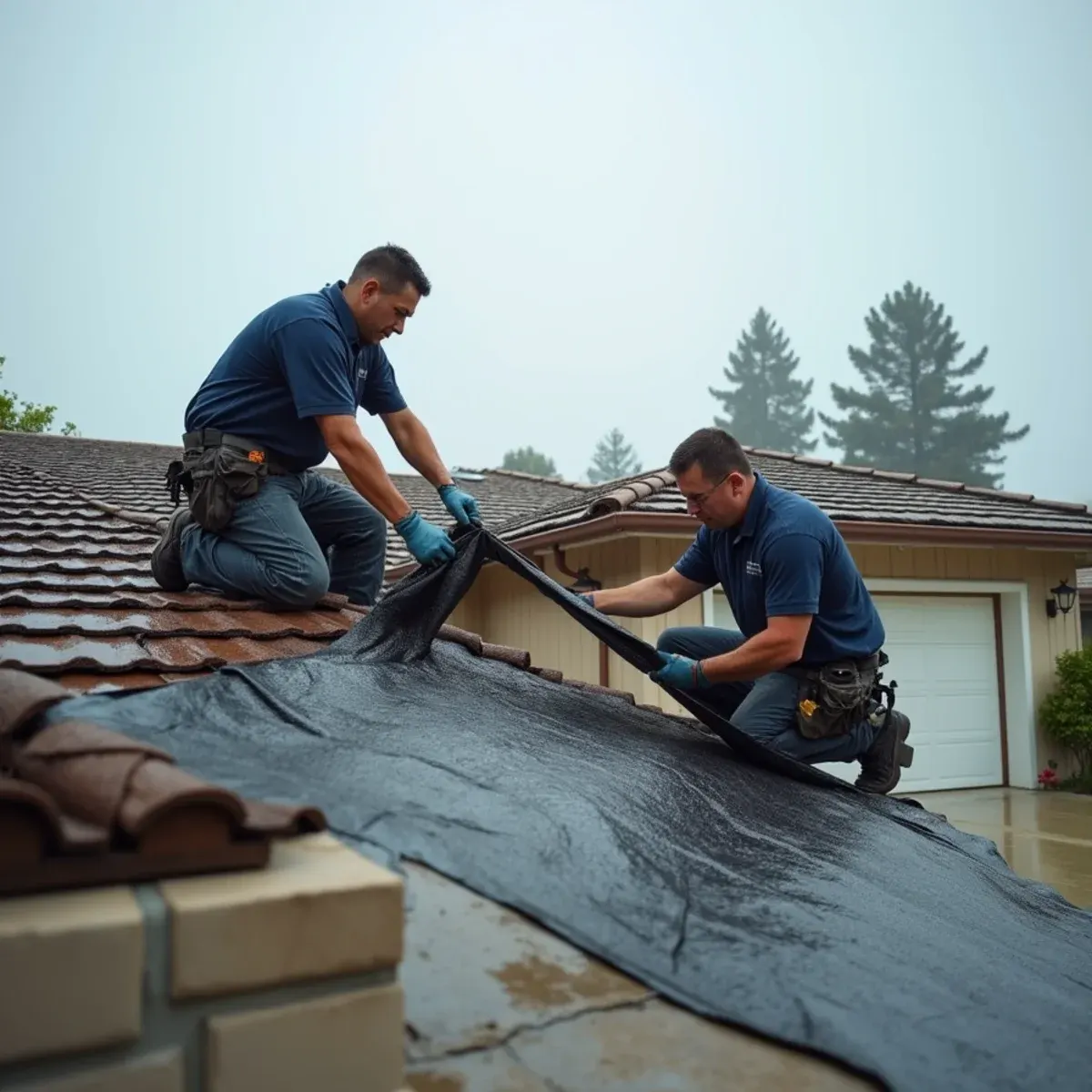
Two things happen on Signal Hill that don't happen in the flat cities around it. Water arrives fast — a 365-foot hill sheds runoff with real velocity, so it overtops thresholds and pushes through door seals instead of quietly ponding in a yard. And the wind at the top is stronger than anywhere in the surrounding basin, coming across open exposure with nothing to break it. A tarp that would hold for a week in a flat neighborhood will be flapping loose by 3am up on the Hilltop or the Panorama slopes.
The hill is entirely surrounded by Long Beach, and its housing splits sharply. Older single-family from the twenties onward sits along the base and the original streets, with period piping and mixed foundations. The 1990s and 2000s townhomes and condos went up on former oil land — steep engineered lots with retaining walls, terrace drains and tight side setbacks. Active oil operations still sit intermixed with all of it. We're about sixteen minutes west of Cypress and dispatch as fast as conditions allow.
What Signal Hill Changes About Storm Damage
1Wind-rated tarping, not just tarping
Anchoring matters more here than almost anywhere we work. We batten and strap for the exposure, use more anchor points than a flat-city roof needs, and where pitch and wind direction allow we ballast as well. We also come back to check it. An emergency tarp that fails on night two costs more than the original leak, and on this hill that happens to people regularly.
2Cut-and-fill pads on former oil land
Much of the newer hillside housing sits on engineered pads held by retaining walls, with terrace drains above them. Those drains fill with slope soil and planting debris across a dry summer. When they block, water that was designed to leave the slope inside a pipe instead loads the wall and comes out at the joints or around the ends, often into a garage or a lower-level room.
3Water arrives with velocity, not ponding
Storm water on a steep lot doesn't sit and wait to be sandbagged. It runs, and it finds thresholds, garage door bottoms and window wells on the downhill side. Diverting it above the house works; blocking it at the door mostly doesn't. When we respond we look uphill of the intrusion first, because on this grade the entry point is rarely where the problem actually started.
How the Work Runs
The method is the same one we use on every storm damage job, documented to the IICRC S500:2025 standard. Here it is in short — the full storm damage restoration process explains each stage in detail.
- Emergency tarping and board-up
- Water diversion and extraction
- Full damage documentation
- Interior mitigation
- Structural drying to standard
- Permanent repairs
The Signal Hill Background Worth Knowing
On these lots the drainage is engineered rather than natural. Terrace drains catch water partway down a slope, v-ditches carry it around a pad instead of across it, and retaining walls have weep holes with a gravel drain behind them so pressure never builds in the soil. All of that works until something clogs. Then a retaining wall stops being a wall and starts being a dam, and saturated soil pushes water through the joints and into whatever sits on the other side, which is usually a garage, a storage room, or the back of a lower level.
There is more on the housing stock, drainage and plumbing history of this city on our water damage restoration in Signal Hill page.
Signal Hill at a glance
- Dominant construction era
- 1920–2005
- Foundation type
- mixed on grade
- Supply piping found here
- original 1920s piping, galvanized steel, modern PEX in newer hillside builds
- Drain line materials
- cast iron, ABS
- Terrain and water table
- hillside-mixed, deep water table
- Most common local failure
- slope drainage and retaining-wall failures on steep lots, where water arrives with velocity rather than ponding
- Highest-value local prevention
- keeping terrace drains, v-ditches and retaining-wall weeps clear before the first storm
What It Costs in Signal Hill
We do not quote a number over the phone before seeing the property — anyone who does is guessing. The variables that actually move the price on a storm damage job are size of the opening and duration of intrusion, emergency mitigation scope, how many rooms the water reached, and they are broken down in full on the storm damage restoration page. The assessment and the written estimate are free anywhere in Signal Hill, day or night, with no obligation.
Storm Damage Questions from Signal Hill Homeowners
Sometimes, and we'll be straight with you about when we can't. Working a pitched roof in strong gusts is how people get hurt, and a tarp installed in that wind usually won't stay put anyway. When conditions are unsafe we do what we can from inside — containment under the leak, extraction, protecting contents — then get on the roof as soon as the gusts drop. We'll give you a realistic time, not a comfortable one.
During. Emergency tarping and board-up happen in the rain — that is the entire point of them. We triage by severity, so active intrusion into occupied living space goes to the front of the queue.
Sudden wind and rain damage is generally covered, including the resulting interior water damage. What gets excluded is damage from a roof that had already failed or from deferred maintenance, and flooding from water that came across the ground, which needs separate flood insurance.
Start uphill. On this hill the cause is almost never at the place the water got in. Walk the slope above your pad and check the terrace drains, the v-ditch and the retaining wall weep holes. A weep that has been painted or stuccoed over is common and completely disables the drain behind the wall. Then look at where the uphill property discharges. Fixing the entry point without finding the redirect just moves the problem a few feet.