
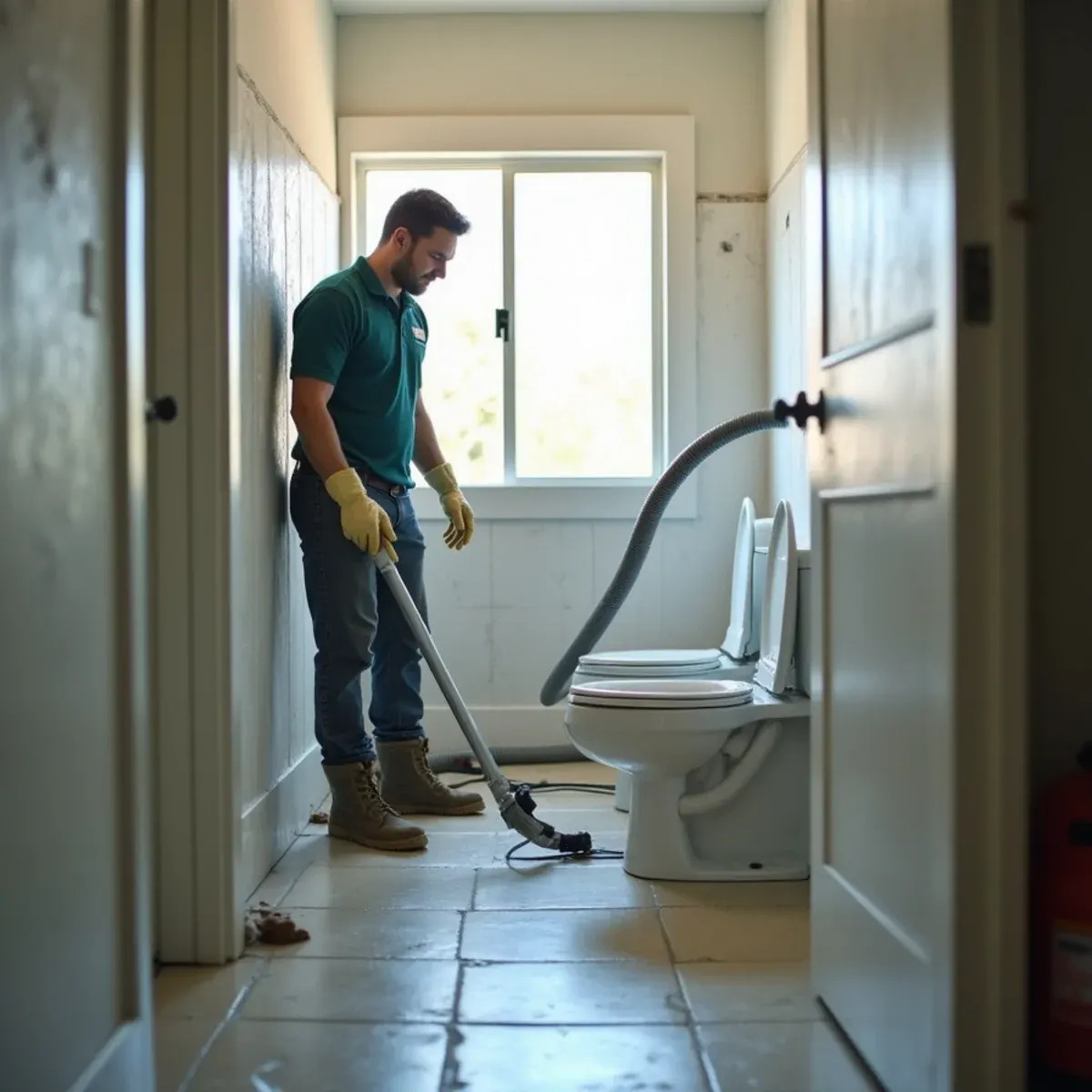
Signal Hill is a 365-foot hill completely surrounded by Long Beach, and gravity is the first thing we think about on this call. Much of the newer housing sits on steep engineered lots built over former oil land, in three-level plans with the garage at the bottom and the bedrooms and baths at the top. When a toilet overflows up there, the water doesn't stay on that floor. It finds the flange penetration or the stair landing and works its way down through the building.
The city's older side is a different animal. The 1921 Alamitos No. 1 discovery set off one of the great American oil booms, the field is still moderately productive, and active wells and oilfield infrastructure sit intermixed with housing to this day. The flatter pockets hold older stock on original-era drainage where a lateral backup is a real possibility. Strong marine influence across the whole hill means whatever gets wet here dries more slowly than it would a few miles inland.
What Signal Hill Changes About Toilet Overflow
1Three levels between the bath and the garage
In the hillside plans, a top-floor bathroom sits over living space that sits over a garage. Water follows the joists and the plumbing chase down, and the first visible sign is often a stain on the garage ceiling — two floors from the source. We open an inspection point in the chase rather than chasing stains, and we meter each level independently before scoping.
2Steep laterals fail at the flat transition
On a grade this steep, drain lines run fast until they reach the flatter section near the street. Water outpaces solids on the steep run and the solids settle where it levels out. That's where blockages form, and it's why a house can drain fine for years and then back up with no warning. Camera work should focus on that transition, not the vertical run.
3Marine air slows every dry-out here
The hill catches enough marine influence that ambient humidity works against us most mornings. We dehumidify enclosed spaces rather than ventilate them, because pulling in outside air often means bringing in more moisture than we remove. It adds time to the job. We say so at the estimate instead of setting a schedule we'd have to walk back on day three.
How the Work Runs
The method is the same one we use on every toilet overflow job, documented to the IICRC S500:2025 standard. Here it is in short — the full toilet overflow cleanup process explains each stage in detail.
- Stop the water, stabilize the room
- Determine the category before scoping
- Extract, then remove only what must go
- Pull the toilet, inspect the flange
- Dry the subfloor and the ceiling below
- Disinfect to category, verify, reset
The Signal Hill Background Worth Knowing
On these lots the drainage is engineered rather than natural. Terrace drains catch water partway down a slope, v-ditches carry it around a pad instead of across it, and retaining walls have weep holes with a gravel drain behind them so pressure never builds in the soil. All of that works until something clogs. Then a retaining wall stops being a wall and starts being a dam, and saturated soil pushes water through the joints and into whatever sits on the other side, which is usually a garage, a storage room, or the back of a lower level.
There is more on the housing stock, drainage and plumbing history of this city on our water damage restoration in Signal Hill page.
Signal Hill at a glance
- Dominant construction era
- 1920–2005
- Foundation type
- mixed on grade
- Supply piping found here
- original 1920s piping, galvanized steel, modern PEX in newer hillside builds
- Drain line materials
- cast iron, ABS
- Terrain and water table
- hillside-mixed, deep water table
- Most common local failure
- slope drainage and retaining-wall failures on steep lots, where water arrives with velocity rather than ponding
- Highest-value local prevention
- keeping terrace drains, v-ditches and retaining-wall weeps clear before the first storm
What It Costs in Signal Hill
We do not quote a number over the phone before seeing the property — anyone who does is guessing. The variables that actually move the price on a toilet overflow job are the category of the water, how far it traveled from the base, what your floor is built from, and they are broken down in full on the toilet overflow cleanup page. The assessment and the written estimate are free anywhere in Signal Hill, day or night, with no obligation.
Toilet Overflow Questions from Signal Hill Homeowners
A finished floor, a subfloor, at least one joist bay with insulation, and usually a plumbing chase running vertically between them. Water rarely drops straight down — it travels along a joist to the lowest point and appears wherever the drywall gives up first. The garage ceiling stain is the endpoint, not the map. We meter the middle level's ceiling and walls too, because in these Signal Hill plans that's where most of the trapped water actually sits.
Clear water lowers the health risk, not the drying requirement. Clean water still soaks into carpet pad, particle board, and the cut edge of subfloor around the flange, and it still causes swelling and mold growth if it stays. What clean water does change is the scope: no containment, no PPE, usually no demolition. If it stayed on sealed tile and you got it up quickly, you may genuinely be fine. If it reached anything porous, it needs real drying.
Three checks. Did the water rise in the bowl without anyone flushing it? Does another fixture gurgle, drain slowly, or fill up when you run water elsewhere in the house? Is there visible soil or a sewer odor in what came out? Any one of those points at the main line. A stuck fill valve, by contrast, gives you clear water, a bowl that overflows steadily, and a tank you can hear running continuously.
Start uphill. On this hill the cause is almost never at the place the water got in. Walk the slope above your pad and check the terrace drains, the v-ditch and the retaining wall weep holes. A weep that has been painted or stuccoed over is common and completely disables the drain behind the wall. Then look at where the uphill property discharges. Fixing the entry point without finding the redirect just moves the problem a few feet.