
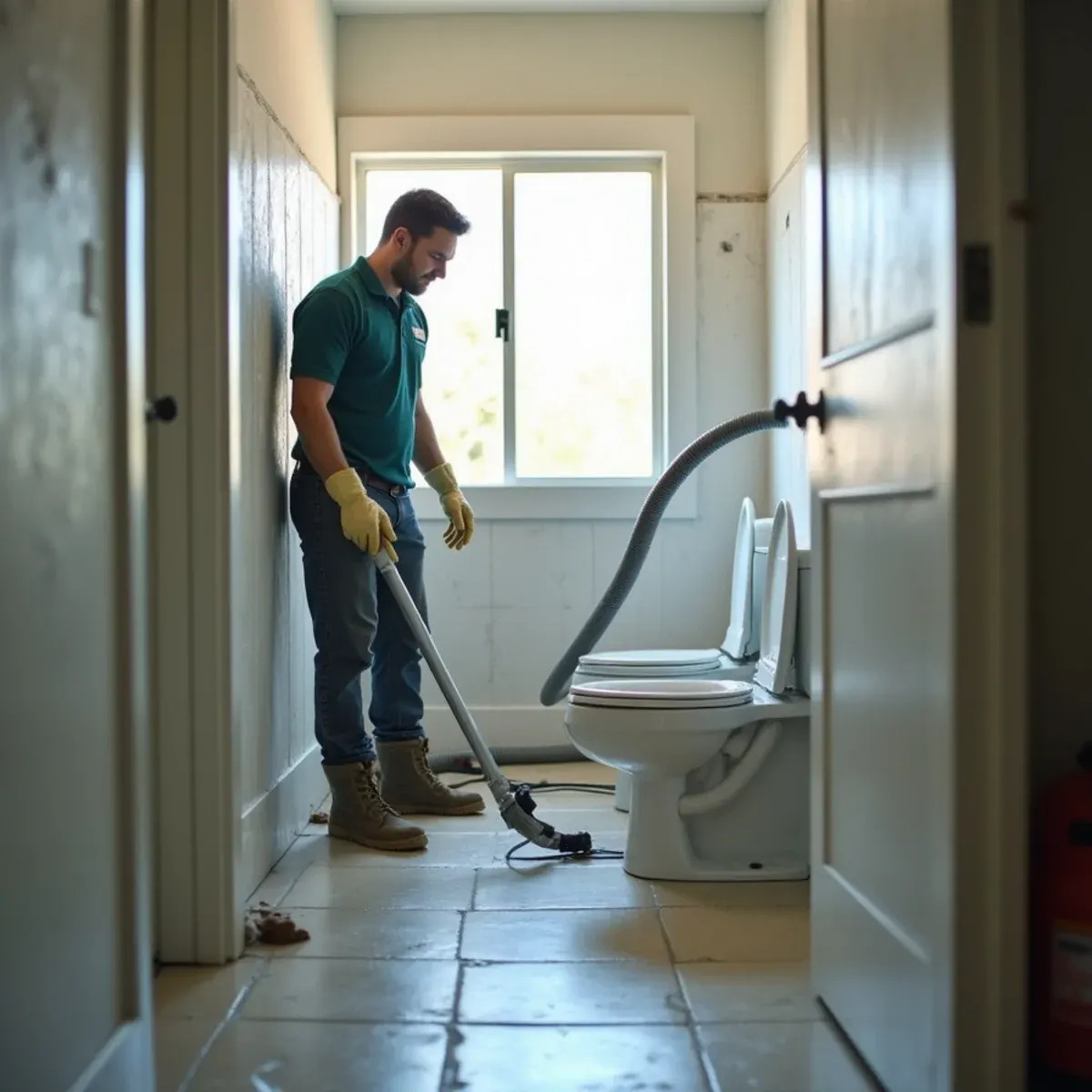
Long Beach spans more construction eras than anywhere else we cover, and a toilet overflow means something genuinely different in each of them. In 1920s Bluff Park or California Heights it is a lath-and-plaster problem, where the ceiling below an upstairs bath holds several times the water drywall would and gives it back far more slowly. In Naples it is a filled-land problem, with a shallow water table keeping the slab damp before anything spilled. In Belmont Shore it is a logistics problem, with narrow lots, no driveways and long hose runs from wherever the truck can legally sit.
Then there is postwar East Long Beach, El Dorado Park Estates and Los Altos, which behaves almost exactly like Cypress: single-story slab, flat spread beneath the flooring, and a straightforward dry-out if we reach it before the materials break down. We ask for cross streets before the truck is loaded, because the equipment list, the containment plan and the demolition decision all change with the answer. A crew running one playbook citywide will either over-demolish a plaster ceiling or under-dry a Naples slab, and both mistakes cost the homeowner.
What Long Beach Changes About Toilet Overflow
1Bluff Park and California Heights plaster
In the 1920s neighborhoods, the ceiling below an upstairs bathroom is plaster on wood lath. It stores far more water than drywall, dries on a longer clock, and fails at the keys behind the lath rather than at the visible face. We sound and meter it before deciding anything, because a plaster ceiling that comes down unnecessarily gets replaced with something that will never match.
2Naples canal-front on filled land
The Naples islands sit on filled ground with a high water table right up against the canals. Slabs there carry background moisture year round, so an overflow reading has to be compared against a control taken elsewhere in the same house. Without that comparison you cannot tell residual overflow water from the baseline the house has always had, and the equipment stays on for nothing.
3Belmont Shore parking and hose runs
The narrow lots off Second Street have no driveways and street parking that disappears by mid-morning. Long extraction runs mean lost lift, so we bring portable extraction inside and stage the truck as close as the block allows. We ask about alley access on the phone, because sorting that out before dispatch saves twenty minutes at the front end of a job where minutes matter.
How the Work Runs
The method is the same one we use on every toilet overflow job, documented to the IICRC S500:2025 standard. Here it is in short — the full toilet overflow cleanup process explains each stage in detail.
- Stop the water, stabilize the room
- Determine the category before scoping
- Extract, then remove only what must go
- Pull the toilet, inspect the flange
- Dry the subfloor and the ceiling below
- Disinfect to category, verify, reset
The Long Beach Background Worth Knowing
The postwar tracts around El Dorado Park, Los Altos, and the neighborhoods near the Cypress border were built in the same era and largely the same way as the housing in our home city. Single-story slab construction, plumbing routed under the concrete, and a fifty-to-seventy-year age on the supply lines.
There is more on the housing stock, drainage and plumbing history of this city on our water damage restoration in Long Beach page.
Long Beach at a glance
- Dominant construction era
- 1920–1980
- Foundation type
- mixed on grade
- Supply piping found here
- original 1920s piping, galvanized steel, under-slab copper
- Drain line materials
- cast iron, clay
- Terrain and water table
- coastal-flat, shallow water table
- Most common local failure
- the approach changing entirely by neighborhood — a 1926 plaster wall and a 1955 drywall wall are different restoration problems
- Highest-value local prevention
- identifying the construction type before anyone starts cutting
What It Costs in Long Beach
We do not quote a number over the phone before seeing the property — anyone who does is guessing. The variables that actually move the price on a toilet overflow job are the category of the water, how far it traveled from the base, what your floor is built from, and they are broken down in full on the toilet overflow cleanup page. The assessment and the written estimate are free anywhere in Long Beach, day or night, with no obligation.
Toilet Overflow Questions from Long Beach Homeowners
Not really, and that is good news. Postwar East Long Beach is single-story slab with drywall, so an overflow spreads flat under the flooring instead of soaking a plaster ceiling, and your slab does not carry the background moisture a Naples house does. The job is extraction, pulling flooring and pad, opening wall base and drying the slab. It is the most predictable version of this work anywhere in Long Beach.
Clear water lowers the health risk, not the drying requirement. Clean water still soaks into carpet pad, particle board, and the cut edge of subfloor around the flange, and it still causes swelling and mold growth if it stays. What clean water does change is the scope: no containment, no PPE, usually no demolition. If it stayed on sealed tile and you got it up quickly, you may genuinely be fine. If it reached anything porous, it needs real drying.
Three checks. Did the water rise in the bowl without anyone flushing it? Does another fixture gurgle, drain slowly, or fill up when you run water elsewhere in the house? Is there visible soil or a sewer odor in what came out? Any one of those points at the main line. A stuck fill valve, by contrast, gives you clear water, a bowl that overflows steadily, and a tank you can hear running continuously.
All of it, with the fastest response to East Long Beach — El Dorado Park Estates, Los Altos, and the neighborhoods near the Cypress border, which are typically twenty to twenty-five minutes. Coastal and downtown areas run a little longer, and we will give you a realistic ETA when you call.