
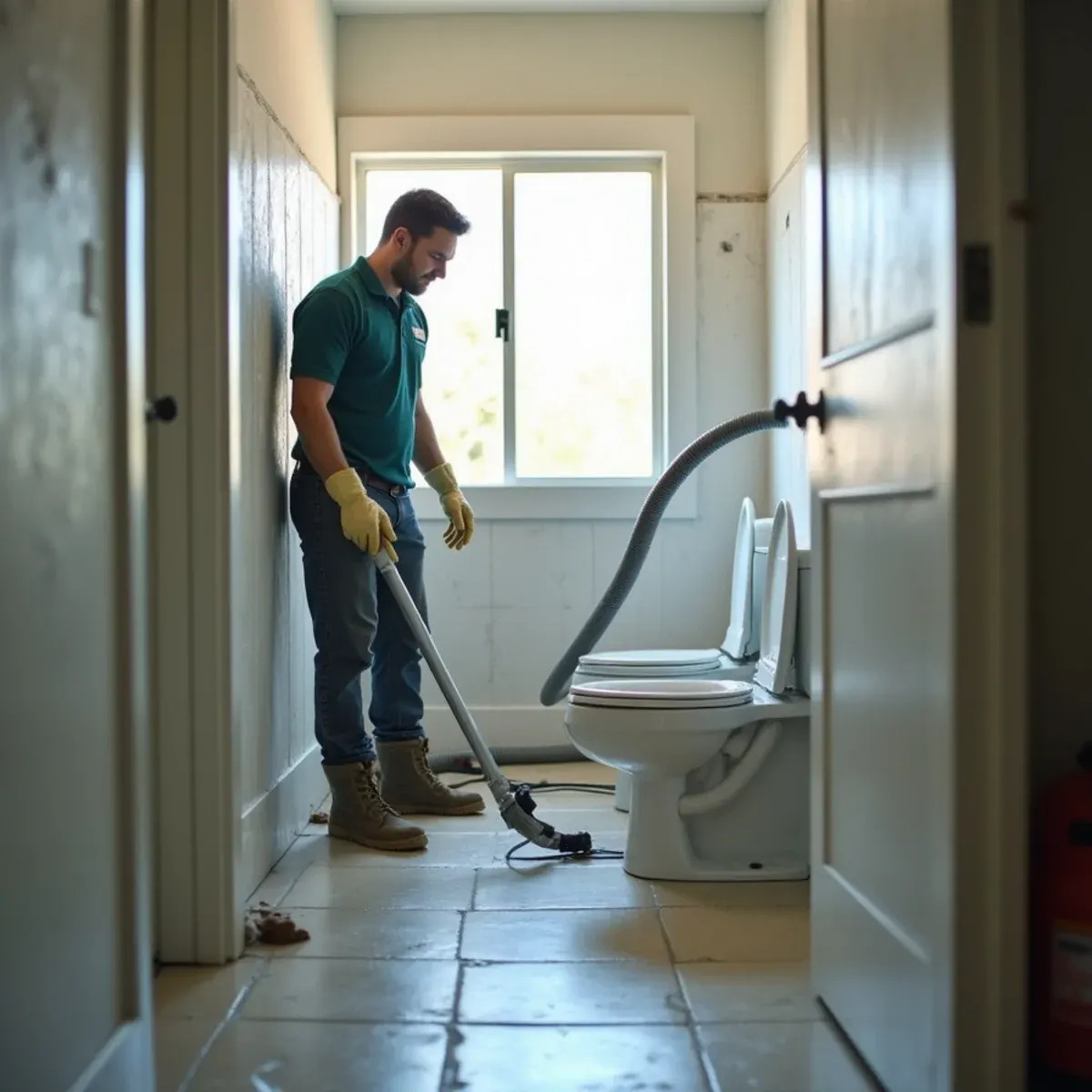
In Leisure World, a toilet overflow is almost never a single-unit event. The community runs to roughly 9,000 attached units built in the early 1960s, and water leaving a bathroom floor crosses into the neighbor's unit through the shared wall assembly well within the hour. That pulls in the mutual, the management company and often more than one insurance policy before anyone has decided what actually has to come out. We are used to that structure. We document unit by unit, we arrange access rather than assuming it, and we do not cut anything shared without the right approval in hand.
The rest of Seal Beach divides into two more environments. Old Town is dense coastal building from the 1920s onward on mixed foundations, and where a house sits raised, an overflow can drop into a sub-floor void instead of spreading across a floor. College Park sits inland with different ground and drier air. Everywhere in this city the marine layer lengthens the work: outdoor humidity stays high through most mornings and the shallow water table keeps slabs damp, so we run sealed dehumidification and plan for more drying days than an inland job of the same size.
What Seal Beach Changes About Toilet Overflow
1Mutual approval before shared-wall work
In Leisure World, the wall between you and your neighbor is not simply yours. Opening it, drying inside it or removing material from it goes through the mutual and the management company, and doing that correctly is faster than doing it twice. We handle emergency extraction and containment immediately, then work the approval for anything structural rather than presenting a fait accompli to a board.
2Marine layer adds drying days
Seal Beach mornings sit under humid coastal air most of the year, and the water table this close to the shoreline keeps slabs at an elevated baseline. Both stretch the timeline. We seal the affected area and dehumidify rather than ventilating, and we tell residents up front that a Seal Beach dry-out generally runs longer than the same loss would ten miles inland.
3Old Town raised floors and sub-floor voids
Not all of Seal Beach is slab. In Old Town, older homes on raised foundations hide a sub-floor void beneath the bathroom, and water that seems to have vanished from a tile floor is often sitting on the sheathing below. Access is tight on those narrow coastal lots, and salt air has usually taken a toll on any metal we find under there.
How the Work Runs
The method is the same one we use on every toilet overflow job, documented to the IICRC S500:2025 standard. Here it is in short — the full toilet overflow cleanup process explains each stage in detail.
- Stop the water, stabilize the room
- Determine the category before scoping
- Extract, then remove only what must go
- Pull the toilet, inspect the flange
- Dry the subfloor and the ceiling below
- Disinfect to category, verify, reset
The Seal Beach Background Worth Knowing
Structural drying works by creating a vapor pressure differential — dry air pulls moisture out of wet materials. When the surrounding air is already carrying a heavy moisture load, that differential shrinks and everything slows down.
There is more on the housing stock, drainage and plumbing history of this city on our water damage restoration in Seal Beach page.
Seal Beach at a glance
- Dominant construction era
- 1920–1965
- Foundation type
- mixed on grade
- Supply piping found here
- galvanized steel, copper, shared community mains
- Drain line materials
- cast iron, clay
- Terrain and water table
- coastal-flat, shallow water table
- Most common local failure
- losses that cross shared walls between attached units, involving several policies and a mutual at once
- Highest-value local prevention
- documenting each affected unit separately from the first hour
What It Costs in Seal Beach
We do not quote a number over the phone before seeing the property — anyone who does is guessing. The variables that actually move the price on a toilet overflow job are the category of the water, how far it traveled from the base, what your floor is built from, and they are broken down in full on the toilet overflow cleanup page. The assessment and the written estimate are free anywhere in Seal Beach, day or night, with no obligation.
Toilet Overflow Questions from Seal Beach Homeowners
Shut the angle stop behind the toilet, then notify your mutual and the management company, because they control access and any work on shared assemblies. Call us at the same time so extraction and containment can start while that is happening. Every hour the shared wall stays wet is more material lost on both sides. We document your unit and your neighbor's separately, which matters when two policies and the mutual are all looking at the same wall.
Clear water lowers the health risk, not the drying requirement. Clean water still soaks into carpet pad, particle board, and the cut edge of subfloor around the flange, and it still causes swelling and mold growth if it stays. What clean water does change is the scope: no containment, no PPE, usually no demolition. If it stayed on sealed tile and you got it up quickly, you may genuinely be fine. If it reached anything porous, it needs real drying.
Three checks. Did the water rise in the bowl without anyone flushing it? Does another fixture gurgle, drain slowly, or fill up when you run water elsewhere in the house? Is there visible soil or a sewer odor in what came out? Any one of those points at the main line. A stuck fill valve, by contrast, gives you clear water, a bowl that overflows steadily, and a tank you can hear running continuously.
Coastal marine layer conditions keep ambient humidity high for extended periods, which reduces the vapor pressure differential that drives drying. Jobs near the water need sealed chambers and more dehumidification capacity than an equivalent loss inland, and the equipment stays on longer.