
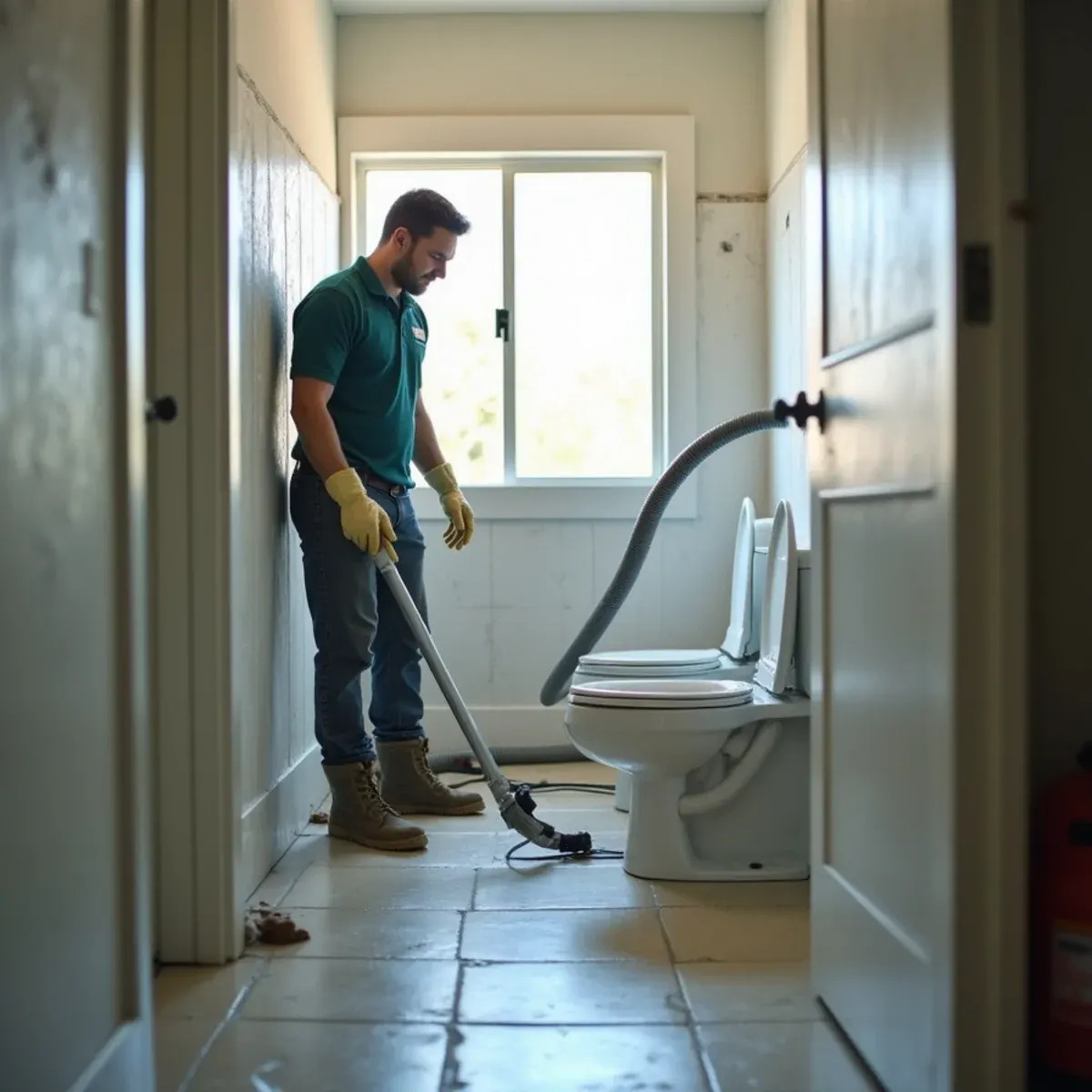
In a manufactured home, an overflow at the toilet doesn't stop at the floor. Water goes through the vinyl seam at the base of the bowl, through the particleboard underlayment, and into the belly wrap — the sealed membrane slung under the frame that's meant to keep things out and turns out to be excellent at holding water in. Carson has an unusually large mobile home park population, and this is the version of the job we see here more than anywhere else on our map.
The rest of the city is conventional. Carson incorporated in 1968 on former ranch, oil-field and industrial land, and most of the housing is 1950s through 1970s slab tract with refineries and logistics yards immediately adjacent. The water table is shallow, which slows slab drying the same way it does closer to the channels. But the coaches are the distinguishing factor here, and they need a different approach entirely: different access, different materials, and different limits on what we can plug in.
What Carson Changes About Toilet Overflow
1Belly wrap holds what the floor lets through
Once water sits between the underfloor insulation and the bottom board, no reading taken from inside the coach tells the whole story. The wrap has to be opened, drained and dried, and saturated insulation is a removal item. Closing it back over wet fiberglass guarantees odor and rot within a season. We cut, dry, replace the insulation and re-seal it properly.
2Particleboard underlayment at the flange
Most coaches use particleboard decking, which swells and loses structure fast once water reaches the edge of the closet flange cut-out. If the floor feels spongy around the base of the toilet, that decking is already compromised and drying won't bring it back. It gets cut out and replaced with proper backing before the toilet goes back down.
3Power and access inside the parks
Older coaches have limited panel capacity, and spaces are tight enough that equipment placement takes planning. We bring our own power distribution rather than tripping your breakers, and we coordinate with park management on access, the water shutoff location and where equipment can sit. It's a small thing that prevents a second problem in the middle of the first one.
How the Work Runs
The method is the same one we use on every toilet overflow job, documented to the IICRC S500:2025 standard. Here it is in short — the full toilet overflow cleanup process explains each stage in detail.
- Stop the water, stabilize the room
- Determine the category before scoping
- Extract, then remove only what must go
- Pull the toilet, inspect the flange
- Dry the subfloor and the ceiling below
- Disinfect to category, verify, reset
The Carson Background Worth Knowing
Manufactured homes are built with the floor deck, usually particleboard or OSB, sitting on a steel frame, with batt insulation below it and a vapor barrier belly wrap stapled underneath to hold everything in place. Supply lines run through that cavity. When one leaks, the water does not run out onto the ground where you would see it. The belly wrap catches and holds it, the insulation soaks it up, and you now have a sealed reservoir under your floor with no path to evaporate. It can sit there for months before anything shows upstairs.
There is more on the housing stock, drainage and plumbing history of this city on our water damage restoration in Carson page.
Carson at a glance
- Dominant construction era
- 1950–1975
- Foundation type
- slab on grade
- Supply piping found here
- galvanized steel, under-slab copper, manufactured-home supply lines
- Drain line materials
- cast iron
- Terrain and water table
- flat, shallow water table
- Most common local failure
- manufactured-home underfloor leaks trapped in the belly wrap, alongside conventional 1960s slab failures
- Highest-value local prevention
- treating any soft spot in a manufactured-home floor as moisture until a meter proves otherwise
What It Costs in Carson
We do not quote a number over the phone before seeing the property — anyone who does is guessing. The variables that actually move the price on a toilet overflow job are the category of the water, how far it traveled from the base, what your floor is built from, and they are broken down in full on the toilet overflow cleanup page. The assessment and the written estimate are free anywhere in Carson, day or night, with no obligation.
Toilet Overflow Questions from Carson Homeowners
Most likely the particleboard decking has taken on water at the flange cut-out and swollen, and some of that water is now sitting in the belly wrap below it. Neither one dries from inside the bathroom. We open the wrap from underneath, drain and dry the cavity, pull the saturated insulation, and replace the decking around the flange. Setting a toilet back onto soft decking just moves the same failure a few months down the road.
Clear water lowers the health risk, not the drying requirement. Clean water still soaks into carpet pad, particle board, and the cut edge of subfloor around the flange, and it still causes swelling and mold growth if it stays. What clean water does change is the scope: no containment, no PPE, usually no demolition. If it stayed on sealed tile and you got it up quickly, you may genuinely be fine. If it reached anything porous, it needs real drying.
Three checks. Did the water rise in the bowl without anyone flushing it? Does another fixture gurgle, drain slowly, or fill up when you run water elsewhere in the house? Is there visible soil or a sewer odor in what came out? Any one of those points at the main line. A stuck fill valve, by contrast, gives you clear water, a bowl that overflows steadily, and a tank you can hear running continuously.
By locating it rather than arguing about it. The dividing line is the connection point where the park's service meets your home. Upstream of that is the park's responsibility, downstream is yours. We open the belly wrap where water is pooling, trace the wet path back to its source, and photograph what we find with the connection in frame. That documentation settles the question. Guessing from where the wet spot showed up inside is unreliable, because water travels along the frame first.