
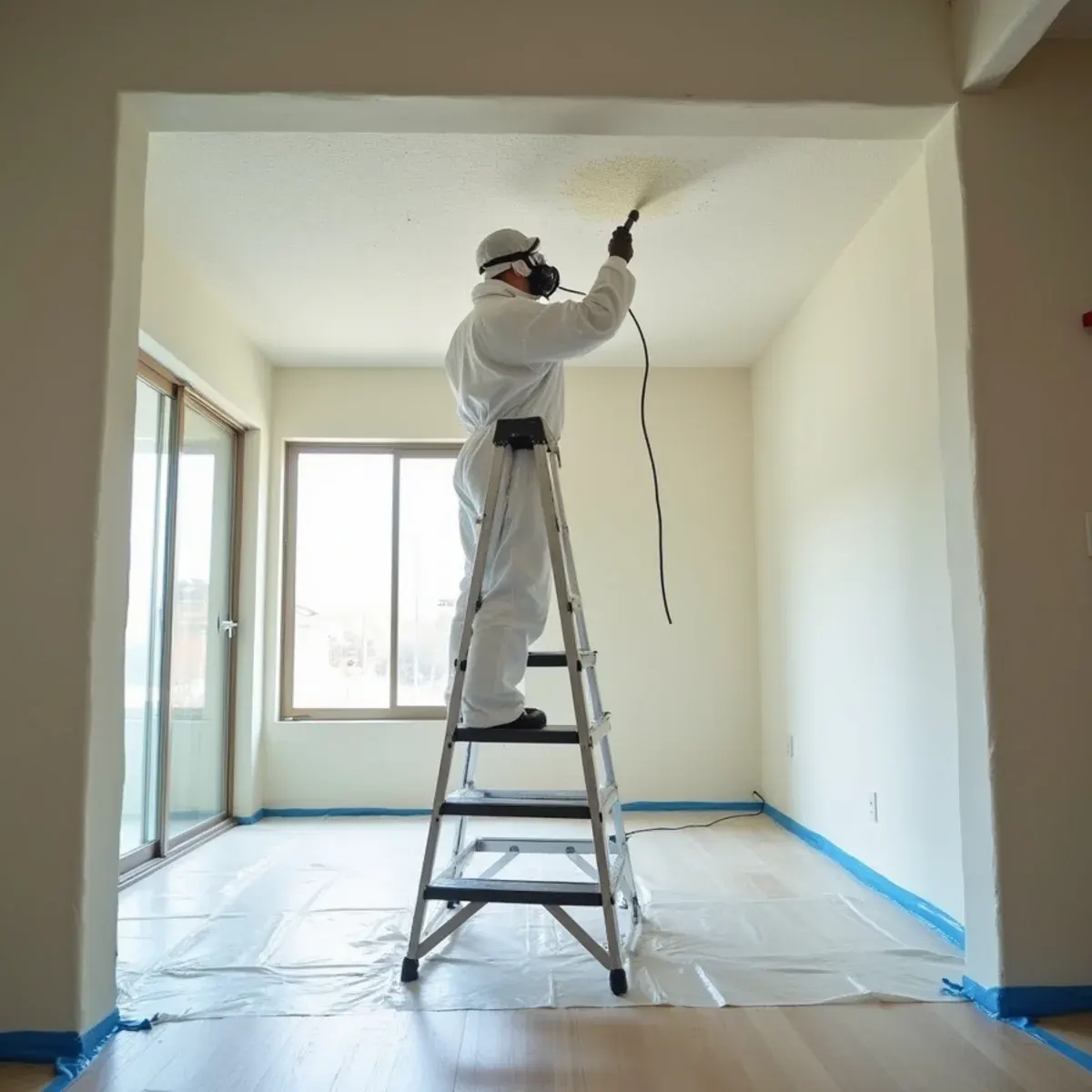
A 365-foot hill surrounded by Long Beach, with working wells and oilfield infrastructure intermixed with housing — Signal Hill does not look like anywhere else on this list, and the building stock splits hard. The small houses that went up after the 1921 Alamitos No. 1 discovery are boom-era construction with paint from the highest-lead decades and, in some cases, original plaster and pipe insulation. Those are the addresses where sampling before any cutting is not negotiable, no matter how small the repair looks.
The newer hillside housing built on former oil land is a different animal. Steep engineered lots, retaining walls and terrace drains, built well past both cutoffs, so a water loss there is a drainage and drying problem rather than a testing one. Water arrives with velocity on those slopes instead of ponding, and it gets behind walls fast. Strong marine influence slows drying across the whole hill. One thing we do not do is soil or site contamination testing tied to former oil operations — that is a different license, and we will refer you.
What Signal Hill Changes About Asbestos & Lead Testing
1Boom-era cottages hold the highest-lead paint
Houses built in the years right after the 1921 discovery predate every restriction. Original exterior paint, window sash and door casing are the highest-probability lead components on the hill. If water damage means pulling casing or scraping siding before repainting, those specific components should be tested rather than characterized from a wall sample somewhere else in the house.
2Newer slope housing rarely needs sampling
On post-1980 hillside construction there is nothing for a lab to find in the standard assemblies, and we say so instead of quoting a survey. That money is better spent finding where the terrace drain or retaining wall weep actually failed, since on these grades the same defect will deliver water to the same wall in the next storm.
3We do not test soil or site conditions
Being built on former oil field land raises questions we are not licensed to answer. Our scope is building materials — texture, compound, flooring, insulation and paint. Soil, vapor and site contamination assessment belongs to an environmental consultant, and we will tell you that rather than stretching a building-materials survey into something it is not.
How the Work Runs
The method is the same one we use on every asbestos & lead testing job, documented to the IICRC S500:2025 standard. Here it is in short — the full asbestos & lead paint testing process explains each stage in detail.
- Emergency stabilization without cutting
- Define exactly what gets disturbed
- A certified inspector takes the samples
- Independent laboratory analysis
- Lead assessment on painted surfaces
- Abatement, clearance, then restoration
The Signal Hill Background Worth Knowing
On these lots the drainage is engineered rather than natural. Terrace drains catch water partway down a slope, v-ditches carry it around a pad instead of across it, and retaining walls have weep holes with a gravel drain behind them so pressure never builds in the soil. All of that works until something clogs. Then a retaining wall stops being a wall and starts being a dam, and saturated soil pushes water through the joints and into whatever sits on the other side, which is usually a garage, a storage room, or the back of a lower level.
There is more on the housing stock, drainage and plumbing history of this city on our water damage restoration in Signal Hill page.
Signal Hill at a glance
- Dominant construction era
- 1920–2005
- Foundation type
- mixed on grade
- Supply piping found here
- original 1920s piping, galvanized steel, modern PEX in newer hillside builds
- Drain line materials
- cast iron, ABS
- Terrain and water table
- hillside-mixed, deep water table
- Most common local failure
- slope drainage and retaining-wall failures on steep lots, where water arrives with velocity rather than ponding
- Highest-value local prevention
- keeping terrace drains, v-ditches and retaining-wall weeps clear before the first storm
What It Costs in Signal Hill
We do not quote a number over the phone before seeing the property — anyone who does is guessing. The variables that actually move the price on a asbestos & lead testing job are the number of distinct materials, how many samples each needs, how fast you need results, and they are broken down in full on the asbestos & lead paint testing page. The assessment and the written estimate are free anywhere in Signal Hill, day or night, with no obligation.
Asbestos & Lead Testing Questions from Signal Hill Homeowners
Building materials, and on a 1990s house those will almost certainly come back clean — no lead paint, no asbestos texture or flooring. Honest answer: you probably do not need us for testing at all, only for the water damage itself. Questions about what is under the property, soil vapor or former well sites, need an environmental consultant with the right license, and we will point you to one rather than guess.
No, and that's the whole point of testing. Plenty of ceilings from that decade come back clean — the manufacturers were mixed, the formulas changed year to year, and two houses on the same street can give different results. What we can't do is assume either way. A 1974 ceiling is a suspect material, which means one sample and a lab report separates a routine repair from a regulated one. Guessing in either direction is the expensive choice.
Usually less than people fear, and we design around it. Extraction, containment and dehumidification all start on the first visit, because none of that disturbs a suspect material. Sampling happens the same day where we can get an inspector out, and rush lab analysis is available when the clock matters. What genuinely adds time is a positive result, since abatement, containment and clearance testing have to finish before we cut. We'll give you a realistic date rather than an optimistic one.
Start uphill. On this hill the cause is almost never at the place the water got in. Walk the slope above your pad and check the terrace drains, the v-ditch and the retaining wall weep holes. A weep that has been painted or stuccoed over is common and completely disables the drain behind the wall. Then look at where the uphill property discharges. Fixing the entry point without finding the redirect just moves the problem a few feet.