
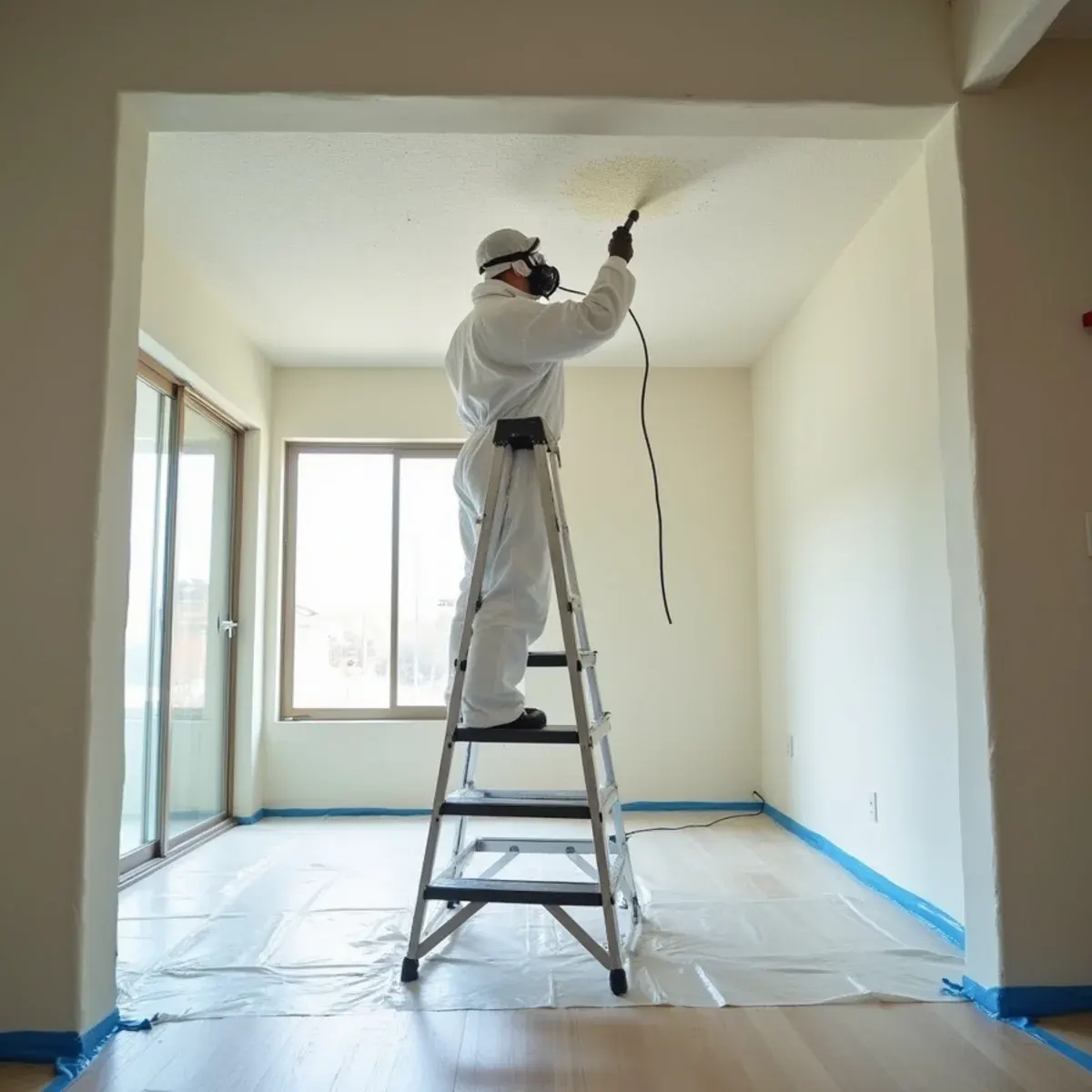
Roughly 17,500 homes went up in Lakewood in about three years, at times a hundred a day, from the same plans with the same crews and the same material orders. That produces a level of uniformity that is genuinely rare, and it means the original ceiling texture, joint compound, kitchen floor tile, adhesive and painted trim in your house came off the same trucks as your neighbor's. Built 1950 to 1953, every one of those materials sits inside both the lead window and the asbestos window, with no build-year argument available.
What forces the issue is the plumbing. Original galvanized steel is seventy years old and letting go at scaled, eroded fittings, and in these plans the kitchen, bath and laundry share a wet core. Repiping means opening one wall that serves three rooms, and that is a large area of original material coming down at once. On the older half of the neighborhoods, the opening also reaches painted door casings and window trim from before anyone thought about lead. Testing before the repipe starts is what keeps the job from stopping halfway.
What Lakewood Changes About Asbestos & Lead Testing
1The wet core is one large opening
Because kitchen, bath and laundry plumbing shares a wall in these plans, a repipe does not mean three small patches. It means one continuous opening through ceiling, wall and sometimes the floor at the base. That is a lot of original 1950s material disturbed in a single afternoon, which is exactly why the survey should be complete before the first cut rather than assembled around it.
2Repipe jobs are the main trigger here
In most cities this service follows a water loss. In Lakewood it just as often follows a decision, when an owner finally accepts that patching galvanized one fitting at a time is over. That is actually the better version, because a planned repipe has room in the schedule for sampling and lab time. Emergency repipes after a burst line do not, and the testing gets squeezed.
3Uniform stock, non-uniform remodels
The houses started identical and stopped being identical the day the first owner remodeled. Some kitchens were redone in 1968, some in 2005, some never. So while we know exactly where the wet wall runs before we walk in, we still sample your materials rather than assuming your neighbor's answers. The plans transfer between houses. The lab results do not.
How the Work Runs
The method is the same one we use on every asbestos & lead testing job, documented to the IICRC S500:2025 standard. Here it is in short — the full asbestos & lead paint testing process explains each stage in detail.
- Emergency stabilization without cutting
- Define exactly what gets disturbed
- A certified inspector takes the samples
- Independent laboratory analysis
- Lead assessment on painted surfaces
- Abatement, clearance, then restoration
The Lakewood Background Worth Knowing
Galvanized steel supply piping was standard when Lakewood was built, and it fails in a specific and predictable way. The zinc coating protecting the steel wears through from the inside, the steel corrodes, and scale builds up on the interior wall — narrowing the pipe over decades. As the diameter shrinks, water velocity and turbulence increase, which accelerates the erosion at elbows and fittings until a thin spot lets go.
There is more on the housing stock, drainage and plumbing history of this city on our water damage restoration in Lakewood page.
Lakewood at a glance
- Dominant construction era
- 1950–1953
- Foundation type
- slab on grade
- Supply piping found here
- original galvanized steel
- Drain line materials
- cast iron
- Terrain and water table
- flat, moderate water table
- Most common local failure
- seventy-year-old galvanized supply lines letting go at a scaled, eroded fitting
- Highest-value local prevention
- repiping while walls are already open for a repair, rather than as a separate project later
What It Costs in Lakewood
We do not quote a number over the phone before seeing the property — anyone who does is guessing. The variables that actually move the price on a asbestos & lead testing job are the number of distinct materials, how many samples each needs, how fast you need results, and they are broken down in full on the asbestos & lead paint testing page. The assessment and the written estimate are free anywhere in Lakewood, day or night, with no obligation.
Asbestos & Lead Testing Questions from Lakewood Homeowners
Before anything opens. Once we know the pipe route, we sample every material along it: ceiling texture, joint compound, any floor covering the trench crosses, and painted trim if the route reaches it. The lab runs while the plumber schedules. If everything is clean the repipe proceeds without special handling. If something is positive, that material comes out under containment with clearance testing, and then the plumbing work starts in a clean space.
No, and that's the whole point of testing. Plenty of ceilings from that decade come back clean — the manufacturers were mixed, the formulas changed year to year, and two houses on the same street can give different results. What we can't do is assume either way. A 1974 ceiling is a suspect material, which means one sample and a lab report separates a routine repair from a regulated one. Guessing in either direction is the expensive choice.
Usually less than people fear, and we design around it. Extraction, containment and dehumidification all start on the first visit, because none of that disturbs a suspect material. Sampling happens the same day where we can get an inspector out, and rush lab analysis is available when the clock matters. What genuinely adds time is a positive result, since abatement, containment and clearance testing have to finish before we cut. We'll give you a realistic date rather than an optimistic one.
Have it assessed. Seventy-year-old galvanized has exceeded any reasonable service life, and declining pressure or rust-colored water means it is well along. If a repair is already opening walls, that is the cheapest moment you will ever get to repipe — the demolition and patching are already in the scope.