
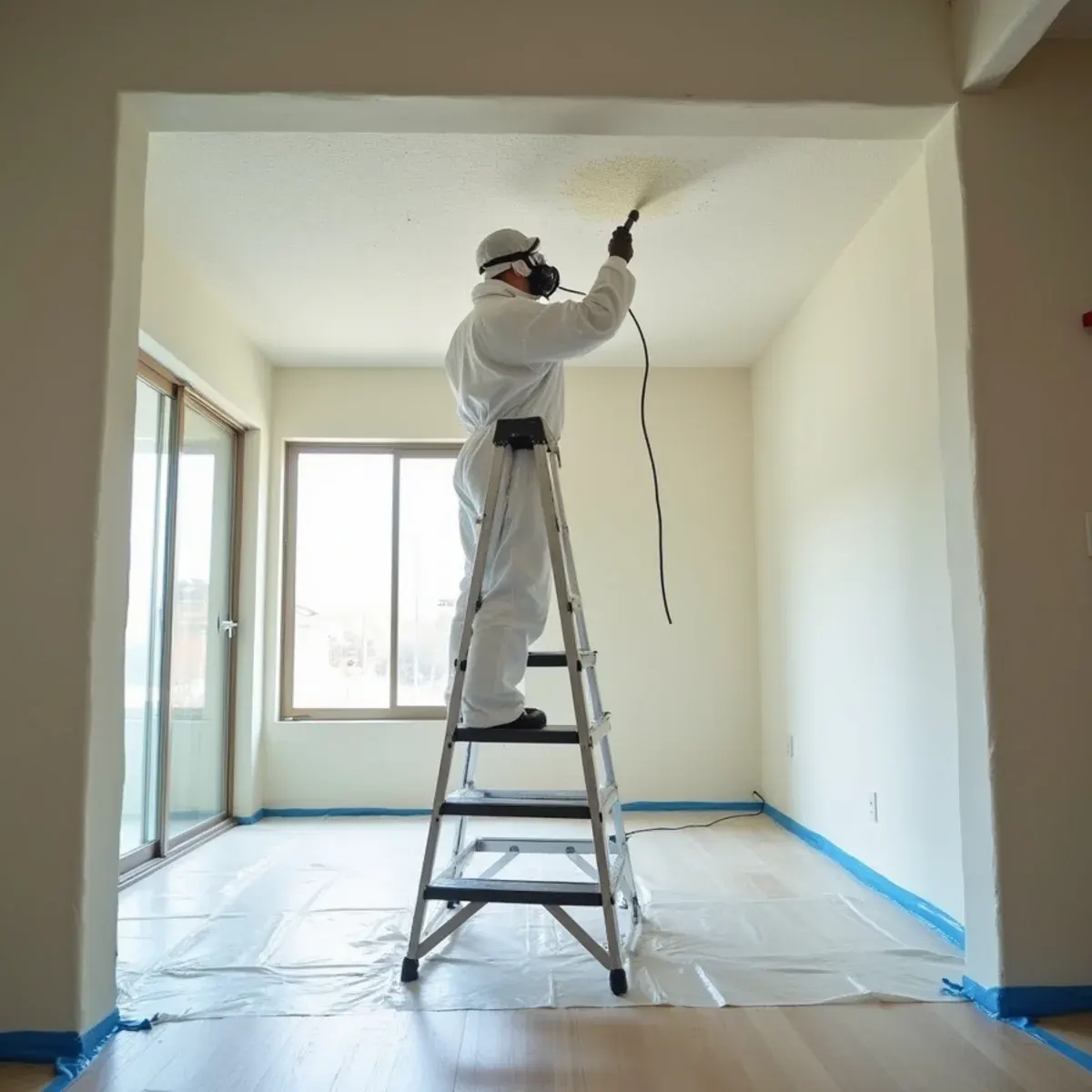
Long Beach covers more construction eras than any other city we work in, and that makes a single city-wide answer useless. In Bluff Park and California Heights the houses are 1920s lath-and-plaster with original wood windows, where lead is live on every sash and casing and asbestos shows up in later skim and patch coats. Out in East Long Beach, in El Dorado Park Estates and Los Altos, the housing behaves almost exactly like Cypress: postwar slab, ceiling texture, joint compound and resilient tile, with lead only a question on the earlier tracts.
Then there is the geography. Naples sits on filled land with a shallow water table, so slabs stay damp and floors come up more often, which pushes the survey toward what is bonded to the concrete. Belmont Shore is narrow-lot with no driveways, so the constraint is not what is in the material but how to get containment, waste and negative air exhaust in and out through an alley. The lab work is identical everywhere. The sample count, the access plan and the honest answer about lead all change by block.
What Long Beach Changes About Asbestos & Lead Testing
1Scope is set block by block
A survey written for a 1924 Bluff Park bungalow would be wrong for a 1958 Los Altos tract house and useless for a Naples canal-front property. We scope from the actual construction era and foundation of the address, which is why we ask the build year before quoting anything. The city name at the top of the page tells you almost nothing here.
21920s windows and plaster carry both risks
In the older neighborhoods the original double-hung windows have friction surfaces that grind painted wood into dust every time they are opened, and the plaster walls behind them have a century of coats on them. Both need answers before repair work starts, and both benefit from being tested during the dry-out rather than on the morning demolition is due to begin.
3Belmont Shore access dictates the plan
On the narrow lots there is no driveway to park a truck in and no side yard to stage waste. Everything routes through the front or the alley, street permitting may be needed, and containment has to be tighter because the neighbor's wall is a few feet away. That constraint is worth pricing and planning up front, since it drives more of the schedule here than the abatement itself does.
How the Work Runs
The method is the same one we use on every asbestos & lead testing job, documented to the IICRC S500:2025 standard. Here it is in short — the full asbestos & lead paint testing process explains each stage in detail.
- Emergency stabilization without cutting
- Define exactly what gets disturbed
- A certified inspector takes the samples
- Independent laboratory analysis
- Lead assessment on painted surfaces
- Abatement, clearance, then restoration
The Long Beach Background Worth Knowing
The postwar tracts around El Dorado Park, Los Altos, and the neighborhoods near the Cypress border were built in the same era and largely the same way as the housing in our home city. Single-story slab construction, plumbing routed under the concrete, and a fifty-to-seventy-year age on the supply lines.
There is more on the housing stock, drainage and plumbing history of this city on our water damage restoration in Long Beach page.
Long Beach at a glance
- Dominant construction era
- 1920–1980
- Foundation type
- mixed on grade
- Supply piping found here
- original 1920s piping, galvanized steel, under-slab copper
- Drain line materials
- cast iron, clay
- Terrain and water table
- coastal-flat, shallow water table
- Most common local failure
- the approach changing entirely by neighborhood — a 1926 plaster wall and a 1955 drywall wall are different restoration problems
- Highest-value local prevention
- identifying the construction type before anyone starts cutting
What It Costs in Long Beach
We do not quote a number over the phone before seeing the property — anyone who does is guessing. The variables that actually move the price on a asbestos & lead testing job are the number of distinct materials, how many samples each needs, how fast you need results, and they are broken down in full on the asbestos & lead paint testing page. The assessment and the written estimate are free anywhere in Long Beach, day or night, with no obligation.
Asbestos & Lead Testing Questions from Long Beach Homeowners
Not really. Your house is postwar slab, so the likely materials are ceiling texture, joint compound and old resilient tile with adhesive, and lead is a narrower question mostly limited to painted trim. Her 1920s house has plaster in multiple layers, original wood windows with friction surfaces, and paint from a century of repaints. Same lab, very different sample lists, different containment and, usually, a different amount of work at the end of it.
No, and that's the whole point of testing. Plenty of ceilings from that decade come back clean — the manufacturers were mixed, the formulas changed year to year, and two houses on the same street can give different results. What we can't do is assume either way. A 1974 ceiling is a suspect material, which means one sample and a lab report separates a routine repair from a regulated one. Guessing in either direction is the expensive choice.
Usually less than people fear, and we design around it. Extraction, containment and dehumidification all start on the first visit, because none of that disturbs a suspect material. Sampling happens the same day where we can get an inspector out, and rush lab analysis is available when the clock matters. What genuinely adds time is a positive result, since abatement, containment and clearance testing have to finish before we cut. We'll give you a realistic date rather than an optimistic one.
All of it, with the fastest response to East Long Beach — El Dorado Park Estates, Los Altos, and the neighborhoods near the Cypress border, which are typically twenty to twenty-five minutes. Coastal and downtown areas run a little longer, and we will give you a realistic ETA when you call.