
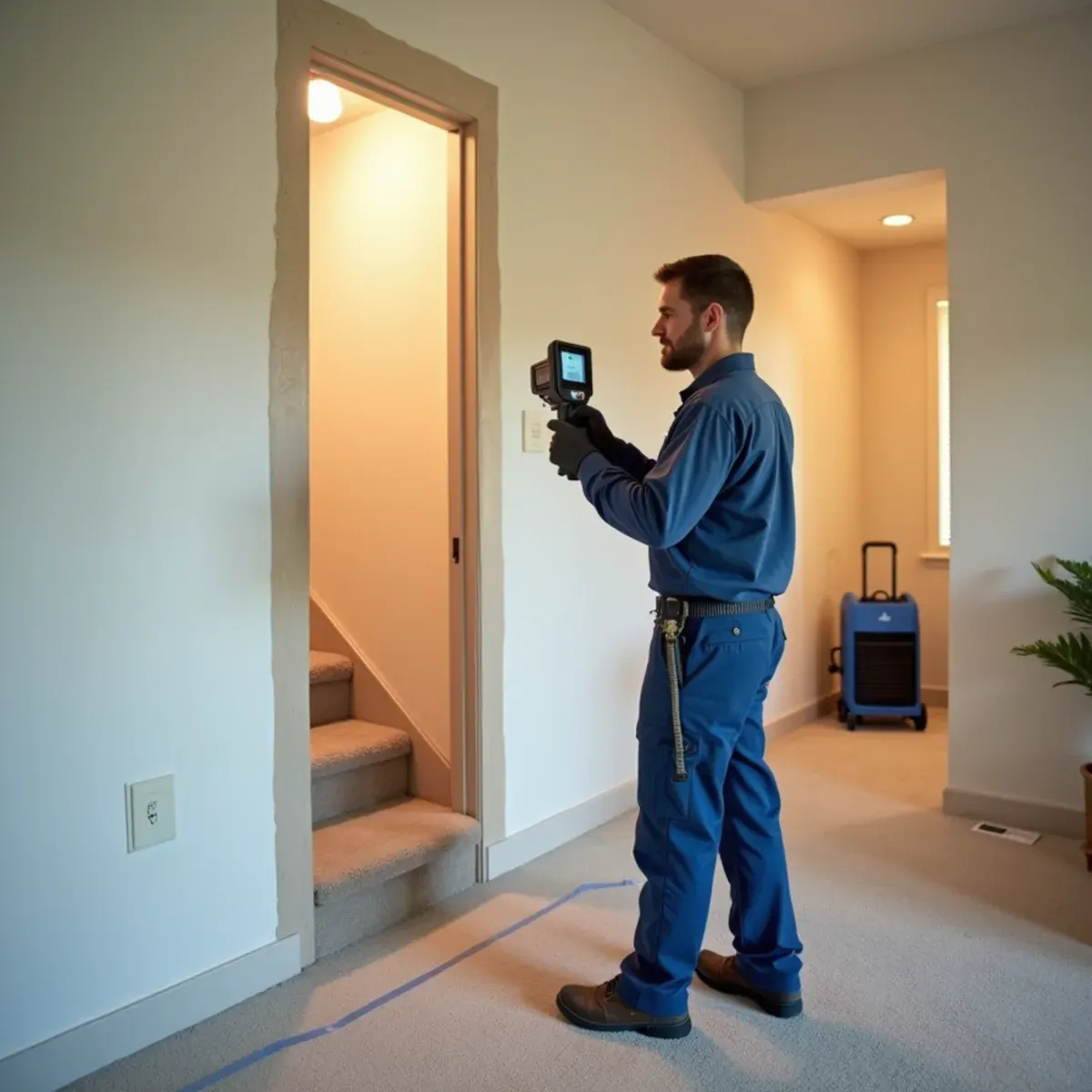
Signal Hill is a 365-foot hill completely surrounded by Long Beach, and gravity does most of the damage. Water here doesn't pond and soak in the way it does on flat ground. It accelerates down engineered lots, loads up against a retaining wall or a terrace drain, and goes through the first weak point it finds. Inside, that shows as a wet band on a lower-level wall built against concrete, where the board is furred off the wall and the cavity behind it stays wet long after the paint looks and feels dry.
The stock is split by the oil field. The 1921 Alamitos No. 1 discovery set off one of the most productive booms in American history, and active wells and oilfield equipment still sit intermixed with housing. Much of the newer hillside construction went up on former oil land, on steep lots with retaining walls and drainage systems that have to keep working. Older 1920s cottages down the slope carry brittle early wall assemblies. Marine influence over all of it means drying takes longer here than the same job would inland.
What Signal Hill Changes About Drywall Repair
1Furred walls hide wet framing
Lower-level rooms on Signal Hill's steep lots often have drywall furred off a concrete retaining wall. Water behind that assembly has no airflow and no exit. The painted face dries first and reads fine, while the furring strips and the back of the board stay soaked. Those walls come open. Reading them from the room side alone will mislead you and cost you the repair twice.
2Marine air stretches the schedule
The hill sits in the marine layer, and outdoor air here often carries more moisture in than it takes out. Drying is a sealed, dehumidified operation, and it takes longer than the same loss would inland. We would rather tell you three or four equipment days up front than pull equipment early and have you find staining behind fresh paint in March.
3Steep lots complicate staging
Narrow driveways, retaining walls and stepped entries make hauling full sheets in and wet debris out a real part of the job on Signal Hill. Equipment placement, hose runs and haul-out routes get planned before demolition starts. Where oilfield infrastructure sits close to housing, the access route has to respect that too, which sometimes means a longer carry.
How the Work Runs
The method is the same one we use on every drywall repair job, documented to the IICRC S500:2025 standard. Here it is in short — the full drywall water damage repair process explains each stage in detail.
- Meter the wall first
- Decide dry-in-place or remove
- Open the cavity, not the wall
- Cut to a stud and a seam line
- Clear the cavity and dry the framing
- Tape, texture, prime, paint
The Signal Hill Background Worth Knowing
On these lots the drainage is engineered rather than natural. Terrace drains catch water partway down a slope, v-ditches carry it around a pad instead of across it, and retaining walls have weep holes with a gravel drain behind them so pressure never builds in the soil. All of that works until something clogs. Then a retaining wall stops being a wall and starts being a dam, and saturated soil pushes water through the joints and into whatever sits on the other side, which is usually a garage, a storage room, or the back of a lower level.
There is more on the housing stock, drainage and plumbing history of this city on our water damage restoration in Signal Hill page.
Signal Hill at a glance
- Dominant construction era
- 1920–2005
- Foundation type
- mixed on grade
- Supply piping found here
- original 1920s piping, galvanized steel, modern PEX in newer hillside builds
- Drain line materials
- cast iron, ABS
- Terrain and water table
- hillside-mixed, deep water table
- Most common local failure
- slope drainage and retaining-wall failures on steep lots, where water arrives with velocity rather than ponding
- Highest-value local prevention
- keeping terrace drains, v-ditches and retaining-wall weeps clear before the first storm
What It Costs in Signal Hill
We do not quote a number over the phone before seeing the property — anyone who does is guessing. The variables that actually move the price on a drywall repair job are how much board comes out, cut height and seam count, texture type and match difficulty, and they are broken down in full on the drywall water damage repair page. The assessment and the written estimate are free anywhere in Signal Hill, day or night, with no obligation.
Drywall Repair Questions from Signal Hill Homeowners
Because water on Signal Hill moves with speed rather than sitting still. It runs down the lot, loads up against whatever retaining wall or terrace drain is in its path, and pushes through at the uphill face of the lower level. The downhill walls never see it. If that wall's drywall is furred off concrete, the framing behind can be soaked while the paint looks untouched, which is why we open it instead of trusting a surface reading.
No, and that assumption is why a lot of walls come out that did not need to. Gypsum board that got clean water, still reads firm under thumb pressure, and is coming down in moisture content day over day can usually be dried in place through the cavity. What forces removal is contaminated water, a core that has softened or swelled, visible growth on the paper, or insulation behind it that holds moisture against the board. We take readings before we answer that question.
Usually two feet or four feet above the floor, measured level across the whole run rather than following the stain. Board comes in four-foot widths, so a cut at either height lands the new seam where a factory edge would sit, which is far easier to hide than a seam floating mid-wall. The cut also has to end at the center of a stud on each side, so the patch has something to fasten to. Cutting to the shape of the damage looks thrifty and finishes badly.
Start uphill. On this hill the cause is almost never at the place the water got in. Walk the slope above your pad and check the terrace drains, the v-ditch and the retaining wall weep holes. A weep that has been painted or stuccoed over is common and completely disables the drain behind the wall. Then look at where the uphill property discharges. Fixing the entry point without finding the redirect just moves the problem a few feet.