
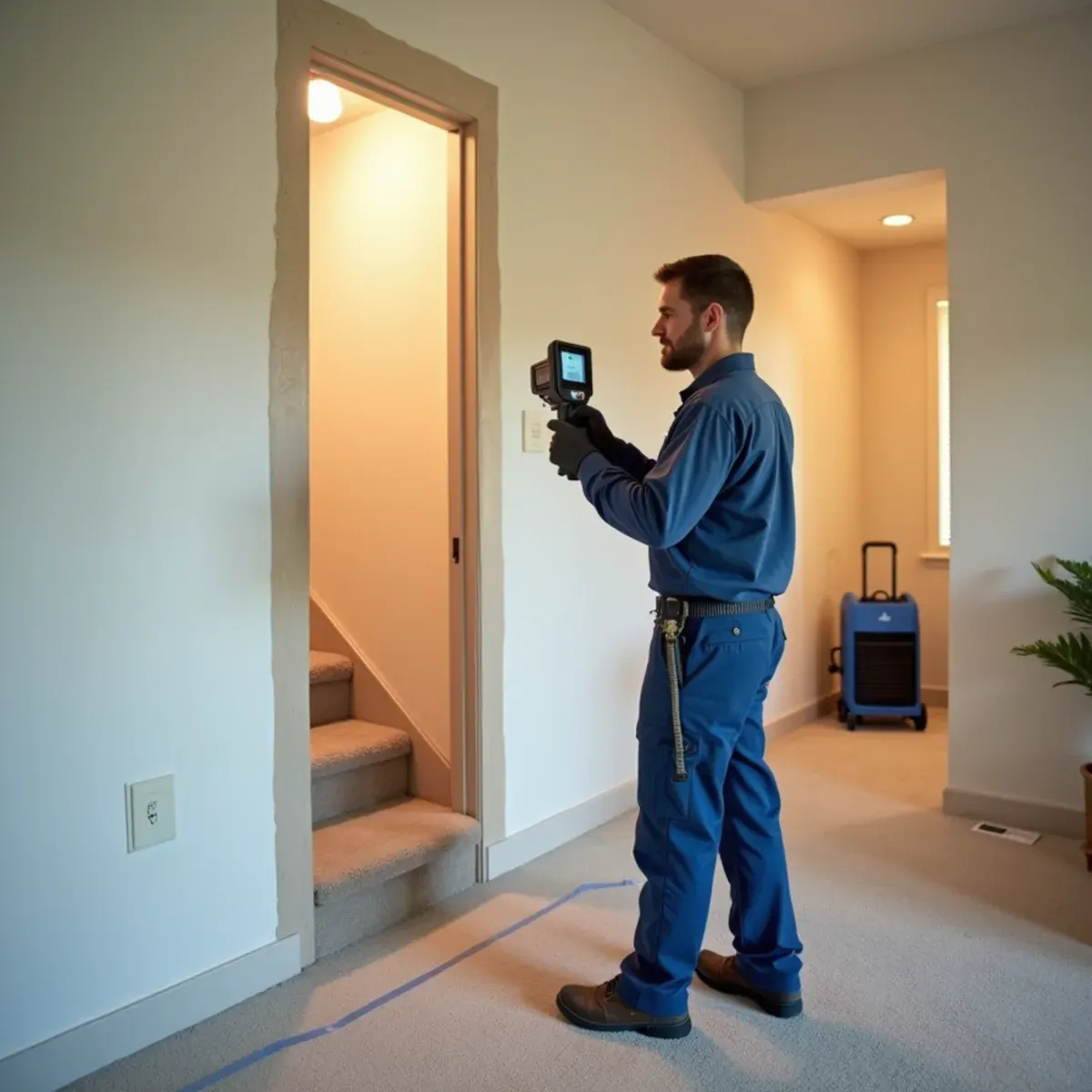
There is no single Long Beach answer, and any company that gives you one has not worked here much. In Bluff Park and California Heights the walls are 1920s lath and plaster that holds water long after the room feels dry to the touch. In Naples the ground is filled land with a shallow water table, so the bottom of a wall is a different conversation from the top of it. Out in El Dorado Park Estates and Los Altos the postwar tracts behave almost exactly like Cypress does. One city, three genuinely different scopes, decided by the address.
Belmont Shore adds a logistics problem rather than a material one. Narrow lots, no driveways, cars parked bumper to bumper along the street. Every sheet of board comes in by hand and every piece of wet gypsum goes out the same way, past a neighbor's front window and down a walkway that was not built for it. It stretches the day and it changes how we stage equipment. We dispatch to Long Beach as fast as conditions allow, and the first thing we settle on arrival is what the wall is actually made of before anyone decides to cut it.
What Long Beach Changes About Drywall Repair
1Wall material changes by neighborhood
A 1926 plaster wall in California Heights and a 1958 gypsum wall in Los Altos are different restoration problems with different timelines. Plaster holds far more water and releases it slowly, so it often dries in place where board would have been cut. We identify the material at the first opening and scope from there rather than from the year on the tax record.
2Naples sits on filled, damp ground
The canal-front lots in Naples are built on fill with the water table close beneath, so wall bases there carry moisture that has nothing to do with your loss. We take a control reading elsewhere in the house before setting a cut height, and when new board goes in we keep the bottom edge off the slab so it is not standing in permanent damp.
3Belmont Shore hauling in and out by hand
On the narrow streets off Second, there is nowhere to park a truck and nowhere to stage material. Board comes in through the front door on shoulders, wet gypsum goes out in bags the same way, and hose runs stretch to whatever curb we can reach. The repair is standard. The labor hours are not, and we put that in the estimate rather than in a surprise.
How the Work Runs
The method is the same one we use on every drywall repair job, documented to the IICRC S500:2025 standard. Here it is in short — the full drywall water damage repair process explains each stage in detail.
- Meter the wall first
- Decide dry-in-place or remove
- Open the cavity, not the wall
- Cut to a stud and a seam line
- Clear the cavity and dry the framing
- Tape, texture, prime, paint
The Long Beach Background Worth Knowing
The postwar tracts around El Dorado Park, Los Altos, and the neighborhoods near the Cypress border were built in the same era and largely the same way as the housing in our home city. Single-story slab construction, plumbing routed under the concrete, and a fifty-to-seventy-year age on the supply lines.
There is more on the housing stock, drainage and plumbing history of this city on our water damage restoration in Long Beach page.
Long Beach at a glance
- Dominant construction era
- 1920–1980
- Foundation type
- mixed on grade
- Supply piping found here
- original 1920s piping, galvanized steel, under-slab copper
- Drain line materials
- cast iron, clay
- Terrain and water table
- coastal-flat, shallow water table
- Most common local failure
- the approach changing entirely by neighborhood — a 1926 plaster wall and a 1955 drywall wall are different restoration problems
- Highest-value local prevention
- identifying the construction type before anyone starts cutting
What It Costs in Long Beach
We do not quote a number over the phone before seeing the property — anyone who does is guessing. The variables that actually move the price on a drywall repair job are how much board comes out, cut height and seam count, texture type and match difficulty, and they are broken down in full on the drywall water damage repair page. The assessment and the written estimate are free anywhere in Long Beach, day or night, with no obligation.
Drywall Repair Questions from Long Beach Homeowners
Probably not. Her postwar house has gypsum board, which wets quickly, dries in days and gets cut when the paper is gone. Your 1920s house most likely has plaster over wood lath, which absorbs several times as much water and gives it up slowly, so it often stays in place and dries where board would have come out. The failure to watch for in yours is the plaster releasing from the lath while the painted face still looks perfect.
No, and that assumption is why a lot of walls come out that did not need to. Gypsum board that got clean water, still reads firm under thumb pressure, and is coming down in moisture content day over day can usually be dried in place through the cavity. What forces removal is contaminated water, a core that has softened or swelled, visible growth on the paper, or insulation behind it that holds moisture against the board. We take readings before we answer that question.
Usually two feet or four feet above the floor, measured level across the whole run rather than following the stain. Board comes in four-foot widths, so a cut at either height lands the new seam where a factory edge would sit, which is far easier to hide than a seam floating mid-wall. The cut also has to end at the center of a stud on each side, so the patch has something to fasten to. Cutting to the shape of the damage looks thrifty and finishes badly.
All of it, with the fastest response to East Long Beach — El Dorado Park Estates, Los Altos, and the neighborhoods near the Cypress border, which are typically twenty to twenty-five minutes. Coastal and downtown areas run a little longer, and we will give you a realistic ETA when you call.