
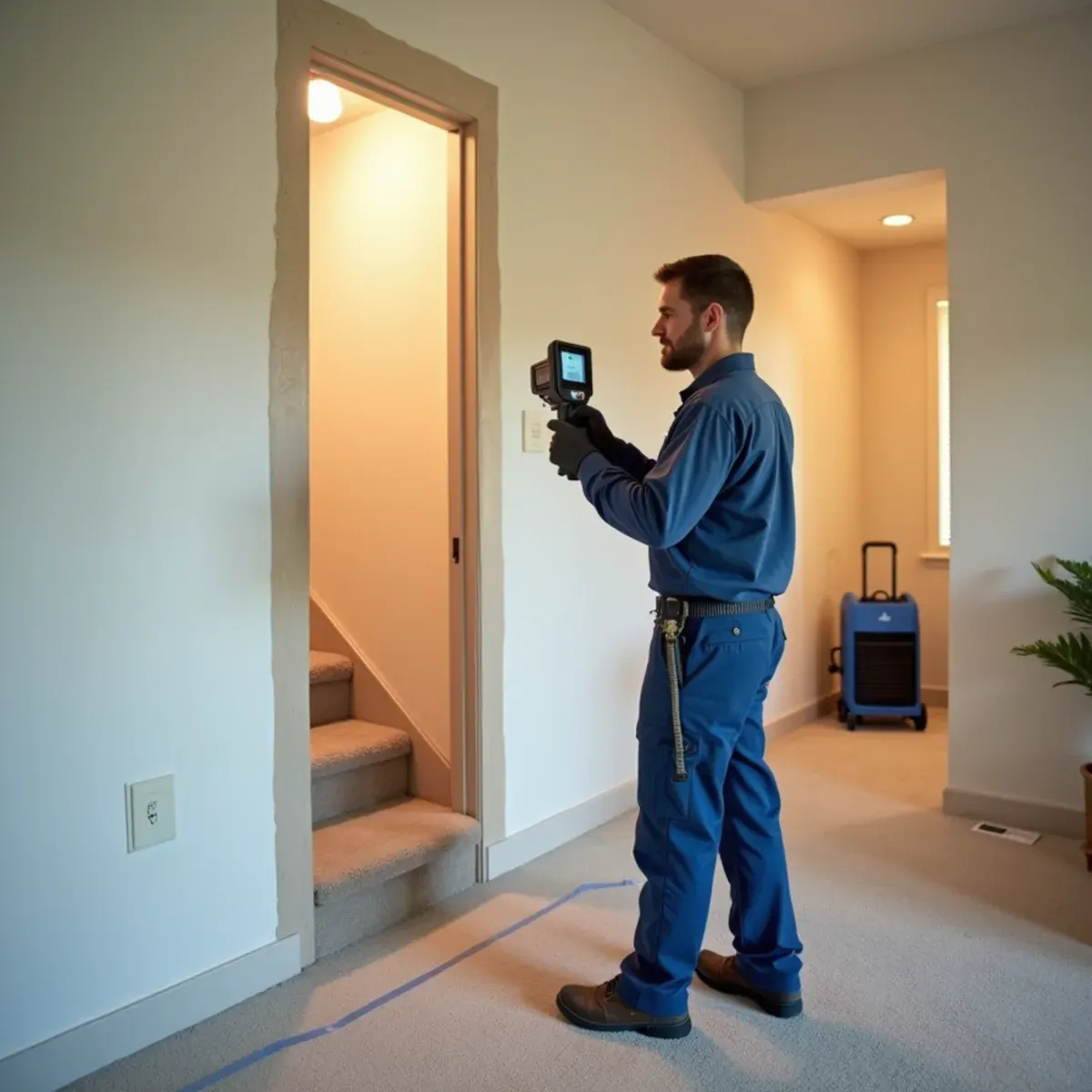
The water that comes out of a seventy-year-old galvanized line is not clear. It is rust colored, loaded with scale, and it stains gypsum in a way that laughs at a coat of latex. Paint over it and the stain ghosts back through within a week or two, usually right after the furniture has been put back. That is why stain-blocking primer is not an upsell on a Lakewood job, it is the only thing standing between the repair and a callback. Shellac-based or a solid oil-based sealer, on every affected surface, before any finish coat goes anywhere near it.
The rest of it follows from how this city got built. Roughly 17,500 homes went up between 1950 and 1953 at a pace reaching a hundred a day, to a handful of plans. Kitchen, bath and laundry share plumbing walls in a tight core, so one failed fitting can wet three rooms through the same cavity and one well-placed opening can often reach all of it. The original board tends to be thinner than modern half-inch and brittle at a fresh cut, so we take the opening back to material that still holds an edge instead of feathering into crumbs.
What Lakewood Changes About Drywall Repair
1Rust stains need a sealing primer
Galvanized steel that has been in service since the Eisenhower administration produces water full of iron and scale. Those stains are soluble and they migrate straight through latex primer and paint. We seal with a shellac or oil-based stain blocker over every stained area, including the framing face where it shows, then finish. Skip it and the brown outline reappears through fresh paint within weeks.
2One opening reaches the shared wet core
These homes were built with kitchen, bathroom and laundry stacked around a common plumbing wall. When a fitting lets go, all three rooms can be wet from one cavity. Rather than cutting three separate holes from three separate rooms, we usually take one well-placed opening on the side with the least finish work and dry and repair the core from there.
3Original board is thin and brittle
Board hung during the 1950 to 1953 build tends to be thinner than what is sold now and has gone chalky at the edges. Cut right at the wet line and the surrounding material crumbles while you are taping, which is how a small repair turns into a wall. We go back to sound board, land the cut on a stud, and get a seam that stays flat.
How the Work Runs
The method is the same one we use on every drywall repair job, documented to the IICRC S500:2025 standard. Here it is in short — the full drywall water damage repair process explains each stage in detail.
- Meter the wall first
- Decide dry-in-place or remove
- Open the cavity, not the wall
- Cut to a stud and a seam line
- Clear the cavity and dry the framing
- Tape, texture, prime, paint
The Lakewood Background Worth Knowing
Galvanized steel supply piping was standard when Lakewood was built, and it fails in a specific and predictable way. The zinc coating protecting the steel wears through from the inside, the steel corrodes, and scale builds up on the interior wall — narrowing the pipe over decades. As the diameter shrinks, water velocity and turbulence increase, which accelerates the erosion at elbows and fittings until a thin spot lets go.
There is more on the housing stock, drainage and plumbing history of this city on our water damage restoration in Lakewood page.
Lakewood at a glance
- Dominant construction era
- 1950–1953
- Foundation type
- slab on grade
- Supply piping found here
- original galvanized steel
- Drain line materials
- cast iron
- Terrain and water table
- flat, moderate water table
- Most common local failure
- seventy-year-old galvanized supply lines letting go at a scaled, eroded fitting
- Highest-value local prevention
- repiping while walls are already open for a repair, rather than as a separate project later
What It Costs in Lakewood
We do not quote a number over the phone before seeing the property — anyone who does is guessing. The variables that actually move the price on a drywall repair job are how much board comes out, cut height and seam count, texture type and match difficulty, and they are broken down in full on the drywall water damage repair page. The assessment and the written estimate are free anywhere in Lakewood, day or night, with no obligation.
Drywall Repair Questions from Lakewood Homeowners
Only if the board behind it is genuinely dry and structurally sound, which we confirm with a meter and by feel rather than by eye. If it is, the answer is sealing rather than painting. Rust-loaded water from old galvanized leaves a soluble stain that comes back through ordinary primer and paint, so we seal it with a shellac or oil-based blocker first, then texture and paint. If the board is soft, sagging or the paper has released, no primer saves it.
No, and that assumption is why a lot of walls come out that did not need to. Gypsum board that got clean water, still reads firm under thumb pressure, and is coming down in moisture content day over day can usually be dried in place through the cavity. What forces removal is contaminated water, a core that has softened or swelled, visible growth on the paper, or insulation behind it that holds moisture against the board. We take readings before we answer that question.
Usually two feet or four feet above the floor, measured level across the whole run rather than following the stain. Board comes in four-foot widths, so a cut at either height lands the new seam where a factory edge would sit, which is far easier to hide than a seam floating mid-wall. The cut also has to end at the center of a stud on each side, so the patch has something to fasten to. Cutting to the shape of the damage looks thrifty and finishes badly.
Have it assessed. Seventy-year-old galvanized has exceeded any reasonable service life, and declining pressure or rust-colored water means it is well along. If a repair is already opening walls, that is the cheapest moment you will ever get to repipe — the demolition and patching are already in the scope.