
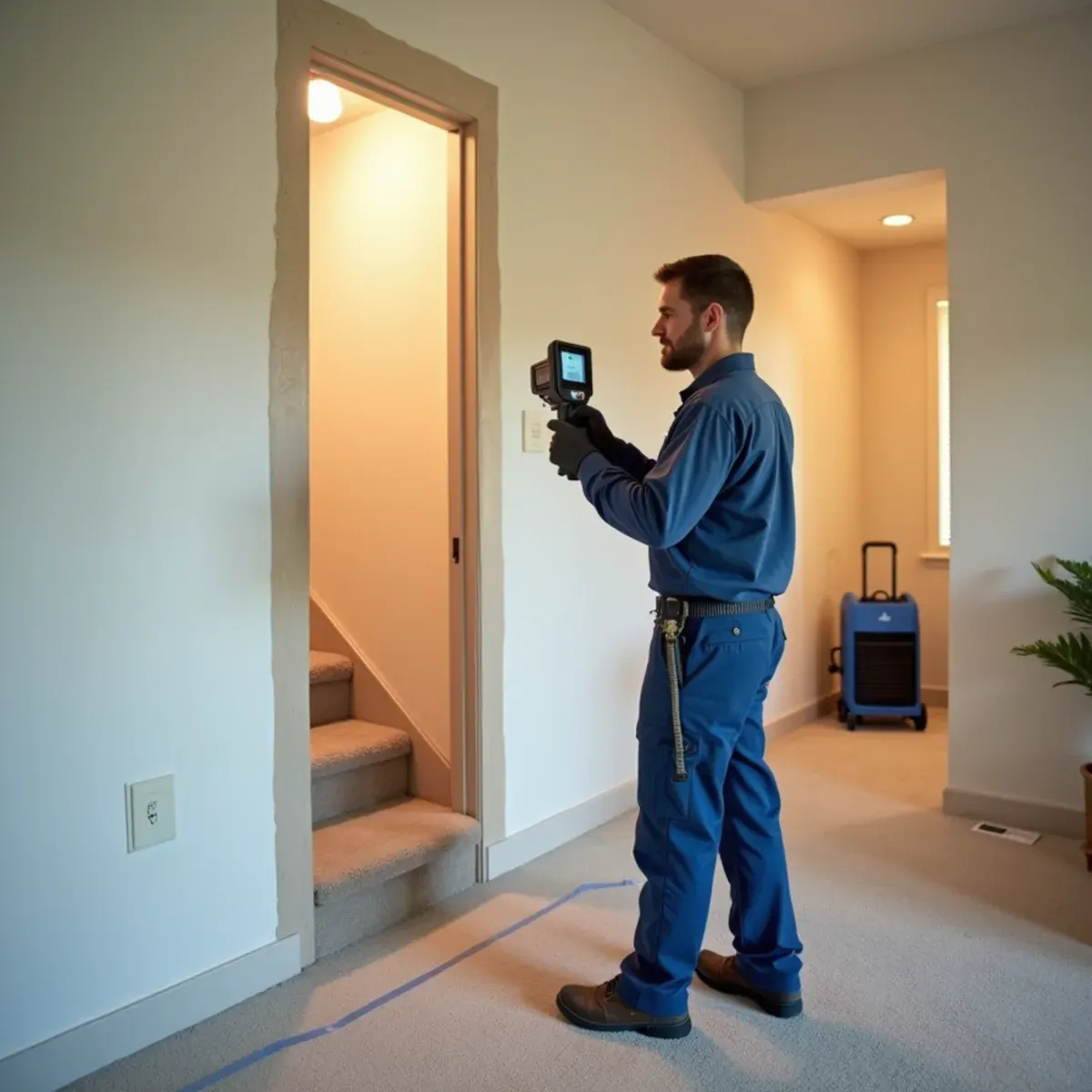
The call we get most in Bellflower comes from the downstairs unit. Water from the apartment above finds the ceiling, the paper face holds it like a bladder, and a low, heavy bulge forms over the living room. Do not push a broom handle into it and stand under it. That water needs to come down on purpose, from the side, into a container, with the room cleared first. Once it's relieved, the assembly can be opened and dried instead of collapsing across the furniture at two in the morning.
The rest of Bellflower is small postwar houses on small lots — dairy and orchard land, named for the Bellflower apple, that filled fast between 1940 and 1960 — where original galvanized supply and cast-iron laterals are eighty years old in places and failing in the same decade. That's older than nearly anything in Orange County. In the multi-family buildings added since, ceilings between units are often rated assemblies with five-eighths board, and putting one back means putting the same material and the same detailing back, not whatever's on the truck.
What Bellflower Changes About Drywall Repair
1Relieve a bulging ceiling on purpose
Paper-faced gypsum holds water like a sack. A ceiling that's sagging is carrying weight it was never designed for, and it fails all at once. The right move is controlled relief from the side, over a container, with the room cleared and the power to that circuit off. Done deliberately, it's a small hole. Left alone, it's the whole ceiling on your floor.
2Rated ceilings between units go back rated
Bellflower has added a lot of multi-family housing, and the assembly between one unit and the one below is often a rated system with five-eighths board and specific fastening. Putting it back means the same material and the same detail, documented. A cheaper sheet in that ceiling is a problem that surfaces at the next inspection, or at the next claim on the building.
3Eighty-year-old systems failing together
Housing here filled in between 1940 and 1960 on old dairy and orchard land, and plenty of it still runs original galvanized supply and cast-iron laterals. That's older than nearly anything in Orange County. When one line fails, the others are the same age and have seen the same water, which is why we look at the whole run of wall rather than just the wet patch.
How the Work Runs
The method is the same one we use on every drywall repair job, documented to the IICRC S500:2025 standard. Here it is in short — the full drywall water damage repair process explains each stage in detail.
- Meter the wall first
- Decide dry-in-place or remove
- Open the cavity, not the wall
- Cut to a stud and a seam line
- Clear the cavity and dry the framing
- Tape, texture, prime, paint
The Bellflower Background Worth Knowing
Galvanized steel was the standard supply pipe when Bellflower was being built, and it fails from the inside out. The zinc lining wears through, the steel underneath corrodes, and scale builds on the interior wall until the pipe is a fraction of its original diameter. Narrower pipe means faster, more turbulent water, which chews at elbows and threaded fittings until one of them lets go. Hot lines corrode faster than cold, which is why hot water pressure is usually the first thing to drop. Eighty years is well past any service life anyone intended when this was installed.
There is more on the housing stock, drainage and plumbing history of this city on our water damage restoration in Bellflower page.
Bellflower at a glance
- Dominant construction era
- 1940–1960
- Foundation type
- slab on grade
- Supply piping found here
- original galvanized steel, early copper
- Drain line materials
- cast iron
- Terrain and water table
- flat, moderate water table
- Most common local failure
- original galvanized supply lines and cast-iron laterals failing together in the same decade
- Highest-value local prevention
- scoping the sewer lateral, which on a house this age has usually never been looked at
What It Costs in Bellflower
We do not quote a number over the phone before seeing the property — anyone who does is guessing. The variables that actually move the price on a drywall repair job are how much board comes out, cut height and seam count, texture type and match difficulty, and they are broken down in full on the drywall water damage repair page. The assessment and the written estimate are free anywhere in Bellflower, day or night, with no obligation.
Drywall Repair Questions from Bellflower Homeowners
In a Bellflower duplex or apartment building, the damage and the source often sit under two different policies — yours for contents, the building's or the upstairs unit's for the leak itself. We don't decide that, but we document it properly: photos of the ceiling before relief, moisture readings, the assembly type and an itemized scope. We bill insurance directly and will work with both adjusters. Getting the documentation right on day one is what keeps that conversation short.
No, and that assumption is why a lot of walls come out that did not need to. Gypsum board that got clean water, still reads firm under thumb pressure, and is coming down in moisture content day over day can usually be dried in place through the cavity. What forces removal is contaminated water, a core that has softened or swelled, visible growth on the paper, or insulation behind it that holds moisture against the board. We take readings before we answer that question.
Usually two feet or four feet above the floor, measured level across the whole run rather than following the stain. Board comes in four-foot widths, so a cut at either height lands the new seam where a factory edge would sit, which is far easier to hide than a seam floating mid-wall. The cut also has to end at the center of a stud on each side, so the patch has something to fasten to. Cutting to the shape of the damage looks thrifty and finishes badly.
It is the most common gap we see here. A cast iron lateral that age has corroded along the bottom, the joints have shifted, and the parkway trees on most Bellflower streets have had seventy years to find them. A camera inspection costs a small fraction of a sewage remediation, and on a line that has never been scoped it usually finds something worth knowing about before it finds you at two in the morning.