
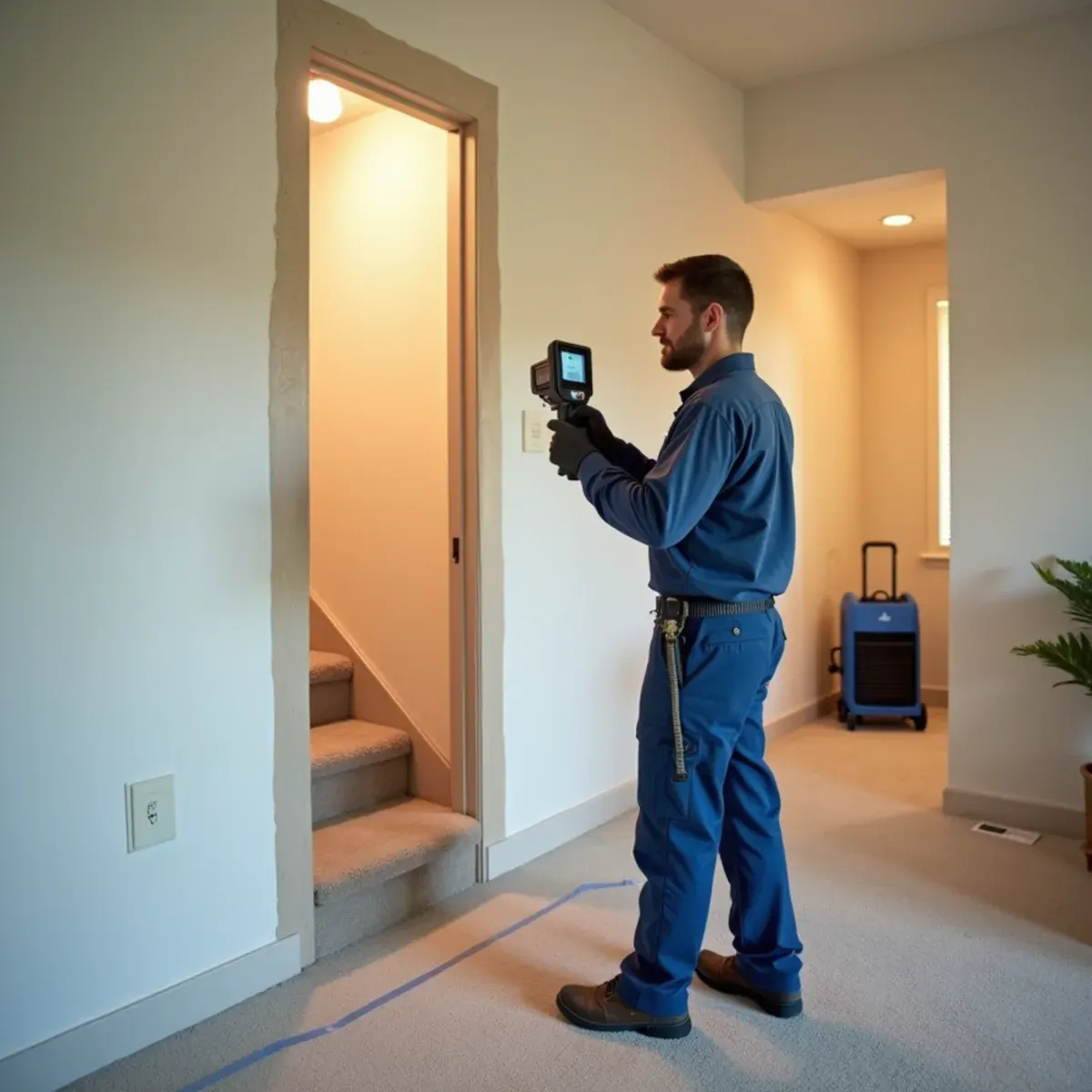
Downey is a 1950s showcase and it shows in the trim. Jean Vandruff's Cinderella Homes brought turrets, pointed roofs, scalloped detail and interior millwork nobody produces anymore. Under all of it is standard 1950s construction — slab, wood framing, galvanized supply — which fails the way standard 1950s construction fails. The difference is what sits in front of the wet drywall. A diamond-paned cabinet, a shaped valance or an original coved ceiling edge is worth extra hours of drying equipment to avoid removing, and that's usually a trade worth paying for.
So we push the dry-in-place option harder in Downey than in most cities. Cavity ventilation through discreet openings low on the wall, behind where the baseboard sits, buys a real chance at keeping the finished surfaces intact. When board does have to come out, we cut to a stud line and stop at a trim edge rather than running the cut through decorative work. Homes near the old aerospace campus and the Columbia Memorial Space Center site follow the same rule — plain construction underneath, detailing on top that's worth protecting.
What Downey Changes About Drywall Repair
1Cavity venting behind the baseboard line
When the water is clean and caught early, we would rather ventilate the cavity through small openings low on the wall, where the baseboard will cover them, than cut out board sitting behind original detailing. It takes longer and needs more equipment days on site. In a Cinderella Home with intact interior woodwork, that trade is usually the right call and we'll say so.
2Cut lines stop at the trim edge
When board does have to come out, the cut runs to a stud and stops where a piece of trim ends, not through a shaped valance, a coved ceiling edge or a diamond-paned cabinet surround. Nobody mills that detailing anymore. Planning the cut around it takes an extra half hour and saves a piece you cannot buy back at any price.
3Plain 1950s guts under the styling
Under the turrets and the gingerbread, Downey is standard 1950s construction: slab, wood frame, galvanized supply. It fails the same way Norwalk and Bellflower fail, on roughly the same schedule. The only difference is what's in front of the wet wall, which is exactly why the demolition plan matters more in this city than demolition speed does.
How the Work Runs
The method is the same one we use on every drywall repair job, documented to the IICRC S500:2025 standard. Here it is in short — the full drywall water damage repair process explains each stage in detail.
- Meter the wall first
- Decide dry-in-place or remove
- Open the cavity, not the wall
- Cut to a stud and a seam line
- Clear the cavity and dry the framing
- Tape, texture, prime, paint
The Downey Background Worth Knowing
The instinct on a wet wall is to open it, and sometimes that is correct. But IICRC S500:2025 is built around restoring rather than replacing wherever the drying goals can genuinely be met, and on a house with original arched casings and applied gingerbread, meeting those goals is worth some patience. We would rather spend three extra days with equipment running than pull a run of trim that would have to be milled from scratch to come back. The standard supports that choice and so does the arithmetic on the estimate, because custom millwork is not cheap and matching a fifties profile is not quick.
There is more on the housing stock, drainage and plumbing history of this city on our water damage restoration in Downey page.
Downey at a glance
- Dominant construction era
- 1950–1965
- Foundation type
- slab on grade
- Supply piping found here
- galvanized steel, under-slab copper
- Drain line materials
- cast iron
- Terrain and water table
- flat, moderate water table
- Most common local failure
- 1950s slab and galvanized failures in houses whose decorative woodwork makes careful, low-demolition drying worth paying for
- Highest-value local prevention
- drying in place wherever readings allow, because the trim and detailing on these houses cannot be bought
What It Costs in Downey
We do not quote a number over the phone before seeing the property — anyone who does is guessing. The variables that actually move the price on a drywall repair job are how much board comes out, cut height and seam count, texture type and match difficulty, and they are broken down in full on the drywall water damage repair page. The assessment and the written estimate are free anywhere in Downey, day or night, with no obligation.
Drywall Repair Questions from Downey Homeowners
Often yes, if we get there early and the water is clean. We can ventilate the cavity through openings low on the wall, hidden behind the baseboard line, and dry it without touching the finished face. That takes more equipment days than cutting would. If the board does have to come out, the cut stops at the edge of the trim, and the pieces come off whole and go back. Nobody reproduces that Vandruff detailing, so we work around it.
No, and that assumption is why a lot of walls come out that did not need to. Gypsum board that got clean water, still reads firm under thumb pressure, and is coming down in moisture content day over day can usually be dried in place through the cavity. What forces removal is contaminated water, a core that has softened or swelled, visible growth on the paper, or insulation behind it that holds moisture against the board. We take readings before we answer that question.
Usually two feet or four feet above the floor, measured level across the whole run rather than following the stain. Board comes in four-foot widths, so a cut at either height lands the new seam where a factory edge would sit, which is far easier to hide than a seam floating mid-wall. The cut also has to end at the center of a stud on each side, so the patch has something to fasten to. Cutting to the shape of the damage looks thrifty and finishes badly.
Usually, yes. We go into the wall cavity through small ports low on the wall, hidden behind shoe molding or inside a closet, and dry from the inside out rather than taking the finished face off. That takes longer and needs more equipment than gutting the wall would, which is exactly the trade we think is worth making on a house with millwork that cannot be bought. Where it will not work, we tell you early.