
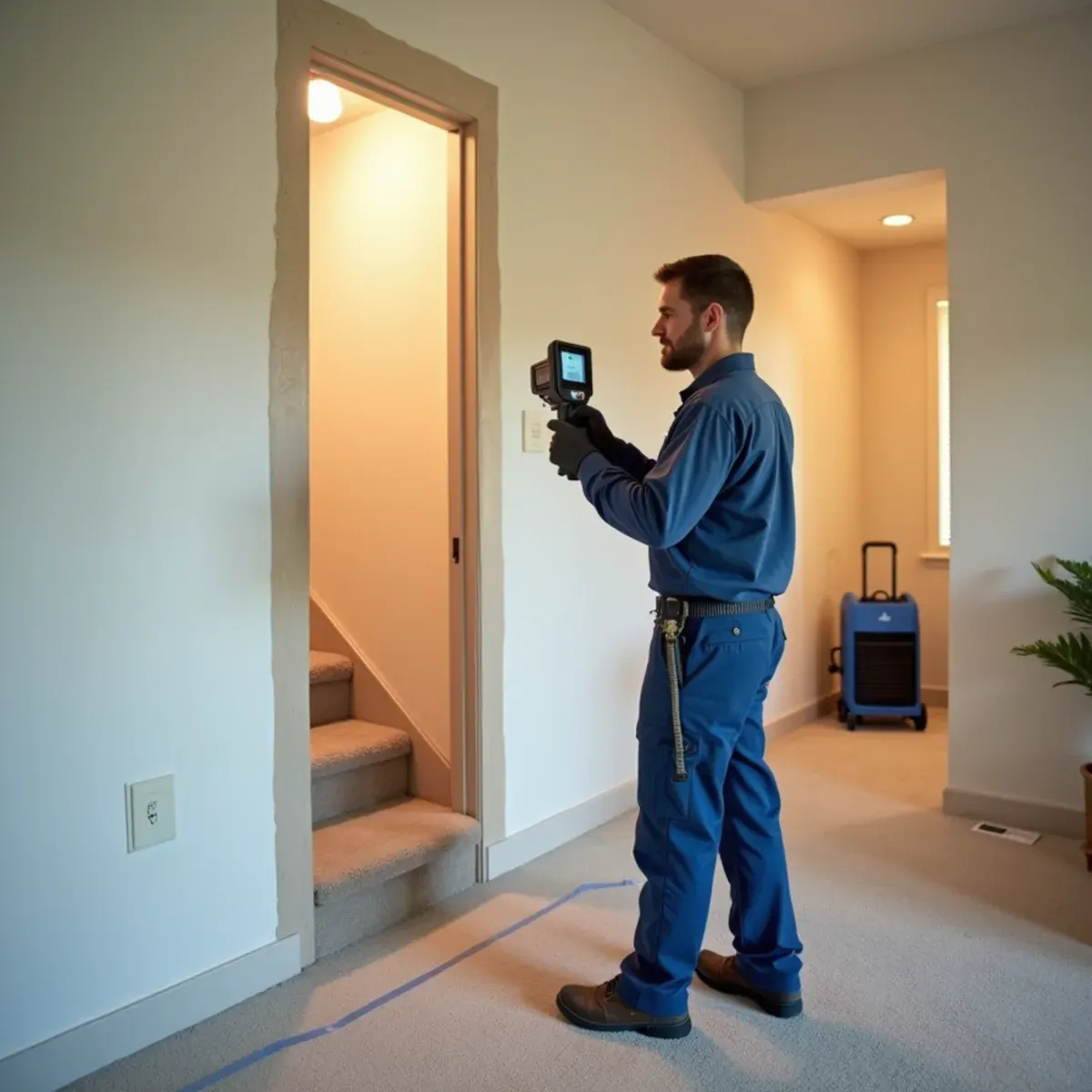
It usually starts as a faint damp patch on a hallway wall, low and easy to blame on a kid's spill. Then it spreads upward overnight. In Norwalk that pattern almost always means a pinhole in original galvanized pipe inside the cavity, spraying against the back of the board. Homes here went up between 1945 and 1960, farmland to full city in about fifteen years, and a lot of those supply lines are the ones the builder installed. Decades of internal scaling thin them from the inside until they let go.
Norwalk lots are small and the houses sit close to the fence line, which changes the repair more than people expect. There is often not enough side-yard room to work from outside, so the wall gets opened from the interior and the cut runs to the nearest stud on each side. Ceilings deserve caution too — anything sprayed before the early 1980s should be tested before it's disturbed. And with the San Gabriel River channel along the western edge, storm-season calls out that way bring exterior water at the slab edge instead.
What Norwalk Changes About Drywall Repair
1Small lots push the work inside
Norwalk homes were built fast and economically on tight lots, often with only a few feet of side yard. There is rarely room to open a wall from outside and work in comfort, so the cut happens on the interior face and we protect the room instead. That means containment, floor protection and a plan for where the dust goes before the first blade touches the board.
2Test sprayed ceilings before disturbing them
Ceilings sprayed before the early 1980s should be sampled before anyone cuts, scrapes or even sets a fan blowing on them. That's true across the region, but Norwalk's housing sits squarely in the years it matters. Testing takes a day and costs far less than mishandling the material. If the result comes back clean, the ceiling gets cut like any other. If not, the scope changes and we tell you plainly.
3Plan around the repipe, not before it
A pinhole in original galvanized is a symptom, not a one-time event. Scaling thins the whole system, and the next failure is usually within a couple of years. If you're considering a repipe, say so before we close anything up. A plumber's access holes and our repair openings can be the same openings, and that's one round of patching instead of two.
How the Work Runs
The method is the same one we use on every drywall repair job, documented to the IICRC S500:2025 standard. Here it is in short — the full drywall water damage repair process explains each stage in detail.
- Meter the wall first
- Decide dry-in-place or remove
- Open the cavity, not the wall
- Cut to a stud and a seam line
- Clear the cavity and dry the framing
- Tape, texture, prime, paint
The Norwalk Background Worth Knowing
The homes built in Norwalk during the postwar surge were built to be affordable and built fast, which was exactly the right priority at the time. Seventy years later, some of those choices have consequences.
There is more on the housing stock, drainage and plumbing history of this city on our water damage restoration in Norwalk page.
Norwalk at a glance
- Dominant construction era
- 1945–1960
- Foundation type
- slab on grade
- Supply piping found here
- original galvanized steel
- Drain line materials
- cast iron
- Terrain and water table
- flat, moderate water table
- Most common local failure
- original galvanized supply lines failing after decades of internal scaling and erosion at fittings
- Highest-value local prevention
- clearing yard and area drains before the season, since small lots leave little ground between the street and the house
What It Costs in Norwalk
We do not quote a number over the phone before seeing the property — anyone who does is guessing. The variables that actually move the price on a drywall repair job are how much board comes out, cut height and seam count, texture type and match difficulty, and they are broken down in full on the drywall water damage repair page. The assessment and the written estimate are free anywhere in Norwalk, day or night, with no obligation.
Drywall Repair Questions from Norwalk Homeowners
If your leak came from original galvanized, the answer is usually yes, or at least decide before we close the wall. Scaling thins the whole system, so the next pinhole tends to arrive within a few years and often in a different room. A repiping crew needs its own openings at fixtures, valves and the water heater. If those get cut while our openings are still open, you pay for one round of tape, texture and paint instead of two.
No, and that assumption is why a lot of walls come out that did not need to. Gypsum board that got clean water, still reads firm under thumb pressure, and is coming down in moisture content day over day can usually be dried in place through the cavity. What forces removal is contaminated water, a core that has softened or swelled, visible growth on the paper, or insulation behind it that holds moisture against the board. We take readings before we answer that question.
Usually two feet or four feet above the floor, measured level across the whole run rather than following the stain. Board comes in four-foot widths, so a cut at either height lands the new seam where a factory edge would sit, which is far easier to hide than a seam floating mid-wall. The cut also has to end at the center of a stud on each side, so the patch has something to fasten to. Cutting to the shape of the damage looks thrifty and finishes badly.
If it is original galvanized from the postwar build-out, it has exceeded any reasonable service life. If you have had one failure, a second is a matter of when. The cheapest moment to repipe is while walls are already open for a repair — the demolition and patching are already in the scope.