
Signal Hill is a 365-foot hill completely surrounded by Long Beach, and almost nothing about moisture here behaves the way it does on flat ground. Water arrives with velocity instead of ponding. The newer hillside townhomes and condos around Panorama and Crescent Heights were built on former oil land through the 1990s and 2000s on steep engineered lots with retaining walls, terrace drains and v-ditches doing real structural work. When a wall's weep holes pack with soil and fines, that wall stops draining and starts holding moisture against the structure behind it. Growth follows on the uphill or below-grade side.
The older housing near Hilltop Park and Discovery Well Park runs back to the 1920s oil boom, with original piping and mixed foundations, so the failures there look nothing like the ones two streets uphill. The other constant is marine air — you're close enough to the water that fog sits on this hill regularly and drying takes longer than the same job would inland. We're about sixteen minutes east in Cypress and dispatch as fast as conditions allow.
What Signal Hill Changes About Mold Remediation
1Retaining-wall weeps that stopped weeping
A drained retaining wall is a system, and when the weeps or the drain rock behind them clog, hydrostatic pressure builds and moisture pushes through to whatever sits on the other side. On these lots that's often a garage wall, a lower-level bedroom or a stair well. Removing drywall fixes the symptom for a season. Restoring drainage is what actually ends it.
2Marine fog on an exposed hill
Sitting up above Long Beach with strong marine influence, this hill holds humid air longer than the inland cities we serve. That slows every natural drying process and means dehumidification has to be sized to real measured conditions. We verify with material readings before containment comes down, not on a schedule, because the ambient air here won't do the work for us.
3Two eras, two failure patterns
A 1920s house near Discovery Well Park has original galvanized and a mixed foundation. A 2003 townhome off Panorama Drive has PEX, a tight envelope and an HOA-governed common wall. The first leaks slowly into old plaster; the second traps a small leak inside a sealed cavity. We inspect for whichever building you actually own rather than a hillside average.
How the Work Runs
The method is the same one we use on every mold remediation job, documented to the IICRC S500:2025 standard. Here it is in short — the full mold remediation & removal process explains each stage in detail.
- Inspection and moisture source identification
- Testing where it is warranted
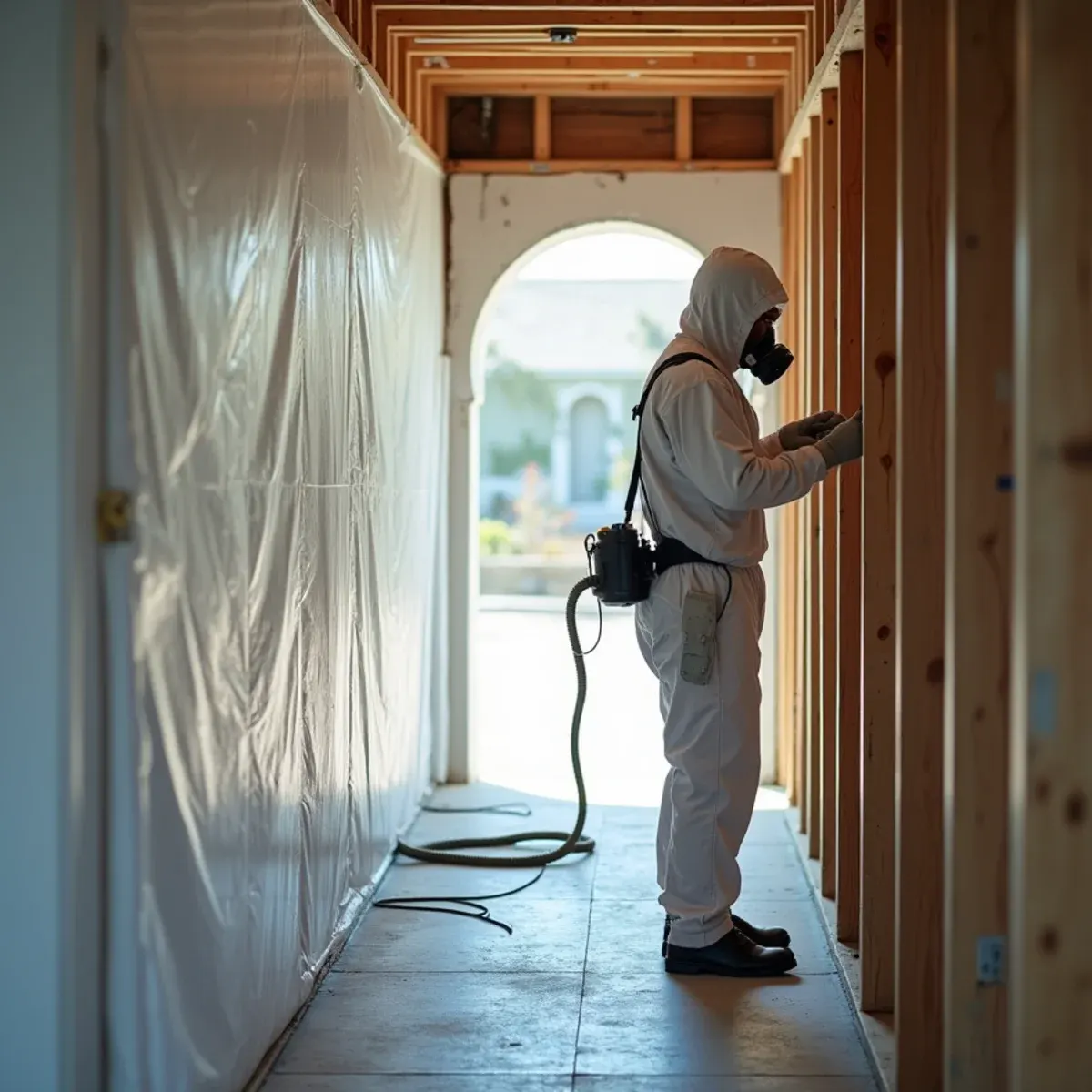
- Containment and negative pressure
- Removal of contaminated material
- HEPA cleaning and antimicrobial application
- Verification before containment comes down
The Signal Hill Background Worth Knowing
On these lots the drainage is engineered rather than natural. Terrace drains catch water partway down a slope, v-ditches carry it around a pad instead of across it, and retaining walls have weep holes with a gravel drain behind them so pressure never builds in the soil. All of that works until something clogs. Then a retaining wall stops being a wall and starts being a dam, and saturated soil pushes water through the joints and into whatever sits on the other side, which is usually a garage, a storage room, or the back of a lower level.
There is more on the housing stock, drainage and plumbing history of this city on our water damage restoration in Signal Hill page.
Signal Hill at a glance
- Dominant construction era
- 1920–2005
- Foundation type
- mixed on grade
- Supply piping found here
- original 1920s piping, galvanized steel, modern PEX in newer hillside builds
- Drain line materials
- cast iron, ABS
- Terrain and water table
- hillside-mixed, deep water table
- Most common local failure
- slope drainage and retaining-wall failures on steep lots, where water arrives with velocity rather than ponding
- Highest-value local prevention
- keeping terrace drains, v-ditches and retaining-wall weeps clear before the first storm
What It Costs in Signal Hill
We do not quote a number over the phone before seeing the property — anyone who does is guessing. The variables that actually move the price on a mold remediation job are square footage of affected material, where it is, containment complexity, and they are broken down in full on the mold remediation & removal page. The assessment and the written estimate are free anywhere in Signal Hill, day or night, with no obligation.
Mold Remediation Questions from Signal Hill Homeowners
Almost always the retaining or below-grade wall behind it. On these steep former oil-land lots, the wall relies on weep holes and drain rock to relieve water. When those silt up, moisture pushes through the wall and into the framing and drywall on your side. It shows on the uphill face and nowhere else, which is the giveaway. We'll remove and treat the affected material, but we'll also tell you the drainage has to be restored — often an HOA matter on these properties.
On a hard, non-porous surface like tile or glass, bleach handles surface growth. On drywall, wood, or anything porous it does not — the water content soaks in and can feed further growth while the chlorine stays on the surface. Porous material with real growth needs to be removed, not treated.
Usually not for visible growth with an obvious cause — you can see the problem and the work would be identical regardless of species. Testing is worthwhile when there is odor but nothing visible, when you need documentation for a claim or dispute, or when you want independent verification that the job was done right.
Start uphill. On this hill the cause is almost never at the place the water got in. Walk the slope above your pad and check the terrace drains, the v-ditch and the retaining wall weep holes. A weep that has been painted or stuccoed over is common and completely disables the drain behind the wall. Then look at where the uphill property discharges. Fixing the entry point without finding the redirect just moves the problem a few feet.