
The plumbing in a lot of Bellflower is older than the plumbing in almost anything we work on in Orange County. This was dairy and orchard land that filled in fast between about 1940 and 1960 with small houses on small lots, and plenty of them still have their original galvanized supply lines and cast-iron drains. Galvanized fails from the inside out. It corrodes, thins, and eventually seeps at a rate too slow to make a puddle — which is exactly the rate that supports mold growth inside a wall cavity for months without a single visible drip.
The other Bellflower factor is density. A large share of the city is multi-family, and the postwar single-family lots are tight. That means a leak in one unit shows up as growth in the neighboring unit's closet, and it means our equipment staging, negative-air exhaust routing and access all have to work in a narrow side yard. We're about twelve minutes southeast of here in Cypress and dispatch as fast as conditions allow, any hour.
What Bellflower Changes About Mold Remediation
1Galvanized seeps rather than bursts
An eighty-year-old galvanized line rarely gives you a dramatic failure. It weeps at a threaded joint behind drywall, and the first symptom is a musty hallway or a section of baseboard that has swelled slightly. By then the cavity insulation and the back of the drywall are contaminated. Once we open it, we usually recommend having the plumber address the run, not just the fitting — the rest of the pipe is the same age.
2Growth crossing between attached units
In duplexes and the older apartment stock along Bellflower Boulevard and near Mayfair, a shared wall means a shared problem. Containing only the reported unit leaves half the contaminated assembly outside the barrier. We need access to both sides, which requires the owner or property manager, and we arrange that up front so the job isn't stopped halfway through with the wall already open.
3Cast-iron laterals raise the category
Cast iron of this vintage is often scaled through or cracked at the transition, and when a lateral backs up, what wets the floor isn't clean water. That changes the classification under S500:2025 and it changes everything downstream: more porous material comes out, personal contents get evaluated differently, and containment is stricter. Scoping the lateral on a house this age is worth doing before it makes the decision for you.
How the Work Runs
The method is the same one we use on every mold remediation job, documented to the IICRC S500:2025 standard. Here it is in short — the full mold remediation & removal process explains each stage in detail.
- Inspection and moisture source identification
- Testing where it is warranted
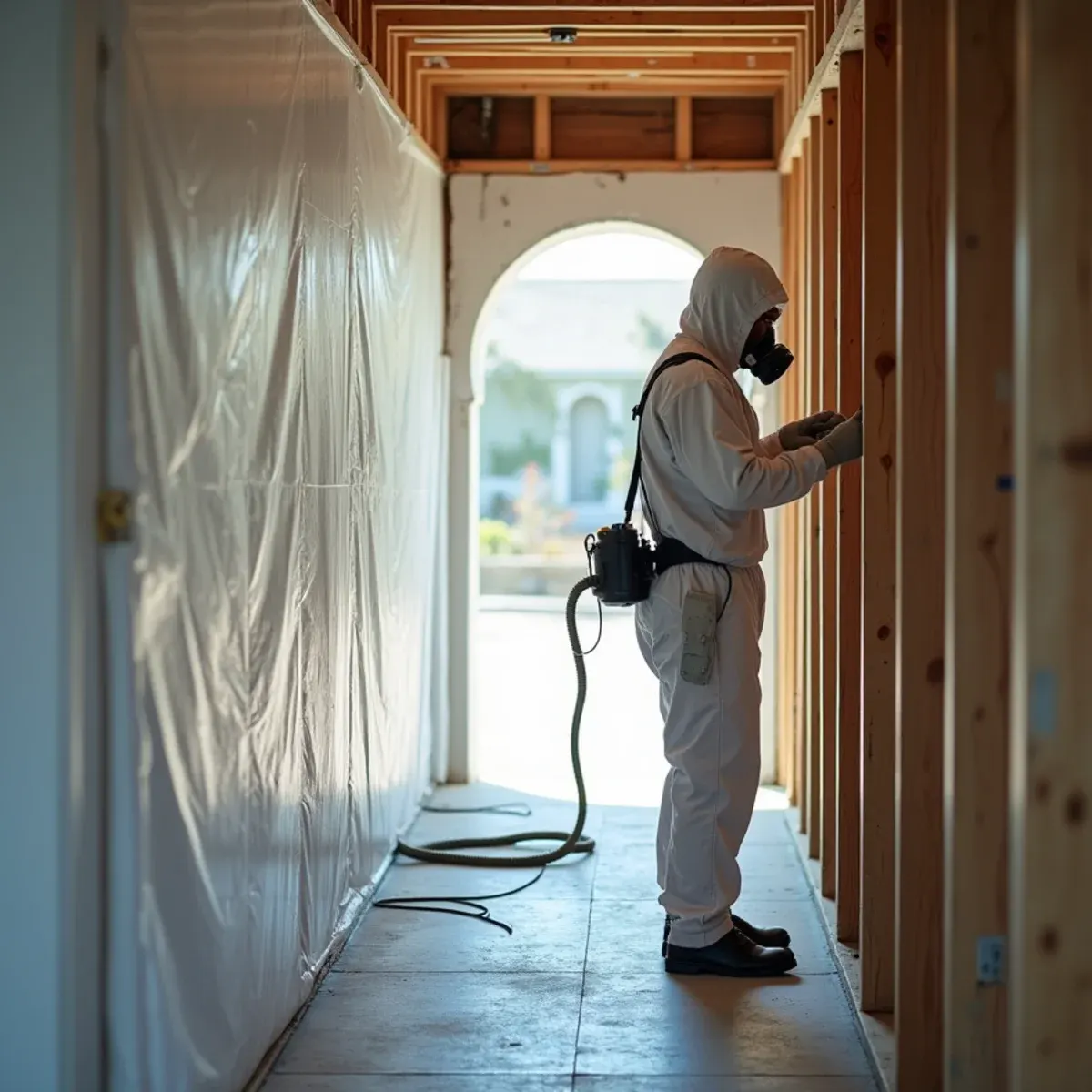
- Containment and negative pressure
- Removal of contaminated material
- HEPA cleaning and antimicrobial application
- Verification before containment comes down
The Bellflower Background Worth Knowing
Galvanized steel was the standard supply pipe when Bellflower was being built, and it fails from the inside out. The zinc lining wears through, the steel underneath corrodes, and scale builds on the interior wall until the pipe is a fraction of its original diameter. Narrower pipe means faster, more turbulent water, which chews at elbows and threaded fittings until one of them lets go. Hot lines corrode faster than cold, which is why hot water pressure is usually the first thing to drop. Eighty years is well past any service life anyone intended when this was installed.
There is more on the housing stock, drainage and plumbing history of this city on our water damage restoration in Bellflower page.
Bellflower at a glance
- Dominant construction era
- 1940–1960
- Foundation type
- slab on grade
- Supply piping found here
- original galvanized steel, early copper
- Drain line materials
- cast iron
- Terrain and water table
- flat, moderate water table
- Most common local failure
- original galvanized supply lines and cast-iron laterals failing together in the same decade
- Highest-value local prevention
- scoping the sewer lateral, which on a house this age has usually never been looked at
What It Costs in Bellflower
We do not quote a number over the phone before seeing the property — anyone who does is guessing. The variables that actually move the price on a mold remediation job are square footage of affected material, where it is, containment complexity, and they are broken down in full on the mold remediation & removal page. The assessment and the written estimate are free anywhere in Bellflower, day or night, with no obligation.
Mold Remediation Questions from Bellflower Homeowners
Usually, yes. A leak inside a common wall wets framing and drywall on both faces, and containing only one side leaves contaminated material open to the other unit. We'll ask the owner or property manager to arrange access, set containment on both sides, and run negative air so nothing pushes across during removal. If access can't be obtained, we'll tell you plainly what part of the assembly we can't verify rather than declaring the job complete.
On a hard, non-porous surface like tile or glass, bleach handles surface growth. On drywall, wood, or anything porous it does not — the water content soaks in and can feed further growth while the chlorine stays on the surface. Porous material with real growth needs to be removed, not treated.
Usually not for visible growth with an obvious cause — you can see the problem and the work would be identical regardless of species. Testing is worthwhile when there is odor but nothing visible, when you need documentation for a claim or dispute, or when you want independent verification that the job was done right.
It is the most common gap we see here. A cast iron lateral that age has corroded along the bottom, the joints have shifted, and the parkway trees on most Bellflower streets have had seventy years to find them. A camera inspection costs a small fraction of a sewage remediation, and on a line that has never been scoped it usually finds something worth knowing about before it finds you at two in the morning.