
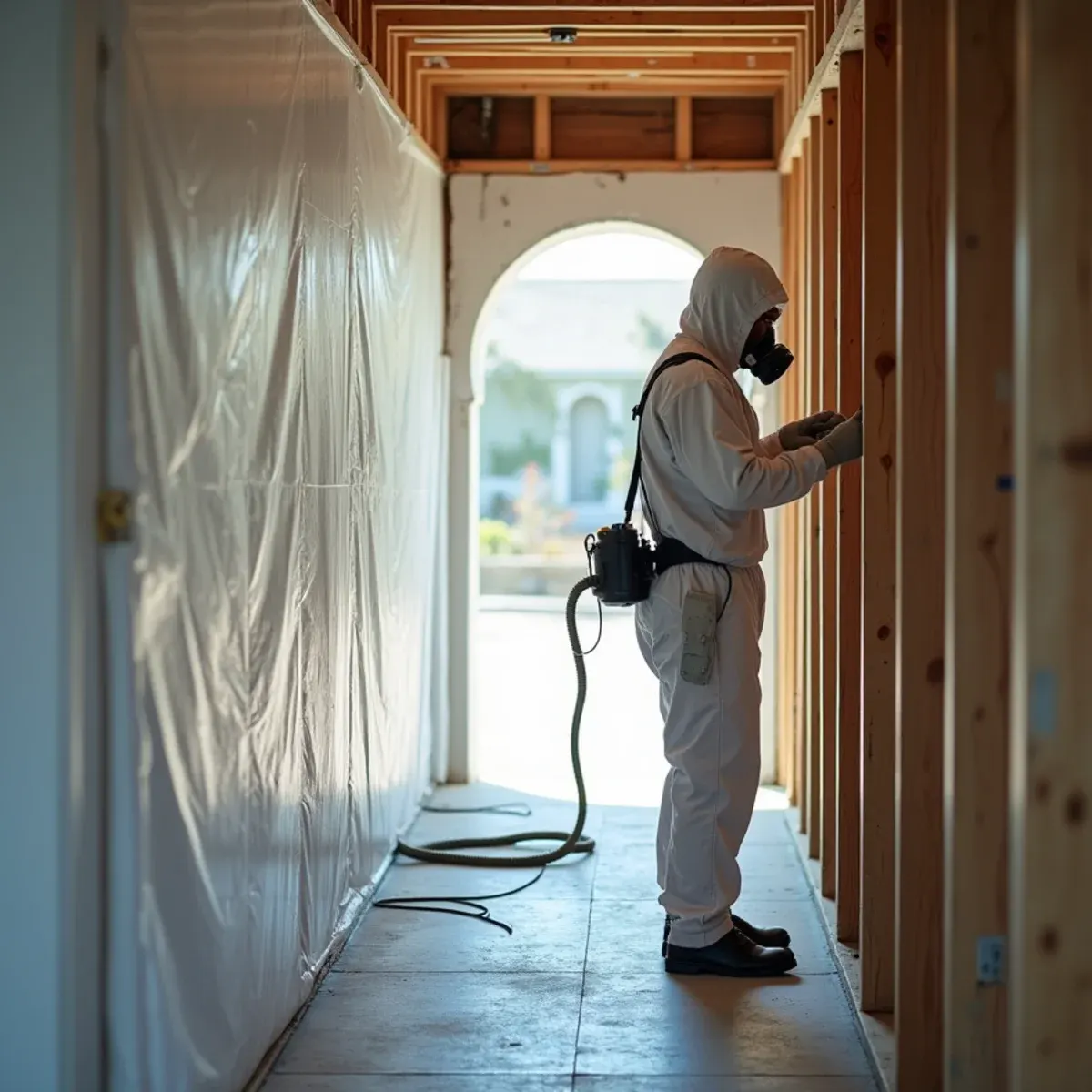
A hard storm comes down Carbon Canyon, the v-ditch above a Country Hills or Olinda Ranch property is half full of leaf litter, and by morning water has found the low side of the house. That's one Brea mold call. The other comes from a small 1920s oil-town house a few blocks off Birch Street downtown, where a galvanized line behind lath and plaster has been weeping into the wall long enough that the paint is still perfect and the framing behind it is not. Two calls, two cities, five minutes apart.
The northern hills were shaped by the Brea Olinda oil field and then developed hard through the 1990s and 2000s, so up there you get engineered slopes, retaining walls, post-tension slabs and modern piping. Downtown you get raised and mixed foundations, original-era supply lines and finishes that don't survive careless demolition. We treat those as separate problems, because the moisture source, the assemblies and the removal decisions are different in each. From Cypress it's about eighteen minutes north, and we dispatch as fast as conditions allow.
What Brea Changes About Mold Remediation
1Carbon Canyon runoff finds the low wall
Concentrated canyon storms deliver water with momentum, not as gentle ponding. On the hillside tracts toward Carbon Canyon Road, it overtops a silted v-ditch and runs at the downslope face of the house. The resulting growth sits behind the lowest few feet of drywall on that elevation. Clearing and confirming the ditch and downspout extensions is part of source correction, not an upsell.
2Plaster and lath near downtown Brea
The small early-century houses off Birch and Brea Boulevard have plaster over wood lath, sometimes with layers of later paint and wallpaper sealing it. That assembly holds moisture and hides growth well. We open the smallest inspection points we can, take cavity readings, and only widen removal where contaminated porous material actually is. Plaster that reads dry and cleans up stays.
3Newer hillside slabs and sealed cavities
Blackstone and Olinda Ranch homes have modern piping and tight envelopes, so a small supply weep does not evaporate away. It stays in the cavity and grows quietly. Because these are often post-tension slabs, we plan investigative openings and any drilling with that in mind, and we coordinate with your plumber before anything gets cut into the floor.
How the Work Runs
The method is the same one we use on every mold remediation job, documented to the IICRC S500:2025 standard. Here it is in short — the full mold remediation & removal process explains each stage in detail.
- Inspection and moisture source identification
- Testing where it is warranted
- Containment and negative pressure
- Removal of contaminated material
- HEPA cleaning and antimicrobial application
- Verification before containment comes down
The Brea Background Worth Knowing
Brea's hillside tracts were designed to handle rain. Terrace drains catch runoff partway up a slope, v-ditches carry it around the toe, area drains take the flat yard, and everything ties into a system that moves water past the house rather than through it. The design works. What fails is maintenance. Over a dry summer those inlets fill with eucalyptus leaf litter, decomposed granite, and whatever the wind brought down the canyon, and nobody looks at them because they sit on a slope behind a fence. The first hard storm of the season finds every one that is blocked.
There is more on the housing stock, drainage and plumbing history of this city on our water damage restoration in Brea page.
Brea at a glance
- Dominant construction era
- 1920–2005
- Foundation type
- mixed on grade
- Supply piping found here
- galvanized steel, under-slab copper, PEX in newer hillside tracts
- Drain line materials
- cast iron, clay, ABS
- Terrain and water table
- hillside-mixed, deep water table
- Most common local failure
- canyon and hillside runoff overwhelming slope drainage during concentrated storms
- Highest-value local prevention
- keeping Carbon Canyon-side slope drains, v-ditches and downspout extensions genuinely clear
What It Costs in Brea
We do not quote a number over the phone before seeing the property — anyone who does is guessing. The variables that actually move the price on a mold remediation job are square footage of affected material, where it is, containment complexity, and they are broken down in full on the mold remediation & removal page. The assessment and the written estimate are free anywhere in Brea, day or night, with no obligation.
Mold Remediation Questions from Brea Homeowners
That smell in a house of that age usually traces to one of two things: original galvanized supply lines weeping inside plaster walls, or moisture under a raised floor section. Neither shows as a stain until late. We'd inspect the underfloor area, take moisture readings at the base of exterior and plumbing walls, and check around the water heater and kitchen. Knowing the actual scope before closing is worth far more than a general mold clause in the contract.
On a hard, non-porous surface like tile or glass, bleach handles surface growth. On drywall, wood, or anything porous it does not — the water content soaks in and can feed further growth while the chlorine stays on the surface. Porous material with real growth needs to be removed, not treated.
Usually not for visible growth with an obvious cause — you can see the problem and the work would be identical regardless of species. Testing is worthwhile when there is odor but nothing visible, when you need documentation for a claim or dispute, or when you want independent verification that the job was done right.
Usually not under a standard homeowners policy. Water that runs across the ground and enters a building is surface water, and that is an excluded cause on nearly every form, whether it came off a Carbon Canyon slope or out of the street. Separate flood coverage handles it. Damage from a covered failure is a different story, so let us document the entry point and cause before anything gets cleaned up.