
A leak under a raised-foundation house does not announce itself. Water drips off a supply line onto the dirt of the crawl space instead of pooling on a floor where somebody would step in it, so it can run for weeks. What you notice first is an odor that is strongest near a floor register or inside a closet, or a cold, slightly springy spot in a hallway. Down below, the subfloor and joists have been damp long enough to grow, and the old-growth Douglas fir framing in these pre-war houses is worth protecting.
The good news is access. A crawl space is far easier to work in than a slab. We can see the source, reach it, dry the assembly and remove what is contaminated without cutting through finished rooms. That is the trade Fullerton's older housing near downtown and Hillcrest Park offers you. The other pattern in this city is student rentals around Cal State Fullerton and Fullerton College, where a leak gets reported late because nobody is sure whose job it is to call. Delay is the whole difference between drying a wall and removing it.
What Fullerton Changes About Mold Remediation
1Crawl spaces hide leaks, then help
Water under a raised foundation drips onto soil instead of pooling on a floor, so leaks here run undetected for weeks and odor is the first symptom. The upside is real, though. Once we know, we can reach the source, the subfloor and the joists directly without cutting through finished rooms. Access is the one clear advantage a raised foundation has over a slab.
2Old-growth framing worth protecting
The Craftsman and Spanish Revival houses near downtown are framed in dense old-growth Douglas fir with thick original flooring above. That material resists decay better than modern lumber, but it still supports surface growth once it stays wet. Cleaning, drying and treating it is almost always the better call compared with replacing it with anything available today.
3Student rentals and late reporting
Around Cal State Fullerton and Fullerton College, a leak often goes unreported because no one is sure whose responsibility it is to call. Two weeks of that turns a drying job into a removal job. Posting the shutoff location and an emergency contact inside every rental costs nothing and changes the size of the loss more than anything else we can recommend.
How the Work Runs
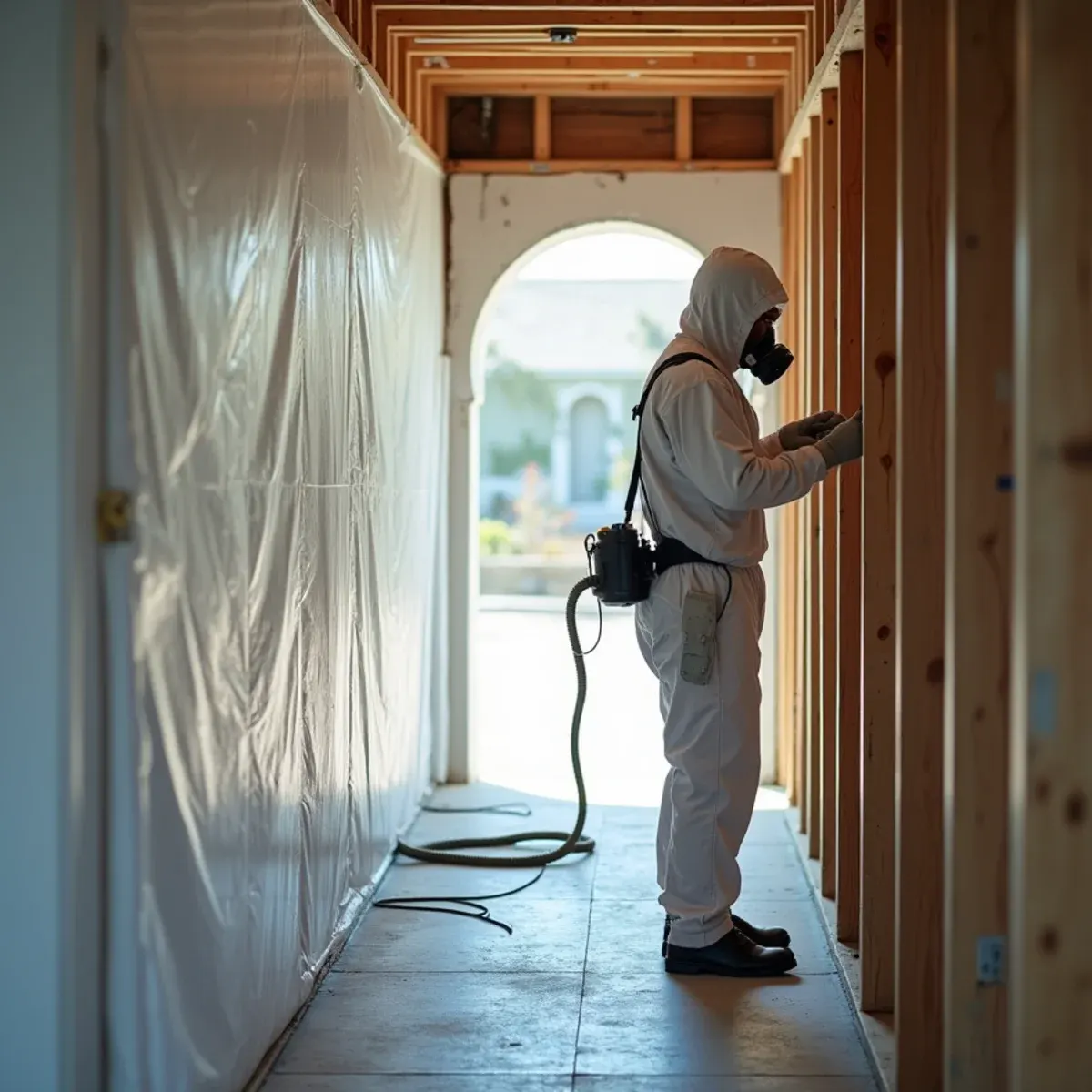
The method is the same one we use on every mold remediation job, documented to the IICRC S500:2025 standard. Here it is in short — the full mold remediation & removal process explains each stage in detail.
- Inspection and moisture source identification
- Testing where it is warranted
- Containment and negative pressure
- Removal of contaminated material
- HEPA cleaning and antimicrobial application
- Verification before containment comes down
The Fullerton Background Worth Knowing
The pre-war homes around downtown Fullerton were built with materials that behave completely differently from modern construction. Lath and plaster walls hold several times the water drywall does. Old-growth Douglas fir framing is dense and dries slowly. Original oak and fir flooring is thick, high-quality material that is well worth saving.
There is more on the housing stock, drainage and plumbing history of this city on our water damage restoration in Fullerton page.
Fullerton at a glance
- Dominant construction era
- 1910–1980
- Foundation type
- mixed on grade
- Supply piping found here
- galvanized steel, copper, original pre-war piping
- Drain line materials
- cast iron, clay
- Terrain and water table
- rolling, moderate water table
- Most common local failure
- crawl-space leaks that run undetected for weeks because the water drips away instead of pooling on a floor
- Highest-value local prevention
- posting a shutoff location and emergency contact in every rental, since delayed reporting is the local failure mode
What It Costs in Fullerton
We do not quote a number over the phone before seeing the property — anyone who does is guessing. The variables that actually move the price on a mold remediation job are square footage of affected material, where it is, containment complexity, and they are broken down in full on the mold remediation & removal page. The assessment and the written estimate are free anywhere in Fullerton, day or night, with no obligation.
Mold Remediation Questions from Fullerton Homeowners
Under the house. On a raised foundation, a slow supply leak drips onto crawl space soil rather than pooling where you would see it, so odor arrives long before any stain does. We go into the crawl space with meters and lights and check the subfloor from below, the joists, the ducting and the soil for wet ground, then work back to the source. That access is the advantage of your foundation type.
On a hard, non-porous surface like tile or glass, bleach handles surface growth. On drywall, wood, or anything porous it does not — the water content soaks in and can feed further growth while the chlorine stays on the surface. Porous material with real growth needs to be removed, not treated.
Usually not for visible growth with an obvious cause — you can see the problem and the work would be identical regardless of species. Testing is worthwhile when there is odor but nothing visible, when you need documentation for a claim or dispute, or when you want independent verification that the job was done right.
Yes, and they need a different approach. Lath and plaster and old-growth framing hold far more water than modern materials and dry much more slowly, so we plan for seven to fourteen days with higher-capacity equipment. The original material is worth that effort — nothing sold today replaces it.