
La Mirada does not sit on the dead-flat plain the coastal cities do. The ground rolls, which means storm water moves across properties instead of ponding on them. Generally a good thing. The trouble is fifty years of improvements. A patio poured here, a raised planter added there, a retaining wall, hardscape that has settled half an inch toward the house. Each change was small on its own. Together they can turn a lot that once shed water into one that delivers it to the base of a wall, and that is where a lot of the mold here begins.
It shows up as growth behind baseboard on one particular wall, usually the uphill side, appearing every wet season and going quiet every summer. Interior work alone will not hold, because the source is outdoors. The city was built as a planned community in a concentrated twelve-year window from 1953, so the houses are consistent slab construction and the failures repeat in recognizable ways. Around Biola University we also see student rentals, where a small leak gets reported late and turns up as mold inside a shared wall weeks afterward.
What La Mirada Changes About Mold Remediation
1Added hardscape redirects the drainage
Patios, raised planters, retaining walls and settled concrete added over fifty years can reverse the fall a lot was originally graded with. On rolling ground that matters more than it does on the flats, because water that used to run past the house now runs at it. That is the source correction behind a surprising share of the mold we find in this city.
2Mold that returns every wet season
The signature here is growth behind baseboard on one particular wall, usually the uphill side, appearing in winter and going quiet in summer. Interior removal alone will not hold, because nothing indoors is producing the water. Until the grading, the drain or the hardscape gets corrected, you are paying to restore the same wall twice. Walk the property during the first real rain and watch where water goes.
3Biola-area rentals and institutional buildings
Student housing around Biola University has the same delayed-reporting pattern as any rental. A small leak sits until somebody decides it is their job to call. Institutional buildings add another wrinkle, since work has to fit around class schedules and shared corridors, with negative air routed away from occupied space and verification finished before rooms go back into use.
How the Work Runs
The method is the same one we use on every mold remediation job, documented to the IICRC S500:2025 standard. Here it is in short — the full mold remediation & removal process explains each stage in detail.
- Inspection and moisture source identification
- Testing where it is warranted
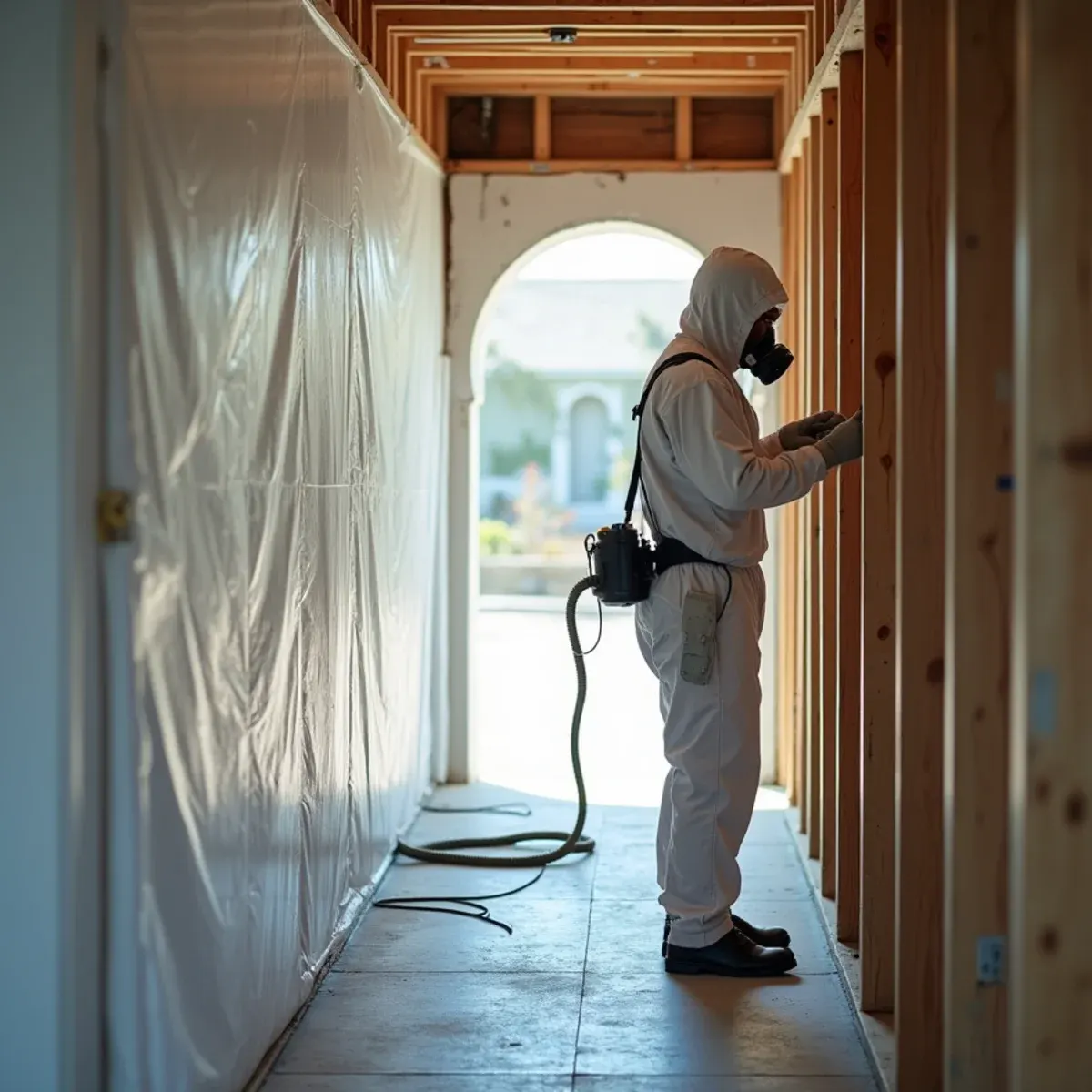
- Containment and negative pressure
- Removal of contaminated material
- HEPA cleaning and antimicrobial application
- Verification before containment comes down
The La Mirada Background Worth Knowing
La Mirada's gentle slopes mean storm water moves across properties instead of sitting on them, which is generally an advantage — except where fifty years of added patios, raised planters, retaining walls, and settled hardscape have redirected it.
There is more on the housing stock, drainage and plumbing history of this city on our water damage restoration in La Mirada page.
La Mirada at a glance
- Dominant construction era
- 1953–1965
- Foundation type
- slab on grade
- Supply piping found here
- under-slab copper, galvanized steel
- Drain line materials
- cast iron
- Terrain and water table
- rolling, moderate water table
- Most common local failure
- exterior water entering where fifty years of added patios, planters and retaining walls redirected the original drainage back toward the house
- Highest-value local prevention
- walking the property during the first real rain and watching where water actually goes
What It Costs in La Mirada
We do not quote a number over the phone before seeing the property — anyone who does is guessing. The variables that actually move the price on a mold remediation job are square footage of affected material, where it is, containment complexity, and they are broken down in full on the mold remediation & removal page. The assessment and the written estimate are free anywhere in La Mirada, day or night, with no obligation.
Mold Remediation Questions from La Mirada Homeowners
Exterior water at the base of that wall. On rolling ground storm water moves, and after decades of patios, planters and hardscape being added, it often moves toward the house instead of away from it. It soaks the ground at the footing, wicks into the bottom plate and drywall paper, then dries out over summer, which is why it looks resolved. Walk the property during the first real rain and watch where water actually goes. That usually finds it.
On a hard, non-porous surface like tile or glass, bleach handles surface growth. On drywall, wood, or anything porous it does not — the water content soaks in and can feed further growth while the chlorine stays on the surface. Porous material with real growth needs to be removed, not treated.
Usually not for visible growth with an obvious cause — you can see the problem and the work would be identical regardless of species. Testing is worthwhile when there is odor but nothing visible, when you need documentation for a claim or dispute, or when you want independent verification that the job was done right.
Almost always exterior drainage rather than a plumbing leak — a plugged area drain, a patio that has settled toward the house, or a planter holding moisture against the wall. We identify the actual path rather than just drying the wall, because drying without fixing the cause means doing it again next storm.