
Norwalk went from farmland to a full city between roughly 1945 and 1960. Modest homes on small lots, built fast and economically, still running on their original galvanized supply lines. Seventy years of internal scaling and erosion at the fittings does something specific: it produces slow weeps rather than dramatic breaks. A weep behind a bathroom or kitchen wall never floods anything. It keeps the framing, the insulation and the back of the drywall damp month after month, which is precisely the condition mold needs. The first symptom is usually smell, not water.
The second source is outside the house. The San Gabriel River channel runs along the western edge of the city and carries a very large share of regional runoff, and the neighborhoods near it saturate quickly in a heavy season. On lots this small there is barely any ground between the sidewalk and the house to absorb anything, so water reaches the stucco and stays there. Add a yard drain that has not been cleared since the last big rain and you get moisture at the wall base and growth starting inside a wall that looks fine from the driveway.
What Norwalk Changes About Mold Remediation
1Galvanized weeps you smell first
The original supply lines in these 1945 to 1960 homes scale internally and erode at the fittings, and the result is a seep rather than a break. A seep keeps insulation and the back of the drywall damp indefinitely without ever wetting your floor, so the first symptom is usually odor in a hallway or a closet rather than anything you can see.
2Small lots and the river channel
The San Gabriel River channel along the western edge carries a very large share of regional runoff, and nearby neighborhoods saturate quickly in a heavy season. With lots this small there is barely any ground between the sidewalk and the stucco to absorb it, so water reaches the wall base and stays. Clearing yard drains before the season matters more here than in most places.
3Apartment stock and shared walls
Norwalk has substantial older multi-family alongside its single-family tracts, much of it running on the same aging systems. Shared walls mean a leak in one unit is often a mold problem in the next, and the tenant who reports it is frequently not the one with the failure. We document each unit separately so nothing gets attributed to the wrong address.
How the Work Runs
The method is the same one we use on every mold remediation job, documented to the IICRC S500:2025 standard. Here it is in short — the full mold remediation & removal process explains each stage in detail.
- Inspection and moisture source identification
- Testing where it is warranted
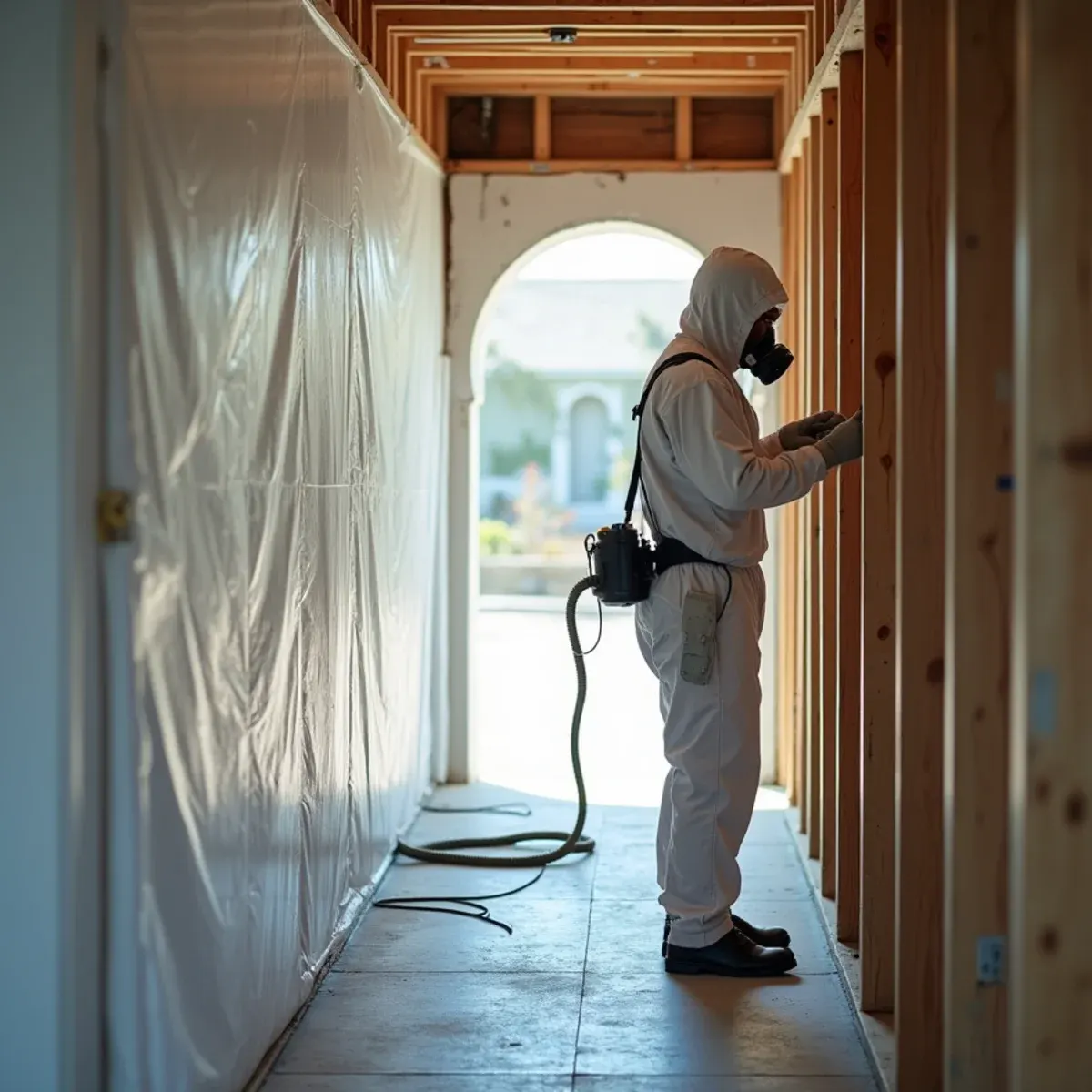
- Containment and negative pressure
- Removal of contaminated material
- HEPA cleaning and antimicrobial application
- Verification before containment comes down
The Norwalk Background Worth Knowing
The homes built in Norwalk during the postwar surge were built to be affordable and built fast, which was exactly the right priority at the time. Seventy years later, some of those choices have consequences.
There is more on the housing stock, drainage and plumbing history of this city on our water damage restoration in Norwalk page.
Norwalk at a glance
- Dominant construction era
- 1945–1960
- Foundation type
- slab on grade
- Supply piping found here
- original galvanized steel
- Drain line materials
- cast iron
- Terrain and water table
- flat, moderate water table
- Most common local failure
- original galvanized supply lines failing after decades of internal scaling and erosion at fittings
- Highest-value local prevention
- clearing yard and area drains before the season, since small lots leave little ground between the street and the house
What It Costs in Norwalk
We do not quote a number over the phone before seeing the property — anyone who does is guessing. The variables that actually move the price on a mold remediation job are square footage of affected material, where it is, containment complexity, and they are broken down in full on the mold remediation & removal page. The assessment and the written estimate are free anywhere in Norwalk, day or night, with no obligation.
Mold Remediation Questions from Norwalk Homeowners
Often, yes. Original galvanized does not fail dramatically. It weeps at a corroded fitting, and a weep inside a wall keeps framing and the back of the drywall damp without ever wetting your floor, so smell is usually the first symptom. We would scan the likely walls with thermal imaging and meters, checking the shared plumbing wall behind the bathroom first. If that reads dry, we look at exterior water at the wall base instead.
On a hard, non-porous surface like tile or glass, bleach handles surface growth. On drywall, wood, or anything porous it does not — the water content soaks in and can feed further growth while the chlorine stays on the surface. Porous material with real growth needs to be removed, not treated.
Usually not for visible growth with an obvious cause — you can see the problem and the work would be identical regardless of species. Testing is worthwhile when there is odor but nothing visible, when you need documentation for a claim or dispute, or when you want independent verification that the job was done right.
If it is original galvanized from the postwar build-out, it has exceeded any reasonable service life. If you have had one failure, a second is a matter of when. The cheapest moment to repipe is while walls are already open for a repair — the demolition and patching are already in the scope.