
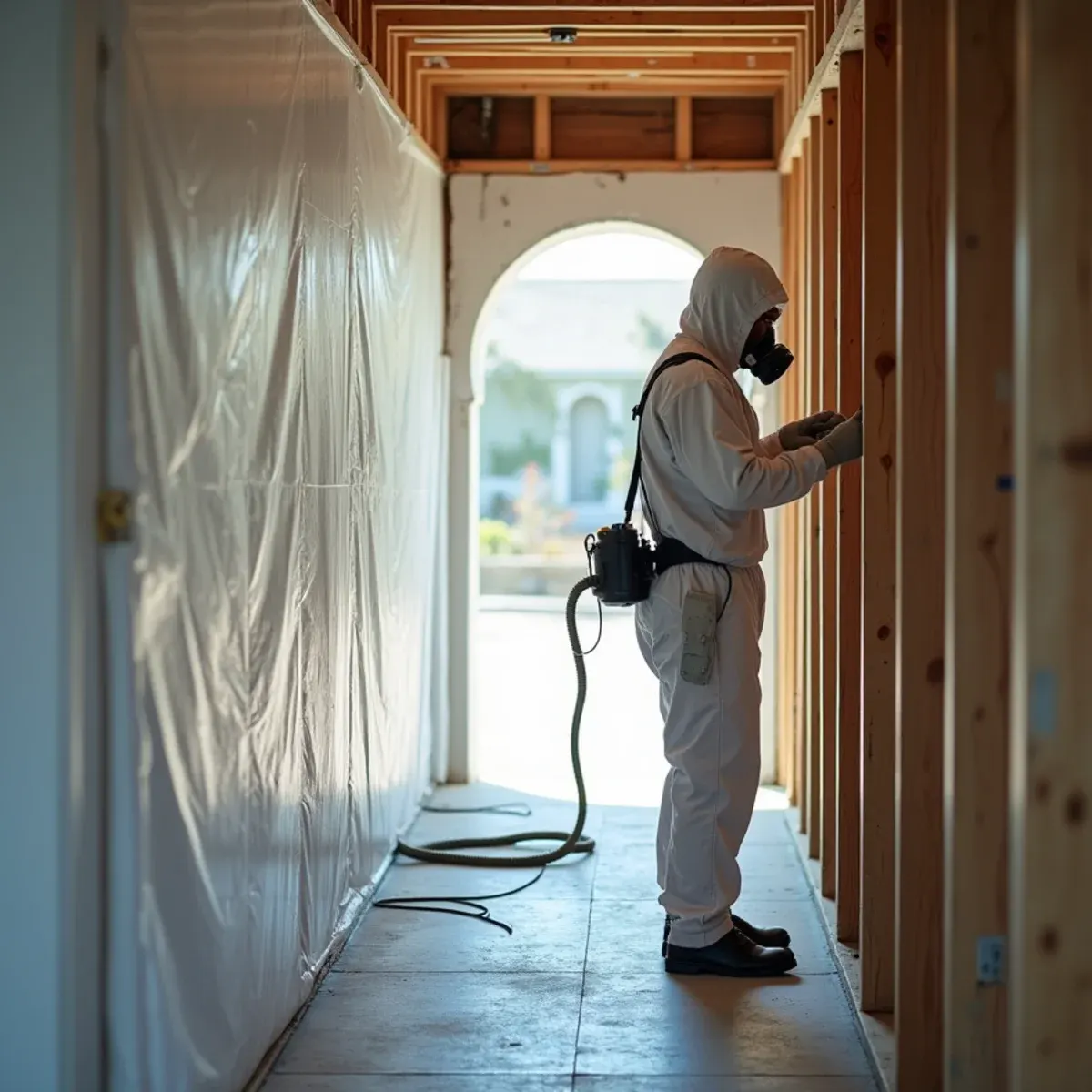
Lath and plaster is the reason mold work in the Anaheim Colony District does not look like mold work anywhere else in the city. Plaster holds several times the water drywall does and gives it back slowly, and the growth you are looking for is often on the back face and in the keys, the ridges squeezed between the wood lath. Nothing you can see from inside the room tells you that. Wet keys also soften and release, so a ceiling that merely looks stained can be a ceiling about to come down.
Drive west and the buildings change completely. West Anaheim's postwar tracts are slab-on-grade with drywall, where mold sits low: bottom plates, wall base, the toe kick under a sink. Up in Anaheim Hills, homes step down the slope across two and three levels with retaining walls and engineered drainage, and the calls come from lower-level rooms built partly into the hill, where a plugged subdrain or a silted area drain pushes moisture through the wall from the soil side. One city, three different source investigations, three different containment plans.
What Anaheim Changes About Mold Remediation
1Plaster needs desiccant drying
In the Colony District, walls are plaster over wood lath: thick, absorbent and slow to release moisture. Refrigerant dehumidifiers stall on that assembly. We bring desiccant equipment and plan for a longer drying period, and we check the back face and the keys rather than judging by the painted surface, because that is where growth establishes first and shows last.
2Hillside lower levels take outside water
Anaheim Hills homes rely on retaining walls, subdrains and area drains to keep the slope's water moving. When a subdrain plugs or a drain silts up, moisture pushes through a lower-level wall from the soil side. Interior removal alone will not hold, because the source is outdoors and seasonal. We look hard at the drainage before we write a scope for the wall.
3Resort-area hotels and short-term rentals
Around Disneyland and the Convention Center, much of the building stock is hotel and short-term rental, occupied nearly every night. Work there means tight zones, negative air pulled away from corridors and guest rooms, and verification before a unit goes back into inventory. We schedule around occupancy and give you an honest completion date rather than an optimistic one.
How the Work Runs
The method is the same one we use on every mold remediation job, documented to the IICRC S500:2025 standard. Here it is in short — the full mold remediation & removal process explains each stage in detail.
- Inspection and moisture source identification
- Testing where it is warranted
- Containment and negative pressure
- Removal of contaminated material
- HEPA cleaning and antimicrobial application
- Verification before containment comes down
The Anaheim Background Worth Knowing
The Anaheim Colony Historic District and the older streets around downtown contain homes built from the early 1900s through the 1930s, and they are constructed differently in ways that matter enormously during a water loss.
There is more on the housing stock, drainage and plumbing history of this city on our water damage restoration in Anaheim page.
Anaheim at a glance
- Dominant construction era
- 1900–2000
- Foundation type
- mixed on grade
- Supply piping found here
- galvanized steel, under-slab copper, original early-century piping in the Colony
- Drain line materials
- cast iron, clay
- Terrain and water table
- hillside-mixed, moderate water table
- Most common local failure
- lath-and-plaster assemblies that hold several times the water drywall does and release it far more slowly
- Highest-value local prevention
- acting immediately on any plaster-wall loss, because wet plaster keys soften and release from the lath
What It Costs in Anaheim
We do not quote a number over the phone before seeing the property — anyone who does is guessing. The variables that actually move the price on a mold remediation job are square footage of affected material, where it is, containment complexity, and they are broken down in full on the mold remediation & removal page. The assessment and the written estimate are free anywhere in Anaheim, day or night, with no obligation.
Mold Remediation Questions from Anaheim Homeowners
Not always. Plaster that is saturated and has lost its keys, the anchors gripping the lath, is coming out, because it is failing structurally as well as harboring growth. Plaster that is still sound with contamination on one face can often be dried with desiccant equipment and cleaned in place. The deciding factor is usually how fast we get there. Plaster gives up water slowly, so a wall left wet a week is far less likely to be savable.
On a hard, non-porous surface like tile or glass, bleach handles surface growth. On drywall, wood, or anything porous it does not — the water content soaks in and can feed further growth while the chlorine stays on the surface. Porous material with real growth needs to be removed, not treated.
Usually not for visible growth with an obvious cause — you can see the problem and the work would be identical regardless of species. Testing is worthwhile when there is odor but nothing visible, when you need documentation for a claim or dispute, or when you want independent verification that the job was done right.
Yes, and we approach them differently. Lath and plaster holds much more water than drywall and dries far more slowly, so it needs more equipment and considerably more patience — but it can usually be saved in place, and original plaster is not something a repair can replace.