
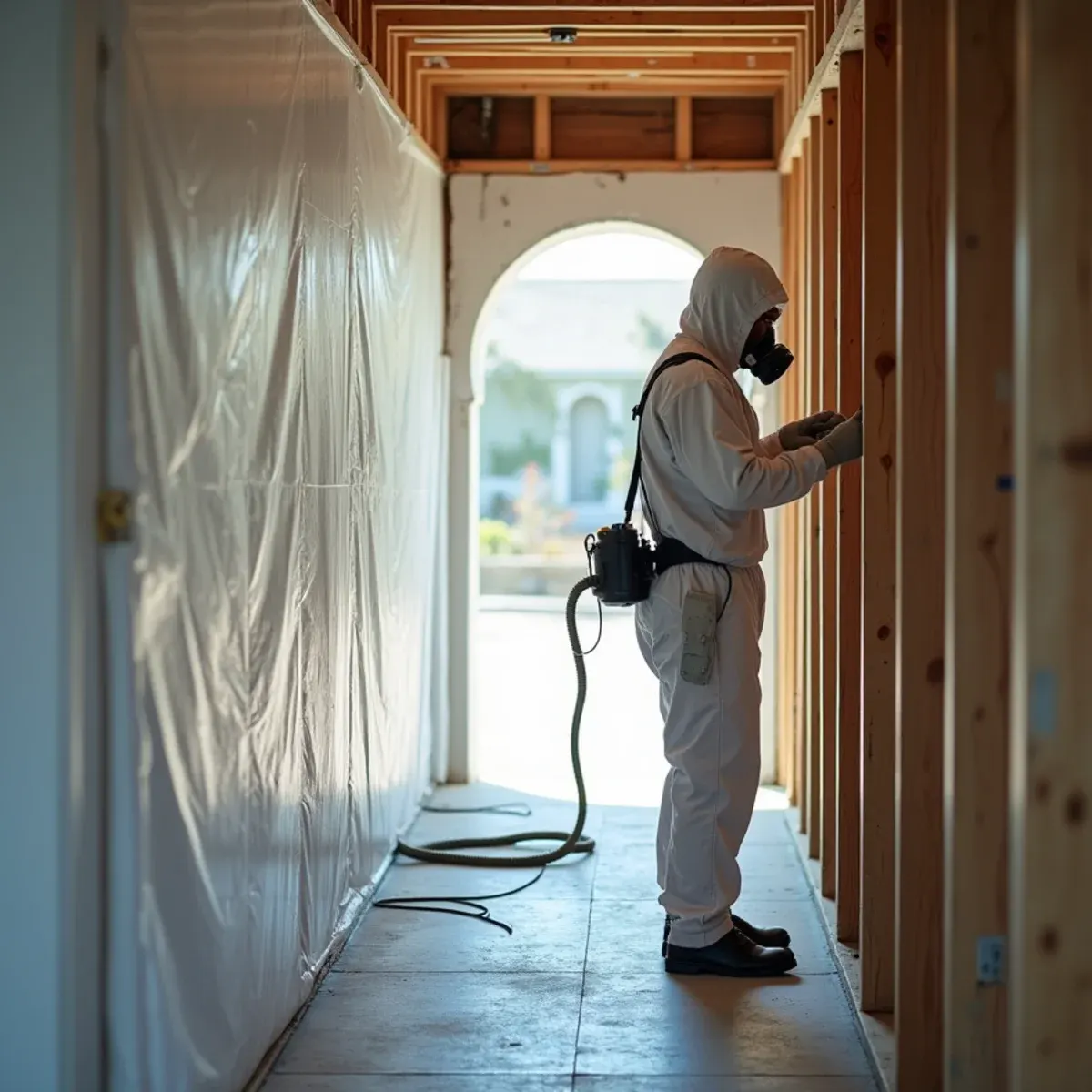
Before anyone cuts anything in a Long Beach house, we need to know what it is made of. A 1926 Craftsman in California Heights has lath and plaster that holds several times the water drywall does and gives it back slowly. A 1955 tract house in Los Altos has drywall over a slab and behaves like the homes we work on every day in Cypress. Same city, same policy, completely different mold job: different drying equipment, different removal method, different timeline. Getting that wrong in the first hour costs you weeks at the end.
Geography splits it further. Naples sits on filled land with canal water close under the surface, so lower walls and garage slabs stay damp in ways an inland slab never does. Belmont Shore lots are narrow with limited street parking, so we plan equipment staging before we roll rather than blocking your neighbors for a week. East Long Beach near El Dorado Regional Park shares Cypress's construction era, its slab-on-grade build and its San Gabriel River drainage behavior, and it is the part of the city we know best.
What Long Beach Changes About Mold Remediation
1Construction type decides the method
A 1926 plaster wall in California Heights and a 1955 drywall wall in Los Altos are different problems needing different equipment and different timelines. We identify the assembly before anyone cuts, because the wrong first move on plaster costs original material that cannot be replaced, and the wrong equipment on either one wastes days you do not have.
2Naples sits on filled ground
Canal-front property on filled land keeps water close under the slab, so lower walls, garage floors and slab edges hold moisture that inland construction sheds easily. Drying targets take longer to reach, and vapor emission becomes a live consideration when choosing replacement flooring. It is a coastal problem that homes three miles inland simply do not have.
3Belmont Shore access has to be planned
Narrow lots, no driveways and street parking that fills by mid-morning mean equipment staging is part of the scope rather than an afterthought. Long hose runs, generator placement and where a trailer can legally sit all get worked out before we roll. It is unglamorous, but on those blocks it is the difference between starting at nine and starting at noon.
How the Work Runs
The method is the same one we use on every mold remediation job, documented to the IICRC S500:2025 standard. Here it is in short — the full mold remediation & removal process explains each stage in detail.
- Inspection and moisture source identification
- Testing where it is warranted
- Containment and negative pressure
- Removal of contaminated material
- HEPA cleaning and antimicrobial application
- Verification before containment comes down
The Long Beach Background Worth Knowing
The postwar tracts around El Dorado Park, Los Altos, and the neighborhoods near the Cypress border were built in the same era and largely the same way as the housing in our home city. Single-story slab construction, plumbing routed under the concrete, and a fifty-to-seventy-year age on the supply lines.
There is more on the housing stock, drainage and plumbing history of this city on our water damage restoration in Long Beach page.
Long Beach at a glance
- Dominant construction era
- 1920–1980
- Foundation type
- mixed on grade
- Supply piping found here
- original 1920s piping, galvanized steel, under-slab copper
- Drain line materials
- cast iron, clay
- Terrain and water table
- coastal-flat, shallow water table
- Most common local failure
- the approach changing entirely by neighborhood — a 1926 plaster wall and a 1955 drywall wall are different restoration problems
- Highest-value local prevention
- identifying the construction type before anyone starts cutting
What It Costs in Long Beach
We do not quote a number over the phone before seeing the property — anyone who does is guessing. The variables that actually move the price on a mold remediation job are square footage of affected material, where it is, containment complexity, and they are broken down in full on the mold remediation & removal page. The assessment and the written estimate are free anywhere in Long Beach, day or night, with no obligation.
Mold Remediation Questions from Long Beach Homeowners
Completely differently. Plaster holds several times the water drywall does and releases it slowly, so we bring desiccant dehumidification and plan for a longer drying period. Refrigerant machines that work fine on a Los Altos tract house will stall on a thick plaster assembly. We handle removal differently too, taking plaster off in a way that protects the lath where the lath is worth keeping. Same service, different equipment, different timeline.
On a hard, non-porous surface like tile or glass, bleach handles surface growth. On drywall, wood, or anything porous it does not — the water content soaks in and can feed further growth while the chlorine stays on the surface. Porous material with real growth needs to be removed, not treated.
Usually not for visible growth with an obvious cause — you can see the problem and the work would be identical regardless of species. Testing is worthwhile when there is odor but nothing visible, when you need documentation for a claim or dispute, or when you want independent verification that the job was done right.
All of it, with the fastest response to East Long Beach — El Dorado Park Estates, Los Altos, and the neighborhoods near the Cypress border, which are typically twenty to twenty-five minutes. Coastal and downtown areas run a little longer, and we will give you a realistic ETA when you call.