
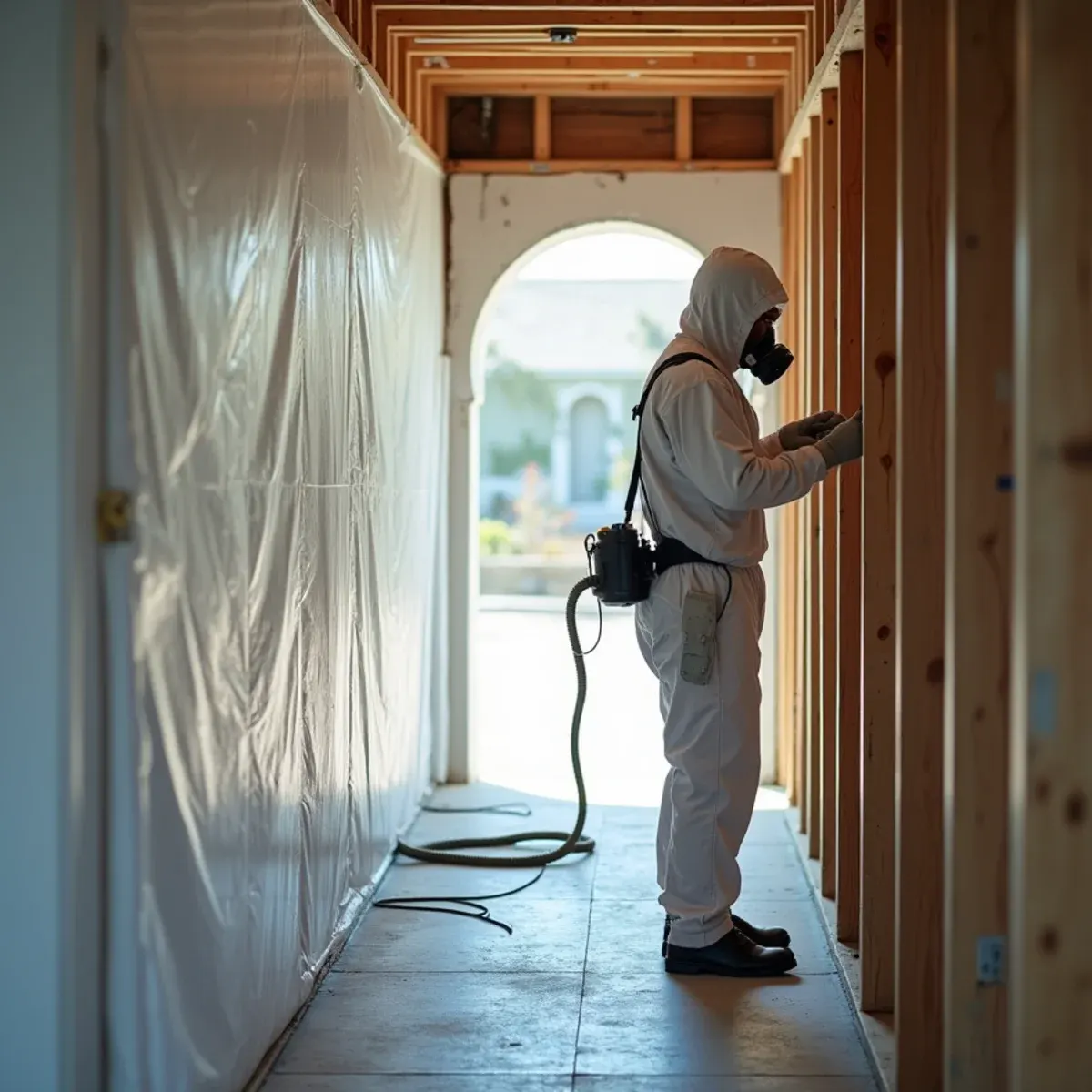
Most people who call us from Hawaiian Gardens are renters, and most are describing a problem that started in somebody else's apartment. This is the smallest city in Los Angeles County by area and one of the most densely populated per acre, with a large share of 1960s and 70s buildings put up around shared vertical plumbing stacks. When a stack or a riser fails, water follows the chase straight down through every unit below it. The tenant who first notices the smell or the sagging ceiling is frequently not the tenant with the leak.
Which makes time the real variable. Roughly speaking, every extra hour before somebody shuts the water off adds another unit to the job. Written notice to management the moment you see it does more good than anything you can do with a towel. When we get there, containment in an occupied apartment has to work around real life: kids, pets, one bathroom, no spare room to move into. We build the barrier so a family can stay in the unit where that is safe, and we say so plainly when it is not.
What Hawaiian Gardens Changes About Mold Remediation
1Shared stacks carry water downward
A large share of the apartments here were built around vertical plumbing stacks, so when one fails the water follows the chase down through every unit below. The affected unit count grows roughly by one for each additional hour before the water is off. The size of these jobs tracks response time far more closely than it tracks the size of the leak.
2Written notice starts the clock
In a stacked building the most useful thing a tenant can do is report it in writing, with the date and a photograph, immediately. Verbal reports get lost between shifts. A dated record moves the shutoff and the response along, and it documents how far the damage had spread before anybody arrived, which matters later for everyone involved.
3Containment where nobody can move out
This is a dense, largely renting city where families do not have a spare room to shift into. Barriers get built to keep a bathroom and a path to the door usable, with air pulled away from living space and filtered before discharge. Where a unit genuinely is not safe to occupy while porous material comes out, we say so early and clearly.
How the Work Runs
The method is the same one we use on every mold remediation job, documented to the IICRC S500:2025 standard. Here it is in short — the full mold remediation & removal process explains each stage in detail.
- Inspection and moisture source identification
- Testing where it is warranted
- Containment and negative pressure
- Removal of contaminated material
- HEPA cleaning and antimicrobial application
- Verification before containment comes down
The Hawaiian Gardens Background Worth Knowing
In a multi-story apartment building, plumbing runs vertically through shared chases connecting stacked units. When a supply line or drain fails in that chase, water follows it downward through every unit below — and it does not stop politely at unit boundaries.
There is more on the housing stock, drainage and plumbing history of this city on our water damage restoration in Hawaiian Gardens page.
Hawaiian Gardens at a glance
- Dominant construction era
- 1950–1975
- Foundation type
- slab on grade
- Supply piping found here
- galvanized steel, copper, shared vertical stacks
- Drain line materials
- cast iron
- Terrain and water table
- flat, moderate water table
- Most common local failure
- stack failures that travel down through every unit below, expanding by one unit for roughly every extra hour of delay
- Highest-value local prevention
- immediate written notice to management, because in a stacked building the clock does more damage than the water
What It Costs in Hawaiian Gardens
We do not quote a number over the phone before seeing the property — anyone who does is guessing. The variables that actually move the price on a mold remediation job are square footage of affected material, where it is, containment complexity, and they are broken down in full on the mold remediation & removal page. The assessment and the written estimate are free anywhere in Hawaiian Gardens, day or night, with no obligation.
Mold Remediation Questions from Hawaiian Gardens Homeowners
Two things, and both are free. Put the report in writing to management with the date and time, and photograph the ceiling now so there is a record of how far it had spread before anyone arrived. If you can, move belongings out from under it, because wet drywall gives way without much warning. Do not puncture the ceiling to drain it unless someone tells you to. In a stacked building, delay is what makes the job bigger.
On a hard, non-porous surface like tile or glass, bleach handles surface growth. On drywall, wood, or anything porous it does not — the water content soaks in and can feed further growth while the chlorine stays on the surface. Porous material with real growth needs to be removed, not treated.
Usually not for visible growth with an obvious cause — you can see the problem and the work would be identical regardless of species. Testing is worthwhile when there is odor but nothing visible, when you need documentation for a claim or dispute, or when you want independent verification that the job was done right.
Photograph and video everything before moving anything, notify your property manager in writing immediately, and move belongings out of the affected area if it is safe to do so. Do not wait for the neighbor upstairs to act — the damage compounds every hour and the written timeline protects you.