
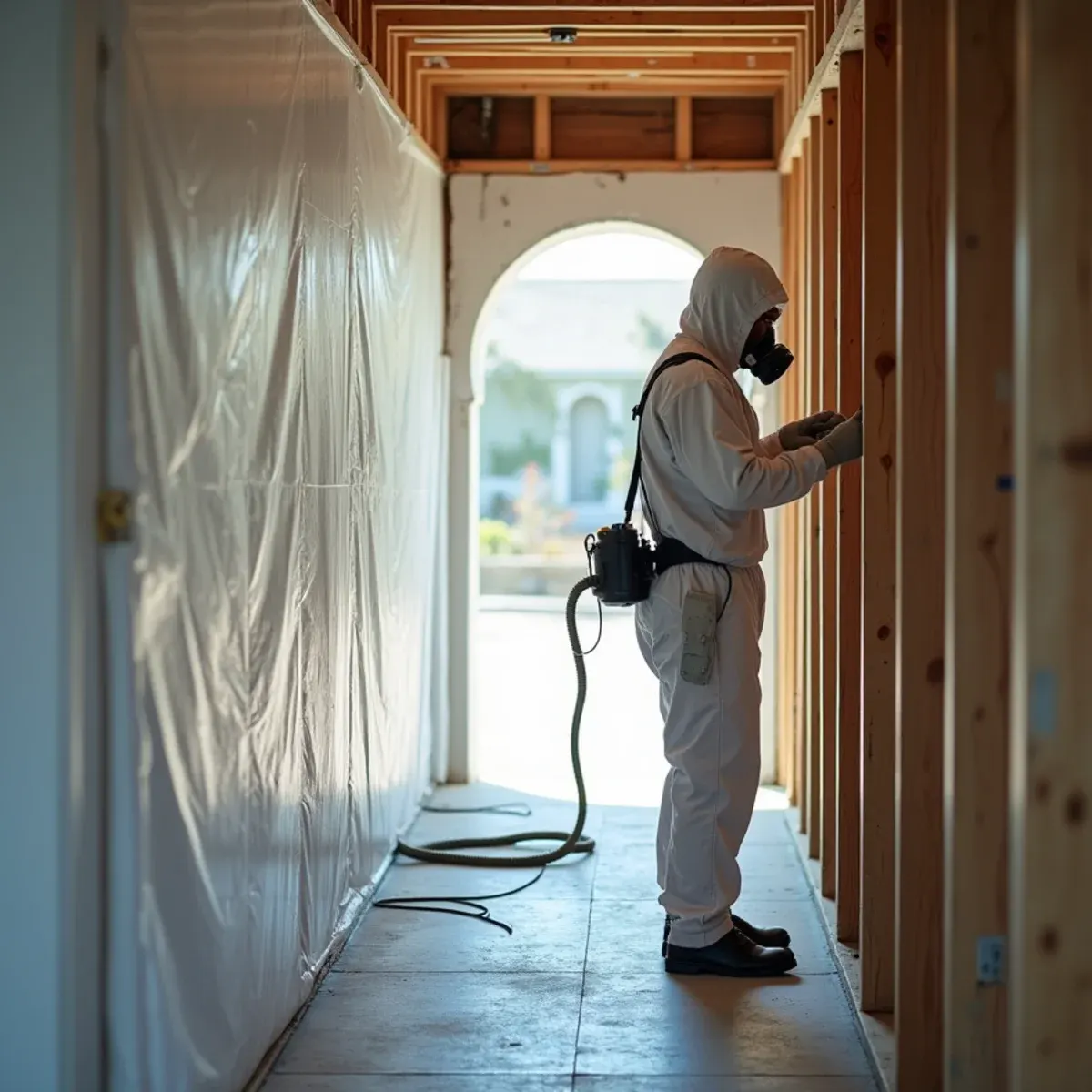
A mold call in Leisure World is rarely about one home. The community's roughly 9,000 units are attached, built in the early 1960s, sharing walls and often plumbing, so water that starts under one kitchen sink becomes a question involving your unit, your neighbor's, the mutual and the management company all at once. We document each affected unit separately from the first hour, with its own moisture readings and its own photographs. That is what keeps a straightforward repair from turning into a months-long argument about who owns which wall.
The rest of Seal Beach behaves differently again. Old Town's dense lots off Main Street hold older homes, some raised, some slab, close enough to the pier that salt has been working on flashings and fasteners for decades. And the marine layer matters more than people expect. When ambient humidity sits high for days at a stretch, drying runs longer and needs more dehumidification capacity than the same job would inland. We would rather bring an extra machine than pull containment off a wall that is still reading wet.
What Seal Beach Changes About Mold Remediation
1Shared walls, separate documentation
In Leisure World the units are attached and water does not respect the boundary between them. Each affected unit gets its own moisture readings, its own photographs and its own scope from the first hour. That separation is what keeps the repair moving while a mutual, a management company and two insurers work out responsibility between themselves.
2Marine layer slows every drying day
When ambient humidity sits high for days at a stretch, dehumidifiers work harder for less return and drying takes longer than the same job inland. Within a mile of the pier, salt has also been eating flashings and fasteners for decades, which is a recurring source of exterior water. We size equipment for coastal conditions rather than a textbook average.
3Working around residents who stay home
Many Leisure World residents are home all day, and some are genuinely sensitive to dust and disruption. Containment gets built with clear walking paths, hoses routed out of the way and honest working hours. Where staying in the unit is not reasonable while porous material comes out, we say so early enough for family to arrange something, not on the morning we start.
How the Work Runs
The method is the same one we use on every mold remediation job, documented to the IICRC S500:2025 standard. Here it is in short — the full mold remediation & removal process explains each stage in detail.
- Inspection and moisture source identification
- Testing where it is warranted
- Containment and negative pressure
- Removal of contaminated material
- HEPA cleaning and antimicrobial application
- Verification before containment comes down
The Seal Beach Background Worth Knowing
Structural drying works by creating a vapor pressure differential — dry air pulls moisture out of wet materials. When the surrounding air is already carrying a heavy moisture load, that differential shrinks and everything slows down.
There is more on the housing stock, drainage and plumbing history of this city on our water damage restoration in Seal Beach page.
Seal Beach at a glance
- Dominant construction era
- 1920–1965
- Foundation type
- mixed on grade
- Supply piping found here
- galvanized steel, copper, shared community mains
- Drain line materials
- cast iron, clay
- Terrain and water table
- coastal-flat, shallow water table
- Most common local failure
- losses that cross shared walls between attached units, involving several policies and a mutual at once
- Highest-value local prevention
- documenting each affected unit separately from the first hour
What It Costs in Seal Beach
We do not quote a number over the phone before seeing the property — anyone who does is guessing. The variables that actually move the price on a mold remediation job are square footage of affected material, where it is, containment complexity, and they are broken down in full on the mold remediation & removal page. The assessment and the written estimate are free anywhere in Seal Beach, day or night, with no obligation.
Mold Remediation Questions from Seal Beach Homeowners
Practically, three things happen at once. Your unit gets documented on its own, with moisture readings, photographs and a scope specific to your walls, because your claim and your neighbor's are separate even though the water was shared. The mutual and management get written notice early, since shared-wall work touches common construction. And we bill insurance directly, so you are not carrying the cost while responsibility gets sorted out.
On a hard, non-porous surface like tile or glass, bleach handles surface growth. On drywall, wood, or anything porous it does not — the water content soaks in and can feed further growth while the chlorine stays on the surface. Porous material with real growth needs to be removed, not treated.
Usually not for visible growth with an obvious cause — you can see the problem and the work would be identical regardless of species. Testing is worthwhile when there is odor but nothing visible, when you need documentation for a claim or dispute, or when you want independent verification that the job was done right.
Coastal marine layer conditions keep ambient humidity high for extended periods, which reduces the vapor pressure differential that drives drying. Jobs near the water need sealed chambers and more dehumidification capacity than an equivalent loss inland, and the equipment stays on longer.