
A terrace drain plugs with silt and the next real storm sends water down the slope with momentum rather than letting it pond. It reaches a retaining wall, finds a joint, and comes through the lower level of the house — the garage, the utility room, the downstairs bedroom. On a 365-foot hill of steep engineered lots, that's the usual sequence rather than the exception. And on most of these split-level homes, the lower level is exactly where the air handler and its return live, which is how a drainage problem becomes an air quality problem in about ten minutes.
Signal Hill's newer hillside housing went up on former oil land, and the field that started with the 1921 Alamitos No. 1 discovery is still moderately productive, with active wells and oilfield infrastructure sitting between houses. Add strong marine influence off Long Beach on every side and these systems carry a distinctive outdoor load before anything goes wrong — salt on the condenser, fine particulate on the filter. After a loss that means the coil and blower need genuine attention, and it means we don't assume the odor you're describing came only from the water.
What Signal Hill Changes About Air Ducts & HVAC
1Lower-level air handlers take the hit first
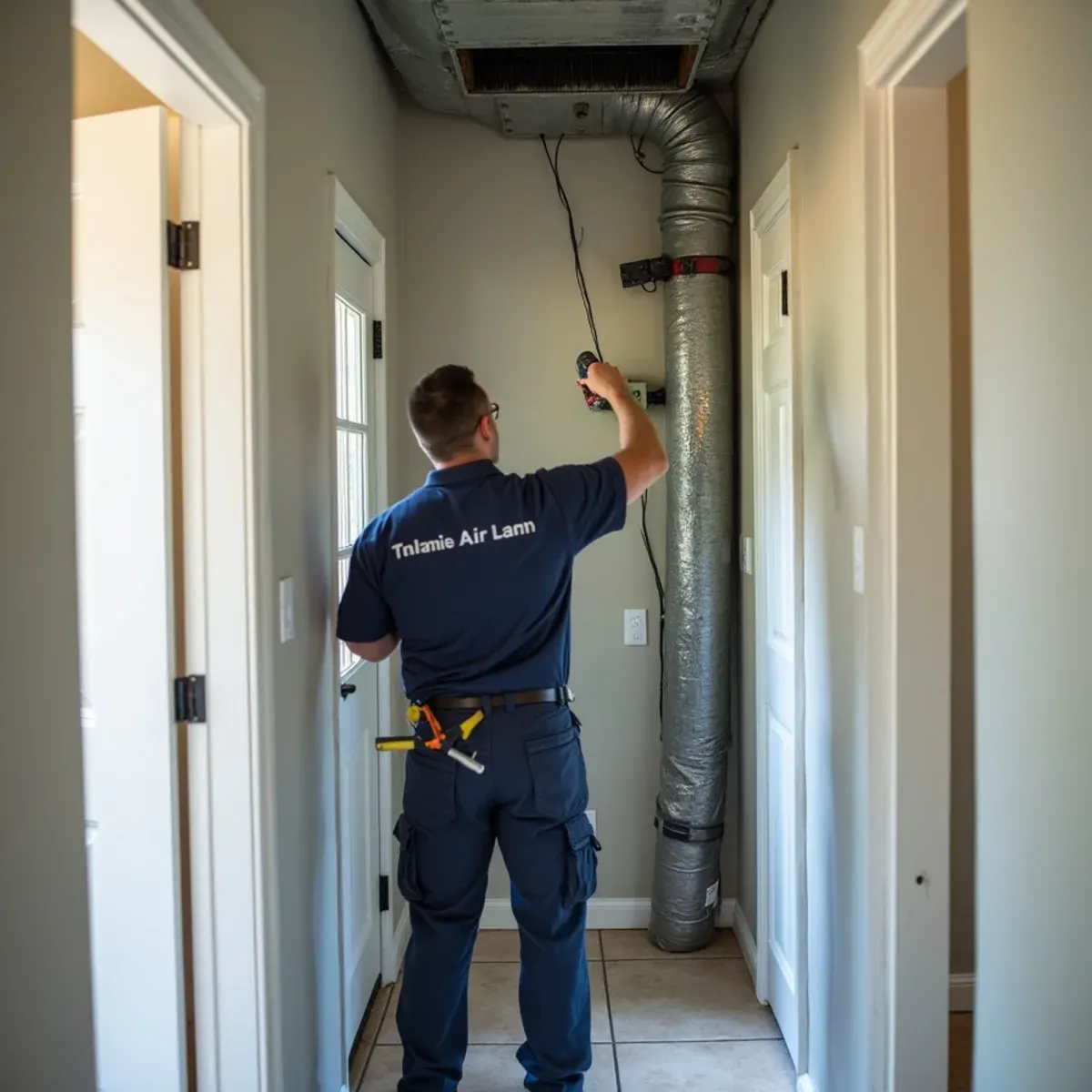
On these split-level lots the equipment is downhill of everything, usually in a garage or utility room at the lowest finished elevation. Water arriving with velocity gets into the cabinet base, the filter rack and the return before it touches anything else. That equipment is the first thing we open, because until it's clean and dry, running the system just moves the problem to the bedrooms upstairs.
2Split-level ducting crosses floors in chases
Supply runs here climb between levels through interior chases and framed soffits rather than sitting flat in one attic. Moisture at the bottom of a chase travels up with the airflow. We inspect at both ends of each chase and at the branch takeoffs, because a register two floors above the wet room can be the one carrying the smell into a bedroom.
3Marine salt and oilfield dust on equipment
Condensers on this hill corrode faster than they do inland, and filters load with fine particulate from active oilfield operations and constant sea air. That fouling is pre-existing, not storm damage, and we document it as such so it doesn't get argued over later. It does affect the work though — a heavily loaded coil takes longer to clean and won't dry on an inland schedule.
How the Work Runs
The method is the same one we use on every air ducts & hvac job, documented to the IICRC S500:2025 standard. Here it is in short — the full air duct cleaning & hvac restoration process explains each stage in detail.
- Inspect before we quote
- Contain and seal the system
- Clean or replace the ducting
- Clean the air handler and coil
- Replace filters and treat surfaces
- Seal, balance, and verify
The Signal Hill Background Worth Knowing
On these lots the drainage is engineered rather than natural. Terrace drains catch water partway down a slope, v-ditches carry it around a pad instead of across it, and retaining walls have weep holes with a gravel drain behind them so pressure never builds in the soil. All of that works until something clogs. Then a retaining wall stops being a wall and starts being a dam, and saturated soil pushes water through the joints and into whatever sits on the other side, which is usually a garage, a storage room, or the back of a lower level.
There is more on the housing stock, drainage and plumbing history of this city on our water damage restoration in Signal Hill page.
Signal Hill at a glance
- Dominant construction era
- 1920–2005
- Foundation type
- mixed on grade
- Supply piping found here
- original 1920s piping, galvanized steel, modern PEX in newer hillside builds
- Drain line materials
- cast iron, ABS
- Terrain and water table
- hillside-mixed, deep water table
- Most common local failure
- slope drainage and retaining-wall failures on steep lots, where water arrives with velocity rather than ponding
- Highest-value local prevention
- keeping terrace drains, v-ditches and retaining-wall weeps clear before the first storm
What It Costs in Signal Hill
We do not quote a number over the phone before seeing the property — anyone who does is guessing. The variables that actually move the price on a air ducts & hvac job are cleaning versus replacing flex duct, number of supply runs and returns, what kind of contamination it is, and they are broken down in full on the air duct cleaning & hvac restoration page. The assessment and the written estimate are free anywhere in Signal Hill, day or night, with no obligation.
Air Ducts & HVAC Questions from Signal Hill Homeowners
Not necessarily, but the equipment definitely needs attention and the branches above it need inspection. On a Signal Hill split-level the lower-level air handler pulls through a return at the elevation the water reached, so the cabinet, filter rack, blower wheel and coil are the priority. From there we inspect the chase and the branch runs climbing to the upper floors. Runs that read dry and clean stay in place; anything that took direct water comes out.
Fair question, and often it is an upsell. The honest answer depends on whether contamination actually reached the system. If the HVAC ran during the loss or the demolition, if water got into the attic where the ducting lives, or if the loss involved sewage or fire, the system is in scope. If none of that happened, it probably is not. We run a camera and show you before you decide anything.
It depends on where the moisture is. If the inner liner got damp and the fiberglass behind it stayed dry, cleaning and drying the run works. If water got through a torn jacket into the insulation, that fiberglass is porous, it holds moisture and growth, and there is no reliable way to clean it or verify it is clean. Those runs get replaced. We show you which is which rather than guessing on your behalf.
Start uphill. On this hill the cause is almost never at the place the water got in. Walk the slope above your pad and check the terrace drains, the v-ditch and the retaining wall weep holes. A weep that has been painted or stuccoed over is common and completely disables the drain behind the wall. Then look at where the uphill property discharges. Fixing the entry point without finding the redirect just moves the problem a few feet.