
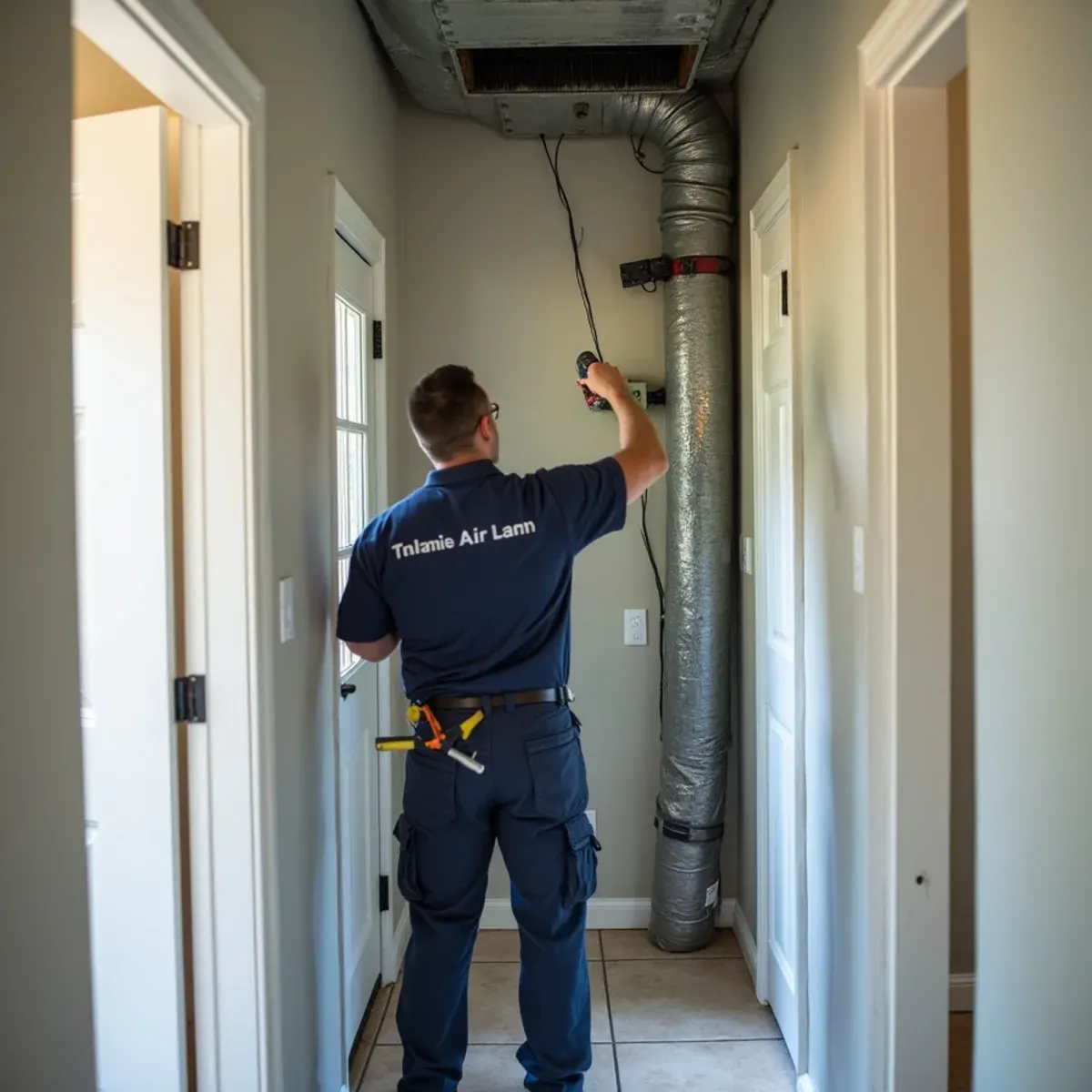
Anaheim is really three cities for this work. In the Colony District the houses are lath and plaster, and plaster holds several times the water drywall does and gives it back slowly. The attic above a wet Colony ceiling stays humid for days after the framing reads dry, and the duct lying in that attic is the last thing to recover. Most of these homes started with a floor furnace and got forced air decades later, so the runs are retrofits threaded through a tight attic with registers cut into plaster ceilings.
West Anaheim is the postwar tract half: slab, attic flex, predictable. Anaheim Hills is different again, multi-level hillside homes with engineered drainage, often two or three systems, one air handler in a lower-level closet and another in the attic, long runs and zone dampers between them. Then there is the Resort District, where hotel rooms cannot go offline for a week. Which Anaheim you are standing in decides what this job costs and how long it takes.
What Anaheim Changes About Air Ducts & HVAC
1Plaster keeps the attic wet longer
A soaked plaster ceiling behaves like a reservoir. Surface readings come back fine while the keys behind the lath are still saturated, and everything in that attic, insulation, duct jacket, boot connections, sits in the humidity the plaster keeps releasing. We do not sign off on a Colony District duct until the ceiling below it has held dry readings over time rather than hitting them once.
2Hillside homes with more than one system
In Anaheim Hills a loss on one level often involves only one air handler, but the return chase and the stairwell connect the levels, so odor moves anyway. We identify which system serves the affected zone, isolate it, and check whether the second is pulling from the same space. Long runs down a hillside plan also mean far more linear feet of duct than a flat tract home.
3Resort District rooms have to stay sellable
Hotel work near the convention center and the parks runs on occupancy. We contain, work the affected stack of rooms, clean or replace the affected duct and terminal unit components, and hand rooms back verified so the front desk can sell them that night. That means night crews and a written status every day, not a crew that disappears into a building for a week.
How the Work Runs
The method is the same one we use on every air ducts & hvac job, documented to the IICRC S500:2025 standard. Here it is in short — the full air duct cleaning & hvac restoration process explains each stage in detail.
- Inspect before we quote
- Contain and seal the system
- Clean or replace the ducting
- Clean the air handler and coil
- Replace filters and treat surfaces
- Seal, balance, and verify
The Anaheim Background Worth Knowing
The Anaheim Colony Historic District and the older streets around downtown contain homes built from the early 1900s through the 1930s, and they are constructed differently in ways that matter enormously during a water loss.
There is more on the housing stock, drainage and plumbing history of this city on our water damage restoration in Anaheim page.
Anaheim at a glance
- Dominant construction era
- 1900–2000
- Foundation type
- mixed on grade
- Supply piping found here
- galvanized steel, under-slab copper, original early-century piping in the Colony
- Drain line materials
- cast iron, clay
- Terrain and water table
- hillside-mixed, moderate water table
- Most common local failure
- lath-and-plaster assemblies that hold several times the water drywall does and release it far more slowly
- Highest-value local prevention
- acting immediately on any plaster-wall loss, because wet plaster keys soften and release from the lath
What It Costs in Anaheim
We do not quote a number over the phone before seeing the property — anyone who does is guessing. The variables that actually move the price on a air ducts & hvac job are cleaning versus replacing flex duct, number of supply runs and returns, what kind of contamination it is, and they are broken down in full on the air duct cleaning & hvac restoration page. The assessment and the written estimate are free anywhere in Anaheim, day or night, with no obligation.
Air Ducts & HVAC Questions from Anaheim Homeowners
Not always. Where we can reach the run from the attic we work from above and leave the ceiling alone. Where we cannot, we open at the register opening itself, which already has a cut edge, and enlarge from there rather than making a fresh hole in the field of the ceiling. Plaster does not patch like drywall, so we plan access to keep repairs at existing openings whenever the geometry allows it.
Fair question, and often it is an upsell. The honest answer depends on whether contamination actually reached the system. If the HVAC ran during the loss or the demolition, if water got into the attic where the ducting lives, or if the loss involved sewage or fire, the system is in scope. If none of that happened, it probably is not. We run a camera and show you before you decide anything.
It depends on where the moisture is. If the inner liner got damp and the fiberglass behind it stayed dry, cleaning and drying the run works. If water got through a torn jacket into the insulation, that fiberglass is porous, it holds moisture and growth, and there is no reliable way to clean it or verify it is clean. Those runs get replaced. We show you which is which rather than guessing on your behalf.
Yes, and we approach them differently. Lath and plaster holds much more water than drywall and dries far more slowly, so it needs more equipment and considerably more patience — but it can usually be saved in place, and original plaster is not something a repair can replace.