
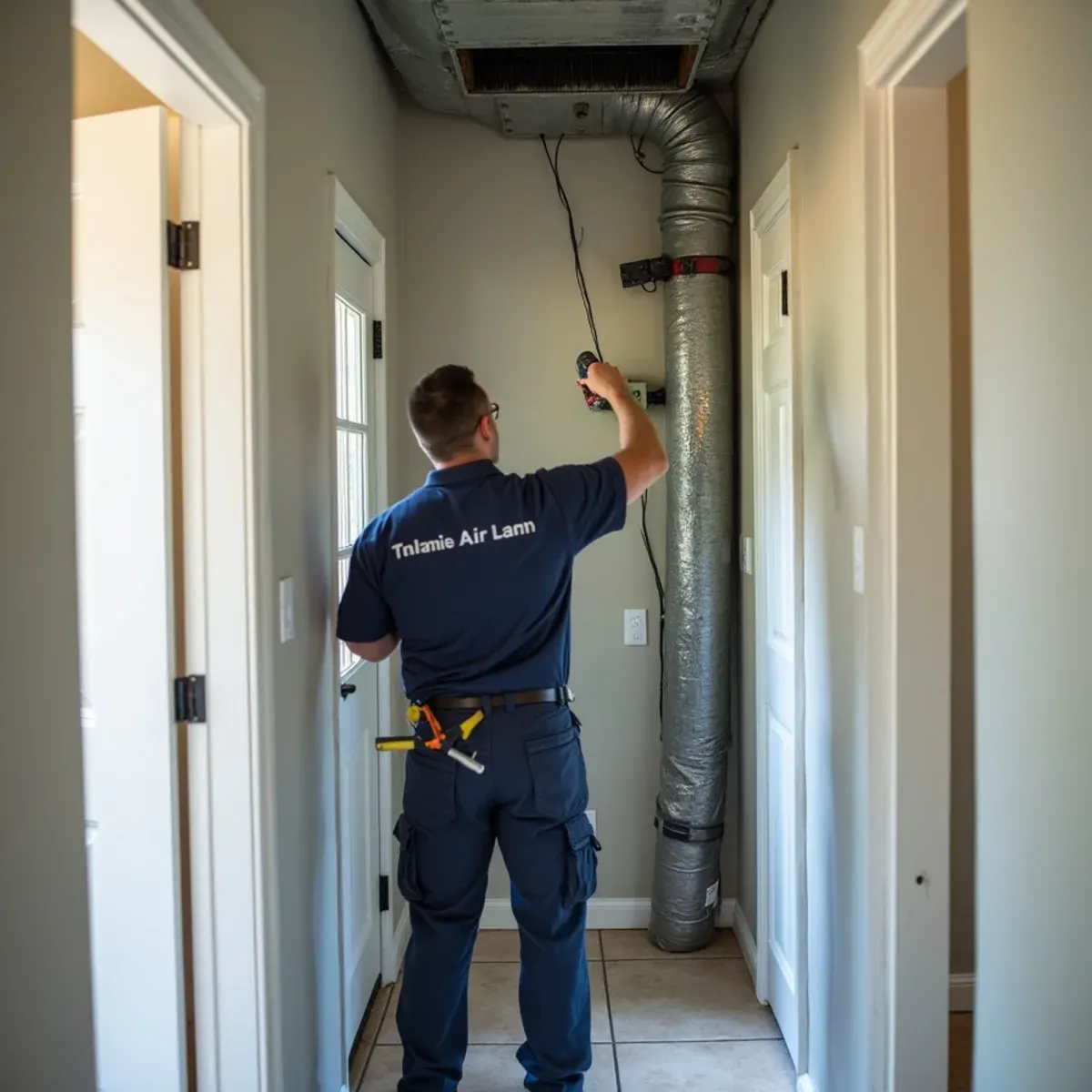
Nine people in a house designed for four changes what a heating and cooling system has been through. Garden Grove has a high share of multi-generational households, and the system in a 1958 tract home may be running twice the hours it was sized for, with cooking going most of the day and the return grille pulling that air across the coil every cycle. By the time water damage brings us in, the coil is already loaded and the return is already dirty. The loss just adds moisture to all of it.
Structurally these are slab tracts from 1950 to 1970 with galvanized supply and under-slab copper, attic flex added later, and a lot of additions both permitted and not: converted garages, back bedrooms, enclosed patios, each with a branch tapped off a trunk that was never sized to carry it. Those added runs are usually the longest, the least insulated and the first place condensation shows up. We look at them before we look at anything else in the house.
What Garden Grove Changes About Air Ducts & HVAC
1Cooking residue changes the cleaning
Daily high-heat cooking leaves an oily film on the evaporator coil, the blower wheel and the return grille. Brushing and vacuuming do not remove it, and once that film is damp it holds odor. The coil has to be cleaned wet, in place or pulled, and the blower wheel usually has to come out. Skipping that is why a system can still smell after every duct in the house has been replaced.
2Added rooms fed by undersized branches
Garage conversions and rear additions are common here, and the duct feeding them was usually spliced into an existing trunk with whatever length of flex was on the truck that day. Long, sagging, thinly insulated runs sweat in summer and collect water fast during a loss. When we map a system we start at the additions, because that is where the wet duct usually turns up.
3The house cannot go without air for days
With several generations under one roof, including elders and small children, shutting a system down for a week is not realistic. We stage the work, keep temporary filtration running, and put the system back in service in stages rather than all at once. We also write scopes itemized in plain language, so whoever in the family handles paperwork and the carrier can follow exactly what was done.
How the Work Runs
The method is the same one we use on every air ducts & hvac job, documented to the IICRC S500:2025 standard. Here it is in short — the full air duct cleaning & hvac restoration process explains each stage in detail.
- Inspect before we quote
- Contain and seal the system
- Clean or replace the ducting
- Clean the air handler and coil
- Replace filters and treat surfaces
- Seal, balance, and verify
The Garden Grove Background Worth Knowing
A 1958 tract home was plumbed for a family of four with one bathroom in regular use, one washing machine, and a single water heater sized to match. Many Garden Grove homes today support considerably more than that, and the plumbing feels it.
There is more on the housing stock, drainage and plumbing history of this city on our water damage restoration in Garden Grove page.
Garden Grove at a glance
- Dominant construction era
- 1950–1970
- Foundation type
- slab on grade
- Supply piping found here
- galvanized steel, under-slab copper
- Drain line materials
- cast iron, clay
- Terrain and water table
- flat, moderate water table
- Most common local failure
- accelerated wear on angle stops, supply risers and washing machine hoses from far higher fixture cycle counts
- Highest-value local prevention
- shorter replacement intervals on every wear item — hoses at five years without exception
What It Costs in Garden Grove
We do not quote a number over the phone before seeing the property — anyone who does is guessing. The variables that actually move the price on a air ducts & hvac job are cleaning versus replacing flex duct, number of supply runs and returns, what kind of contamination it is, and they are broken down in full on the air duct cleaning & hvac restoration page. The assessment and the written estimate are free anywhere in Garden Grove, day or night, with no obligation.
Air Ducts & HVAC Questions from Garden Grove Homeowners
Usually not. Duct and coil work is staged room by room and the dusty parts are contained. What we do need is the system off while sections are open, so we plan around the weather and set temporary filtration for anyone with breathing trouble. If sewage was involved, or if the affected area includes the kitchen and the only bathroom, we will say plainly that a few nights elsewhere is the better call.
Fair question, and often it is an upsell. The honest answer depends on whether contamination actually reached the system. If the HVAC ran during the loss or the demolition, if water got into the attic where the ducting lives, or if the loss involved sewage or fire, the system is in scope. If none of that happened, it probably is not. We run a camera and show you before you decide anything.
It depends on where the moisture is. If the inner liner got damp and the fiberglass behind it stayed dry, cleaning and drying the run works. If water got through a torn jacket into the insulation, that fiberglass is porous, it holds moisture and growth, and there is no reliable way to clean it or verify it is clean. Those runs get replaced. We show you which is which rather than guessing on your behalf.
Yes, all five ZIP codes — 92840, 92841, 92843, 92844, and 92845 — for both residential and commercial properties. Response time runs about twenty-five to thirty-five minutes depending on where in the city.