
Signal Hill does not flood. It drains, hard. A 365-foot hill surrounded entirely by Long Beach means water does not pond on your property. It arrives with speed off the slope above, and when a terrace drain, a v-ditch or a retaining-wall weep is blocked, that flow takes the shortest path into the lowest opening on the lot. In the 1990s and 2000s hillside townhomes built on former oil land, the lowest opening is nearly always the tandem garage, which is where the household keeps everything that will not fit upstairs.
The rest of the city is older and mixed. There are 1920s houses left from the boom that started with the Alamitos No. 1 discovery well in 1921, some still on original piping, sitting on steep lots among working oil infrastructure. Marine influence stays strong up here despite the elevation, so outdoor drying is unreliable most of the year. Between attached hillside townhomes, older single-family and the condos along Panorama and near Hilltop Park, the first thing we establish is who owns the belongings and who owns the building.
What Signal Hill Changes About Contents & Pack-Out
1Tandem garages sit at the bottom of the grade
Hillside townhome garages sit below the living space and below the slope, with a driveway that funnels toward the door. Water entering there moves fast and reaches the back wall before anyone notices. Stored boxes, tools, bikes, seasonal gear and paperwork on that slab are the standard Signal Hill contents loss, and cardboard stacked on concrete has no chance against moving water.
2Association property versus your property
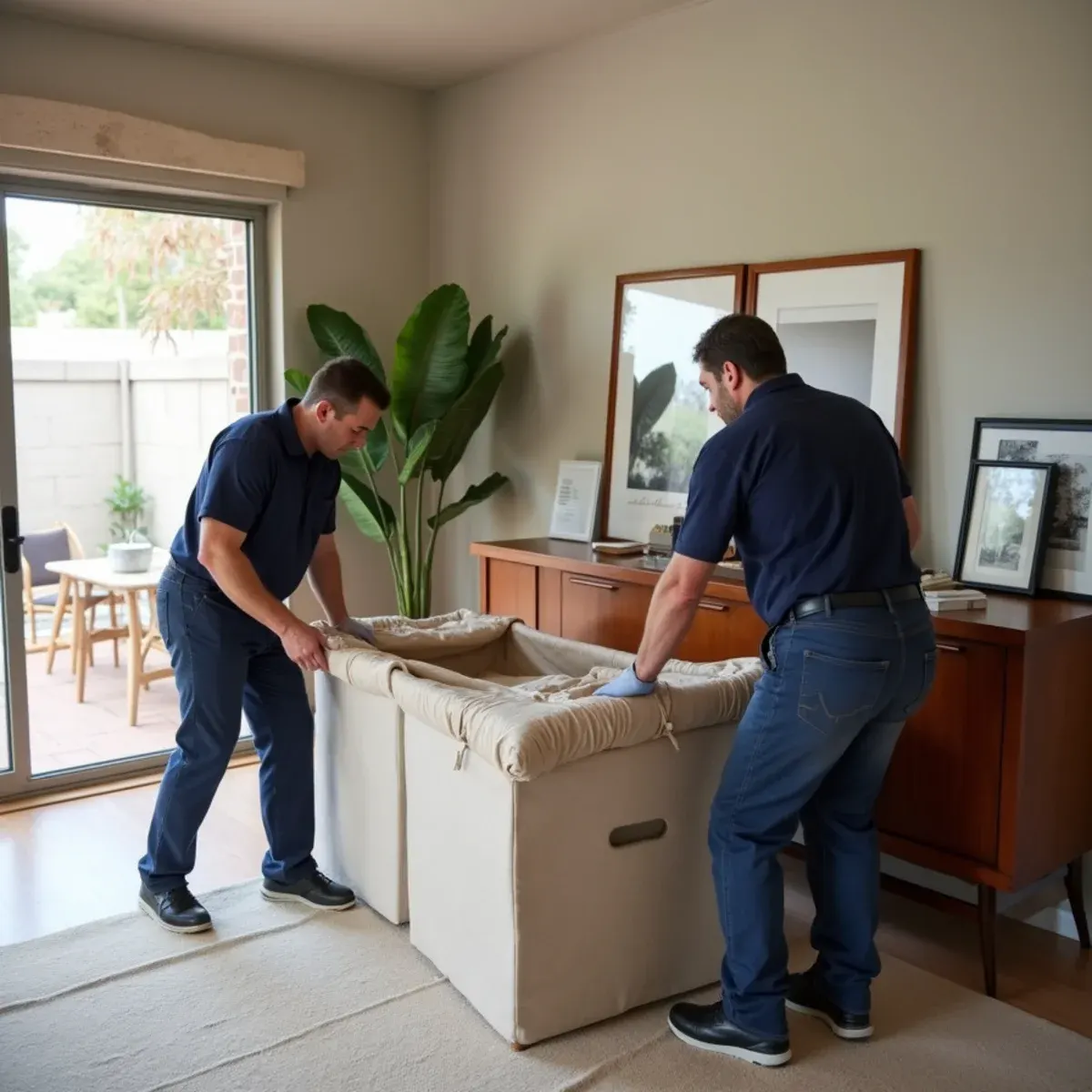
In an attached hillside community the association's policy generally covers the structure and common areas, while your belongings sit under your own personal property or renters coverage. Two carriers, two adjusters, two schedules. We inventory and store unit contents separately from anything the association is responsible for, tagged by address, so neither claim ends up waiting on the other to move.
3Marine air defeats drying on the hill
Being 365 feet up does not put you above the marine layer. Ambient humidity here stays high enough that drying contents in a garage or under a carport does not work reliably, and damp items left in a closed garage after a slope event grow before they dry. Anything porous goes into controlled storage instead of sitting on the property waiting for a dry week.
How the Work Runs
The method is the same one we use on every contents & pack-out job, documented to the IICRC S500:2025 standard. Here it is in short — the full contents restoration & pack-out process explains each stage in detail.
- Room-by-room photographic inventory
- Triage into three categories
- Careful packing and transport
- Cleaning and restoration by material type
- Climate-controlled storage
- Delivery and placement back
The Signal Hill Background Worth Knowing
On these lots the drainage is engineered rather than natural. Terrace drains catch water partway down a slope, v-ditches carry it around a pad instead of across it, and retaining walls have weep holes with a gravel drain behind them so pressure never builds in the soil. All of that works until something clogs. Then a retaining wall stops being a wall and starts being a dam, and saturated soil pushes water through the joints and into whatever sits on the other side, which is usually a garage, a storage room, or the back of a lower level.
There is more on the housing stock, drainage and plumbing history of this city on our water damage restoration in Signal Hill page.
Signal Hill at a glance
- Dominant construction era
- 1920–2005
- Foundation type
- mixed on grade
- Supply piping found here
- original 1920s piping, galvanized steel, modern PEX in newer hillside builds
- Drain line materials
- cast iron, ABS
- Terrain and water table
- hillside-mixed, deep water table
- Most common local failure
- slope drainage and retaining-wall failures on steep lots, where water arrives with velocity rather than ponding
- Highest-value local prevention
- keeping terrace drains, v-ditches and retaining-wall weeps clear before the first storm
What It Costs in Signal Hill
We do not quote a number over the phone before seeing the property — anyone who does is guessing. The variables that actually move the price on a contents & pack-out job are volume of contents, proportion of specialty items, storage duration, and they are broken down in full on the contents restoration & pack-out page. The assessment and the written estimate are free anywhere in Signal Hill, day or night, with no obligation.
Contents & Pack-Out Questions from Signal Hill Homeowners
The split is usually structure versus belongings, but read your CC&Rs, because associations here vary on whether garage interiors and slope drainage count as common area. Practically, your boxes, tools and stored items are your personal property claim regardless of who repairs the drain. We document the entry path and the drainage component that failed, since that evidence matters to both carriers, and we keep your inventory separate from anything the association is handling.
It depends on the scope. For a contained single-room loss we often move contents to an unaffected part of the home and block furniture in place. When the drying chamber covers most of the living area or reconstruction is extensive, off-site pack-out is usually both safer and faster.
Every item is photographed and barcoded at your home and tracked through cleaning, storage, and delivery. You receive the inventory, and at delivery we reconcile it with you item by item before we leave.
Start uphill. On this hill the cause is almost never at the place the water got in. Walk the slope above your pad and check the terrace drains, the v-ditch and the retaining wall weep holes. A weep that has been painted or stuccoed over is common and completely disables the drain behind the wall. Then look at where the uphill property discharges. Fixing the entry point without finding the redirect just moves the problem a few feet.