
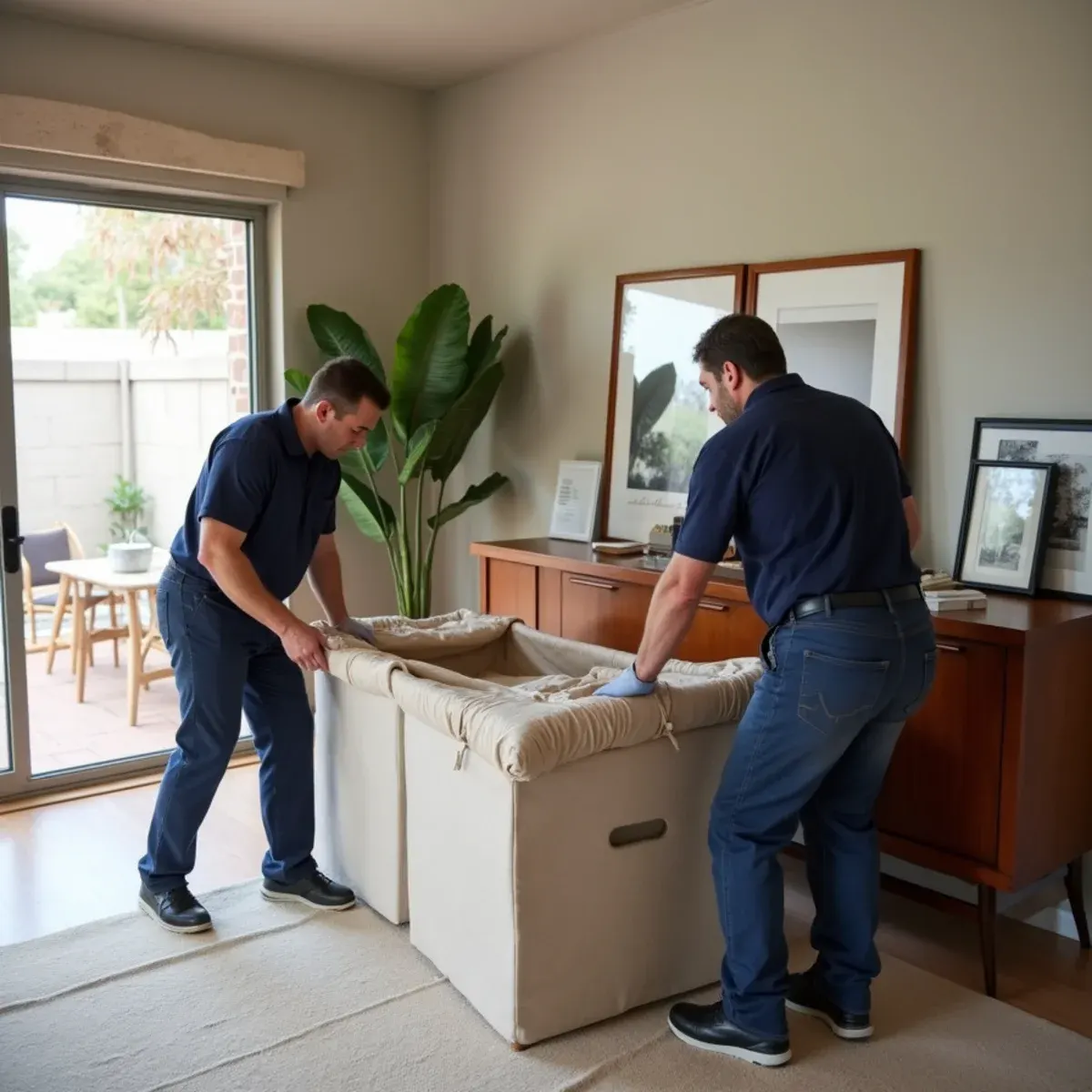
Four Long Beach addresses, four different jobs. A 1926 Craftsman in Bluff Park with lath-and-plaster walls and hundred-year-old furniture. A canal-front house in Naples on filled land with a shallow table. A Belmont Shore lot so narrow that the first real question is where the truck parks. And a slab tract home in El Dorado Park Estates that behaves exactly like the houses on our own street in Cypress. We ask which neighborhood before we ask anything else, because the answer changes the entire plan.
The plaster neighborhoods drive the sequence — contents out before demolition, because wet plaster releases from the lath in a heavy, abrasive cloud that does more harm to upholstery and artwork than the water ever did. The coastal neighborhoods drive the logistics. On Belmont Shore's numbered streets there is no driveway and limited street parking, so staging has to be arranged before the crew arrives rather than figured out on site. East Long Beach is the straightforward one: slab, postwar, familiar ground.
What Long Beach Changes About Contents & Pack-Out
1Construction type is identified before anything moves
A 1926 plaster wall and a 1955 drywall wall are different problems, and the contents decision follows from which one you have. Plaster holds several times the water, releases it slowly, and fails structurally as it dries. That means a longer job, more dehumidification, and belongings out of the room first. We establish the assembly type during the walk-through.
2Belmont Shore staging is planned in advance
Narrow lots, no driveways and permit parking mean a full-size truck often cannot get near the door. We scout the block, shuttle with smaller vehicles where we have to, and protect the walkway and any shared entry. Homeowners can help by holding a parking space early — it saves real hours on a pack-out day.
3Naples and canal-front hold moisture longer
Houses on filled land along the canals sit close to groundwater with strong marine influence, so ambient humidity stays high and drying runs longer than it would three miles inland. Contents held on site in that environment do not dry; they hold. Salvageable items go to climate-controlled storage the same day rather than waiting in a garage.
How the Work Runs
The method is the same one we use on every contents & pack-out job, documented to the IICRC S500:2025 standard. Here it is in short — the full contents restoration & pack-out process explains each stage in detail.
- Room-by-room photographic inventory
- Triage into three categories
- Careful packing and transport
- Cleaning and restoration by material type
- Climate-controlled storage
- Delivery and placement back
The Long Beach Background Worth Knowing
The postwar tracts around El Dorado Park, Los Altos, and the neighborhoods near the Cypress border were built in the same era and largely the same way as the housing in our home city. Single-story slab construction, plumbing routed under the concrete, and a fifty-to-seventy-year age on the supply lines.
There is more on the housing stock, drainage and plumbing history of this city on our water damage restoration in Long Beach page.
Long Beach at a glance
- Dominant construction era
- 1920–1980
- Foundation type
- mixed on grade
- Supply piping found here
- original 1920s piping, galvanized steel, under-slab copper
- Drain line materials
- cast iron, clay
- Terrain and water table
- coastal-flat, shallow water table
- Most common local failure
- the approach changing entirely by neighborhood — a 1926 plaster wall and a 1955 drywall wall are different restoration problems
- Highest-value local prevention
- identifying the construction type before anyone starts cutting
What It Costs in Long Beach
We do not quote a number over the phone before seeing the property — anyone who does is guessing. The variables that actually move the price on a contents & pack-out job are volume of contents, proportion of specialty items, storage duration, and they are broken down in full on the contents restoration & pack-out page. The assessment and the written estimate are free anywhere in Long Beach, day or night, with no obligation.
Contents & Pack-Out Questions from Long Beach Homeowners
It should not, but it takes deliberate work. Original casing, plate rails and stair parts in a Bluff Park Craftsman cannot be replaced with stock material, so we pad and board every jamb and corner along the route before the first item moves, and we take doors off their hinges instead of squeezing past them. Large case pieces get blanket-wrapped and carried through the tight sections rather than dollied.
It depends on the scope. For a contained single-room loss we often move contents to an unaffected part of the home and block furniture in place. When the drying chamber covers most of the living area or reconstruction is extensive, off-site pack-out is usually both safer and faster.
Every item is photographed and barcoded at your home and tracked through cleaning, storage, and delivery. You receive the inventory, and at delivery we reconcile it with you item by item before we leave.
All of it, with the fastest response to East Long Beach — El Dorado Park Estates, Los Altos, and the neighborhoods near the Cypress border, which are typically twenty to twenty-five minutes. Coastal and downtown areas run a little longer, and we will give you a realistic ETA when you call.