
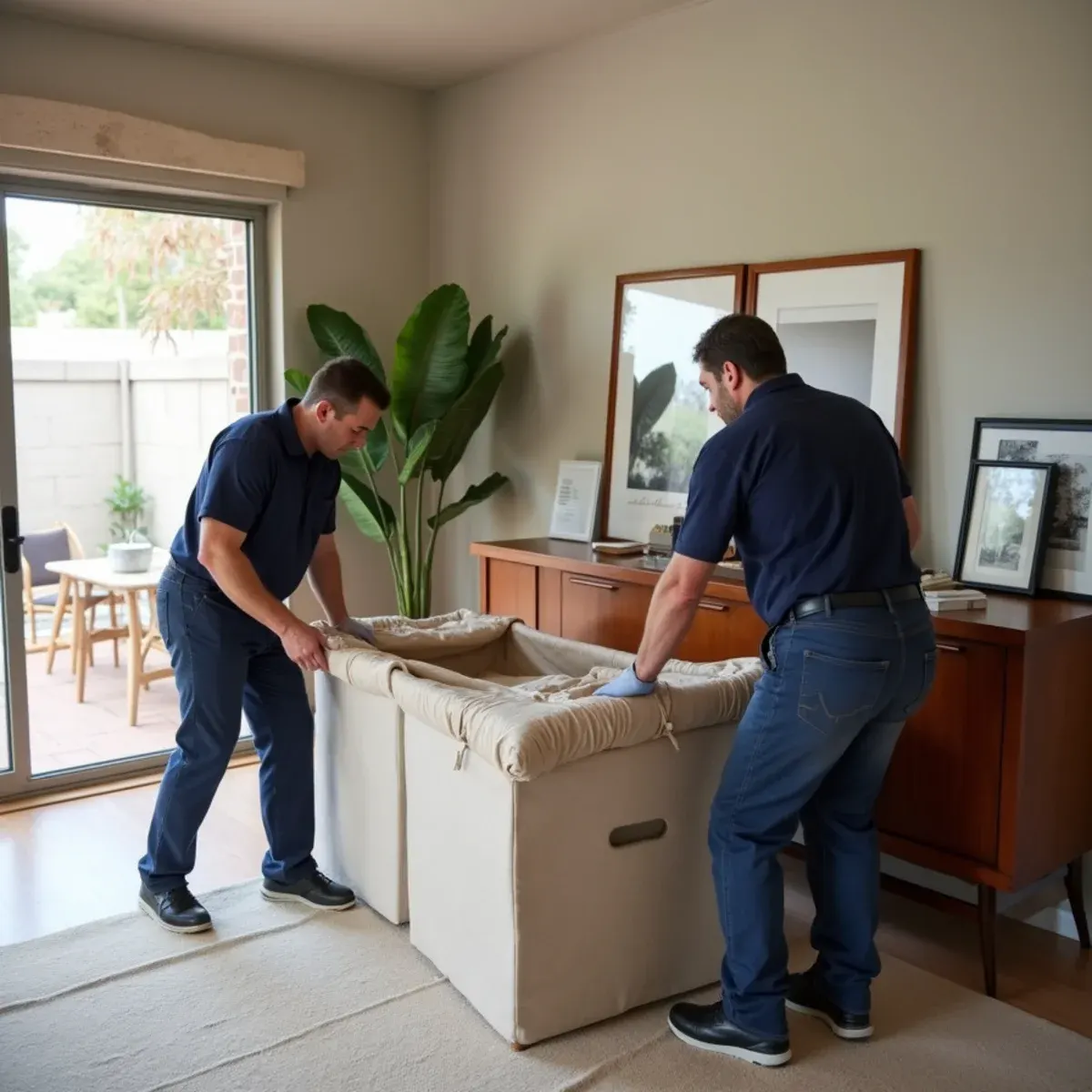
A 1910 Colony District house with lath-and-plaster walls is a different contents job from a 1958 West Anaheim tract, which is different again from a three-level home off Nohl Ranch in the hills. The county's largest city covers more construction history than anywhere else we work, and there is no single Anaheim answer. The first thing we do on arrival is establish which Anaheim we are standing in. Sequence, protection and storage all follow from that, and getting it wrong costs belongings that could have been saved.
In the Colony, plaster is the reason contents move fast. Wet plaster keys soften and let go from the lath, and when a ceiling releases it drops several times the weight of drywall along with a century of dust. In the hills, water follows the stairs — a second-floor failure lands in the entry, the lower-level family room and whatever is stored on the bottom level. And around the Resort District, the property we are inventorying is hotel and hospitality equipment, not a household.
What Anaheim Changes About Contents & Pack-Out
1Plaster dust is harder on contents than water
Old plaster carries lime and silica, and it is both abrasive and alkaline. Settled into upholstery, artwork and electronics it does more permanent harm than the clean water that started the loss. In Colony District homes we get contents out or fully sealed before any plaster is opened, then clean by material type rather than running everything through one process.
2Hillside homes lose contents on the lowest level
Anaheim Hills houses are stacked two and three levels into a slope, and water finds the stairwell. The finished lower level is usually where storage, the home office and the media equipment live, and it is the last place anyone looks. On a multi-level loss we inventory from the bottom up, which is the reverse of how the water traveled.
3Hospitality property runs on a different clock
Near the Resort District, a loss in a hotel or restaurant is business personal property with revenue attached to every hour. We stage the pack-out by room block or kitchen zone so the unaffected part of the operation keeps running, and we document quantities and model numbers in the format a commercial adjuster expects to receive.
How the Work Runs
The method is the same one we use on every contents & pack-out job, documented to the IICRC S500:2025 standard. Here it is in short — the full contents restoration & pack-out process explains each stage in detail.
- Room-by-room photographic inventory
- Triage into three categories
- Careful packing and transport
- Cleaning and restoration by material type
- Climate-controlled storage
- Delivery and placement back
The Anaheim Background Worth Knowing
The Anaheim Colony Historic District and the older streets around downtown contain homes built from the early 1900s through the 1930s, and they are constructed differently in ways that matter enormously during a water loss.
There is more on the housing stock, drainage and plumbing history of this city on our water damage restoration in Anaheim page.
Anaheim at a glance
- Dominant construction era
- 1900–2000
- Foundation type
- mixed on grade
- Supply piping found here
- galvanized steel, under-slab copper, original early-century piping in the Colony
- Drain line materials
- cast iron, clay
- Terrain and water table
- hillside-mixed, moderate water table
- Most common local failure
- lath-and-plaster assemblies that hold several times the water drywall does and release it far more slowly
- Highest-value local prevention
- acting immediately on any plaster-wall loss, because wet plaster keys soften and release from the lath
What It Costs in Anaheim
We do not quote a number over the phone before seeing the property — anyone who does is guessing. The variables that actually move the price on a contents & pack-out job are volume of contents, proportion of specialty items, storage duration, and they are broken down in full on the contents restoration & pack-out page. The assessment and the written estimate are free anywhere in Anaheim, day or night, with no obligation.
Contents & Pack-Out Questions from Anaheim Homeowners
Yes, but it takes longer and it should. Original casing, picture rail and built-in cabinetry in a 1910s Anaheim home cannot be bought back. We pad and board the door jambs and stair run before the first box moves, dismantle nothing that is fastened to the wall unless we have to, and route the crew away from plaster we expect to open. If a built-in must come out to dry the wall behind it, every piece gets numbered as it comes off.
It depends on the scope. For a contained single-room loss we often move contents to an unaffected part of the home and block furniture in place. When the drying chamber covers most of the living area or reconstruction is extensive, off-site pack-out is usually both safer and faster.
Every item is photographed and barcoded at your home and tracked through cleaning, storage, and delivery. You receive the inventory, and at delivery we reconcile it with you item by item before we leave.
Yes, and we approach them differently. Lath and plaster holds much more water than drywall and dries far more slowly, so it needs more equipment and considerably more patience — but it can usually be saved in place, and original plaster is not something a repair can replace.