
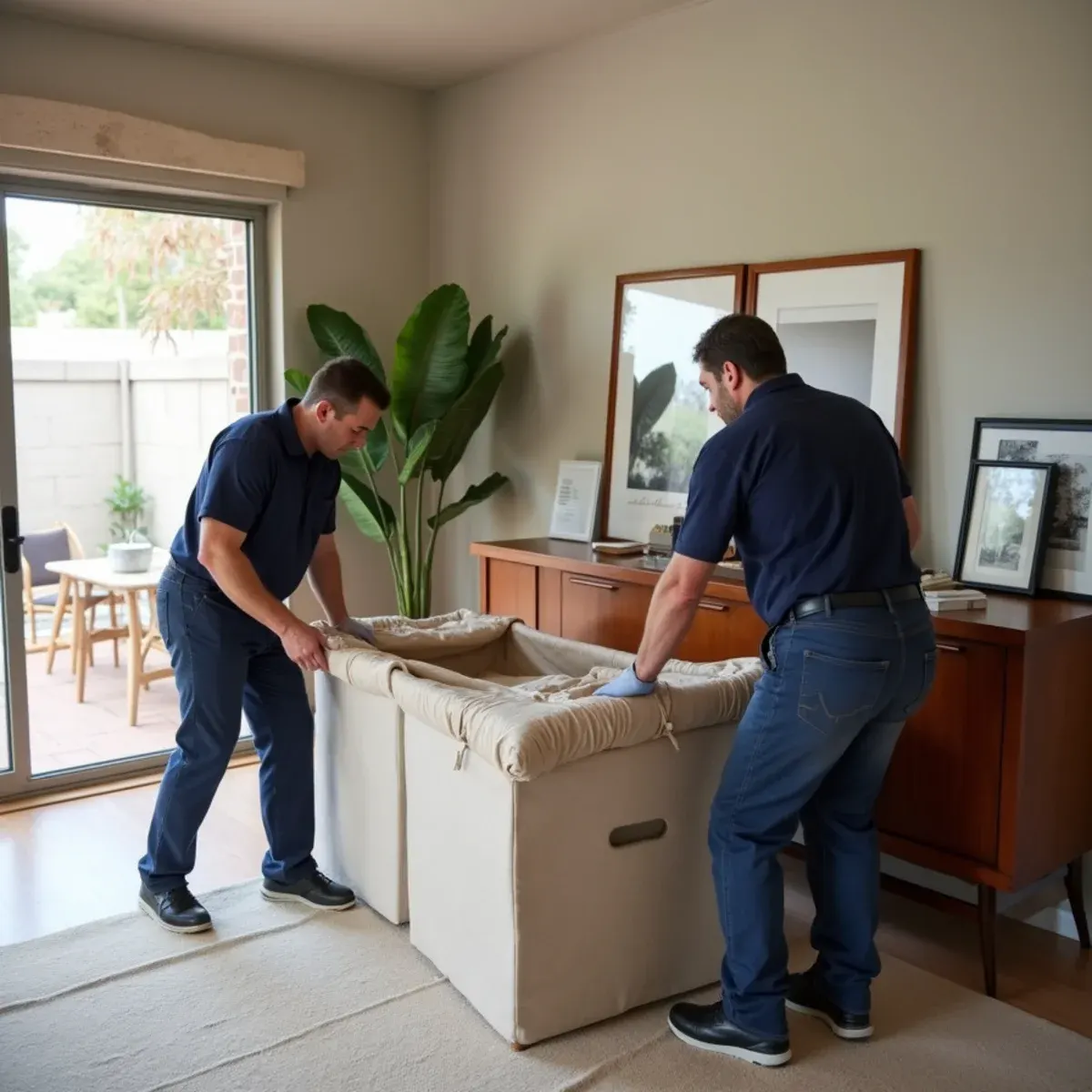
Fabric on Pioneer Boulevard is often worth more per square foot than the building holding it. Silk, zari and gold-thread embroidery, stacked deep on open shelving and hanging low to the floor. When a cast-iron waste line backs up into a sari shop — and grease-loaded cast iron in a 1950s building backs up regularly — the water is Category 3 and the inventory is the entire business. Every piece gets inventoried, triaged and cleaned by fiber, not run through in a single batch to save time.
Artesia packs one of the densest concentrations of independent retail and restaurants in the region into about two square miles, almost all of it in postwar buildings that were never designed for commercial kitchens or high-density retail. The owners are independents. There is no corporate reserve behind a three-week closure, so speed is not a nicety here. Behind the commercial strip, the residential side is modest postwar single-family and older multi-family running on galvanized and cast iron of exactly the same age.
What Artesia Changes About Contents & Pack-Out
1Textile stock cleans by fiber, not by rack
Silk, cotton, synthetic blends and metallic thread all respond differently, and a Category 3 backup means cleaning has to be verifiable rather than cosmetic. We inventory by piece or by SKU where the owner keeps records that way, separate at the point of packing, and handle metallic embroidery on its own because the wrong process tarnishes zari permanently.
2Closure time is the real loss
For an independent shop or restaurant, three weeks closed usually costs more than the damaged inventory did. Pack-out is what lets drying start immediately and lets cleaning happen off site while the building is worked on. We stage returns so a sales floor or a kitchen can reopen in sections rather than waiting for the entire property to finish.
3Grease backups are Category 3 from the start
Grease builds on the rough interior of corroded cast iron until the line restricts and backs up. That water is contaminated, so contents it touched are not a cleaning judgment call — porous items that absorbed it generally do not come back, and IICRC S500:2025 is clear on the point. Documenting why each item was condemned is what protects the claim.
How the Work Runs
The method is the same one we use on every contents & pack-out job, documented to the IICRC S500:2025 standard. Here it is in short — the full contents restoration & pack-out process explains each stage in detail.
- Room-by-room photographic inventory
- Triage into three categories
- Careful packing and transport
- Cleaning and restoration by material type
- Climate-controlled storage
- Delivery and placement back
The Artesia Background Worth Knowing
A commercial kitchen is one of the hardest things you can ask a building to accommodate. High water use, continuous drainage, grease loading, floor drains, and equipment connections that get added and modified over the years. When that kitchen is in a building from the 1950s with original cast-iron waste lines, the failure is a matter of time.
There is more on the housing stock, drainage and plumbing history of this city on our water damage restoration in Artesia page.
Artesia at a glance
- Dominant construction era
- 1950–1970
- Foundation type
- slab on grade
- Supply piping found here
- galvanized steel, copper
- Drain line materials
- cast iron
- Terrain and water table
- flat, moderate water table
- Most common local failure
- grease-loaded cast-iron waste lines restricting until a commercial kitchen backs up
- Highest-value local prevention
- hydro-jetting the waste line rather than snaking it, so the pipe wall actually gets cleaned
What It Costs in Artesia
We do not quote a number over the phone before seeing the property — anyone who does is guessing. The variables that actually move the price on a contents & pack-out job are volume of contents, proportion of specialty items, storage duration, and they are broken down in full on the contents restoration & pack-out page. The assessment and the written estimate are free anywhere in Artesia, day or night, with no obligation.
Contents & Pack-Out Questions from Artesia Homeowners
Not automatically, but a floor-drain backup is contaminated water and porous goods that sat in it usually are. The determining factors are how high the water reached on each rack and what each fabric actually is. Silk and metallic embroidery with only airborne exposure often clean; anything submerged does not. We photograph, count and grade every piece, so the condemned inventory is documented as thoroughly as the salvaged inventory.
It depends on the scope. For a contained single-room loss we often move contents to an unaffected part of the home and block furniture in place. When the drying chamber covers most of the living area or reconstruction is extensive, off-site pack-out is usually both safer and faster.
Every item is photographed and barcoded at your home and tracked through cleaning, storage, and delivery. You receive the inventory, and at delivery we reconcile it with you item by item before we leave.
Yes, and on Pioneer Boulevard that is usually how we schedule it. Overnight crews cost somewhat more in labor and almost always cost dramatically less than lost revenue from closing during operating hours.