
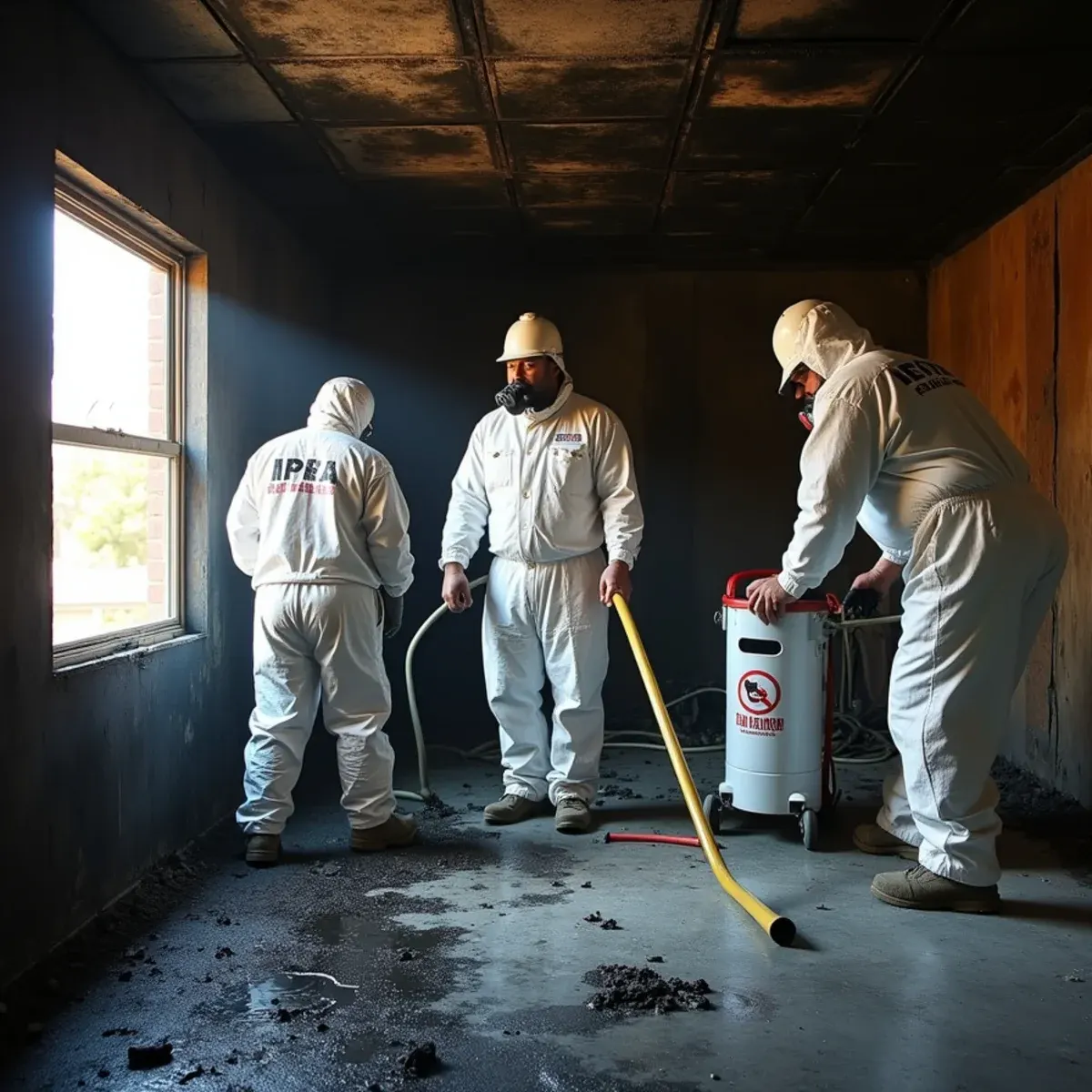
The reason we work slowly in Downey is the trim. Jean Vandruff's Cinderella Homes put turrets, scalloped bargeboard, diamond-pane windows and gingerbread detailing onto ordinary 1950s tract houses, and none of it is available at a lumberyard today. When smoke films that woodwork, the difference between a good restoration and a bad one is whether the contractor cleans it or fills a dumpster because replacement is quicker to bill. We would rather spend the hours on the woodwork than on the demolition.
Downey's mid-century modern tracts bring a different problem. Post-and-beam houses use tongue-and-groove decking as the finished ceiling and the roof deck at the same time, so there is no attic between you and the sky and no cavity to isolate. Smoke that reaches the ceiling reaches the only layer there is. Underneath the styling, this is standard 1950s slab construction with galvanized supply lines, which means suppression water spreads across the slab, under carpet and pad, and into the bottom plates.
What Downey Changes About Fire & Smoke Damage
1Cinderella millwork cannot be reordered
The bargeboard, shake turrets, diamond-pane sash and arched interior openings on these houses were built for a specific tract and never reproduced. Losing a run of it changes the house permanently and hurts resale in a neighborhood where buyers come specifically for the detailing. Where residue and moisture readings allow, we clean, seal and refinish in place, and we match profiles by milling when a piece truly has to be replaced.
2Exposed beam ceilings have no attic
In a post-and-beam house the tongue-and-groove decking overhead is finish surface, structure and roof deck at once. There is no insulated cavity to remove and replace, so soot on that wood is soot on the structure. Cleaning has to be gentle enough to preserve the finish and thorough enough to stop odor, and any staining is addressed with sealing and refinishing rather than covering it with drywall.
3Slab water runs under carpet and pad
These 1950s tracts have no crawl space, so hose-line water spreads horizontally across the slab. It wicks into pad, tack strip, bottom plates and the base of any wall it reaches, often several rooms from the fire. We map moisture with meters rather than eyes, dry to documented standards under IICRC S500:2025, and remove only what will not dry in place.
How the Work Runs
The method is the same one we use on every fire & smoke damage job, documented to the IICRC S500:2025 standard. Here it is in short — the full fire & smoke damage restoration process explains each stage in detail.
- Secure the structure
- Water extraction and drying first
- Assess residue type room by room
- Remove non-salvageable material and clean the rest
- Deodorize at the source
- Contents restoration and rebuild
The Downey Background Worth Knowing
The instinct on a wet wall is to open it, and sometimes that is correct. But IICRC S500:2025 is built around restoring rather than replacing wherever the drying goals can genuinely be met, and on a house with original arched casings and applied gingerbread, meeting those goals is worth some patience. We would rather spend three extra days with equipment running than pull a run of trim that would have to be milled from scratch to come back. The standard supports that choice and so does the arithmetic on the estimate, because custom millwork is not cheap and matching a fifties profile is not quick.
There is more on the housing stock, drainage and plumbing history of this city on our water damage restoration in Downey page.
Downey at a glance
- Dominant construction era
- 1950–1965
- Foundation type
- slab on grade
- Supply piping found here
- galvanized steel, under-slab copper
- Drain line materials
- cast iron
- Terrain and water table
- flat, moderate water table
- Most common local failure
- 1950s slab and galvanized failures in houses whose decorative woodwork makes careful, low-demolition drying worth paying for
- Highest-value local prevention
- drying in place wherever readings allow, because the trim and detailing on these houses cannot be bought
What It Costs in Downey
We do not quote a number over the phone before seeing the property — anyone who does is guessing. The variables that actually move the price on a fire & smoke damage job are extent of structural burn, how far the smoke traveled, residue type, and they are broken down in full on the fire & smoke damage restoration page. The assessment and the written estimate are free anywhere in Downey, day or night, with no obligation.
Fire & Smoke Damage Questions from Downey Homeowners
Frequently, yes. Charred wood with lost section has to go, but a great deal of what looks ruined is surface residue and heat staining on a finish that can be cleaned and refinished. The determining factors are how long soot sat before treatment, since it is acidic and etches finishes within days, and whether the piece stayed dry. Call early. The single biggest cause of losing original Downey millwork is waiting a week to start.
Fire suppression uses enormous volumes of water in a short time — often thousands of gallons. That water saturates ceilings, insulation, walls, and floors well beyond the burned area, and it has to be extracted and dried like any other water loss, on top of the fire work.
Yes, when the residue is removed completely — including inside wall cavities, ductwork, attic insulation, and behind cabinetry. Odor that returns later always means residue was left somewhere. Masking agents and ozone alone do not solve it.
Usually, yes. We go into the wall cavity through small ports low on the wall, hidden behind shoe molding or inside a closet, and dry from the inside out rather than taking the finished face off. That takes longer and needs more equipment than gutting the wall would, which is exactly the trade we think is worth making on a house with millwork that cannot be bought. Where it will not work, we tell you early.