
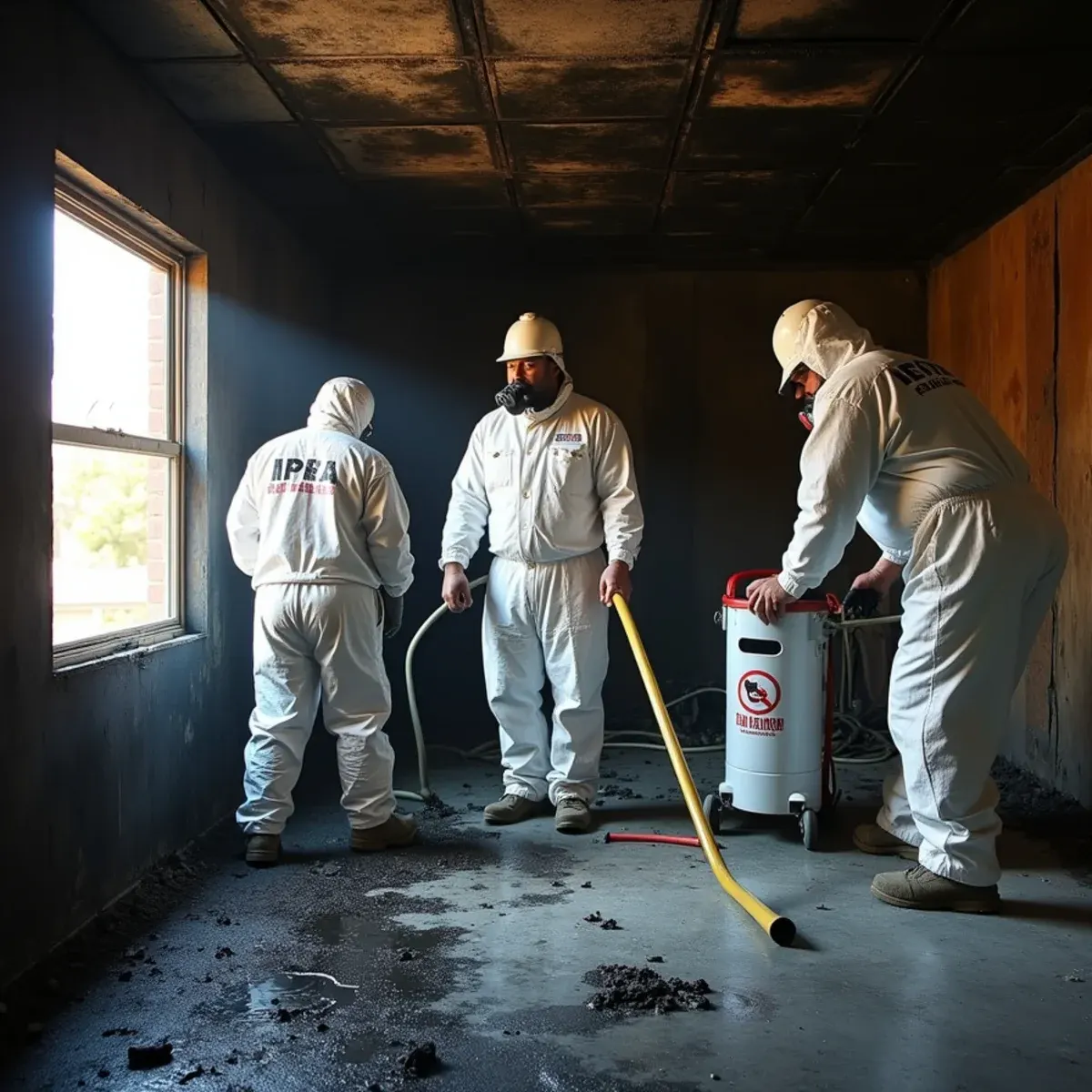
A bedroom fire on the second floor of a La Palma home does two things at once. Heat and smoke go up into the attic and along the ceiling of every upstairs room. Then the hose water goes down — through the burned floor, into the joist bays, and out along the ceiling below until it finds a light fixture or a drywall seam to come through. By the time crews clear out, you have a fire loss upstairs and a water loss downstairs in rooms nobody thought were involved at all.
The city is small enough that we know the tracts by street. Homes off Walker Street and around Central Park went up in a two-decade window, to a limited set of plans, and long-tenured owners have kept them tight — which is exactly why the enclosed floor assemblies are so intact and so good at hiding wet insulation. Well-sealed houses also hold smoke odor longer. We open the ceiling below the fire floor on purpose rather than hoping it dries through the drywall, because it will not.
What La Palma Changes About Fire & Smoke Damage
1Smoke collects in the upstairs ceiling plane
Heat rises to the highest surface it can reach, which in a two-story La Palma home is the second-floor ceiling and the attic above it. Blown insulation up there holds odor well and gives it back on warm days. Sealing over it doesn't work for long. If the attic took smoke, the insulation over the affected area comes out.
2Water in the floor assembly between levels
Hose water from an upstairs fire goes into the joist bays and travels along them, wetting insulation, ductwork and the top of the drywall ceiling below. Nothing about that dries through an intact ceiling in a reasonable time. We meter from both sides and open the ceiling where the readings say to, rather than waiting to see whether stains appear later.
3Water keeps running after the fire is out
Plastic supply lines, angle stops and washing machine hoses melt at temperatures well below what a room fire reaches, so a house can keep feeding water into itself long after the flames are knocked down. Knowing where your main shutoff is, and confirming it still turns, is worth ten minutes of your time this weekend.
How the Work Runs
The method is the same one we use on every fire & smoke damage job, documented to the IICRC S500:2025 standard. Here it is in short — the full fire & smoke damage restoration process explains each stage in detail.
- Secure the structure
- Water extraction and drying first
- Assess residue type room by room
- Remove non-salvageable material and clean the rest
- Deodorize at the source
- Contents restoration and rebuild
The La Palma Background Worth Knowing
There is a pattern we see repeatedly in La Palma. A homeowner has taken excellent care of a house for thirty years — new roof, dual-pane windows, updated electrical panel, remodeled kitchen. Then a slab leak runs for eight months under the living room and nobody catches it, because there was never anything to see.
There is more on the housing stock, drainage and plumbing history of this city on our water damage restoration in La Palma page.
La Palma at a glance
- Dominant construction era
- 1960–1980
- Foundation type
- slab on grade
- Supply piping found here
- under-slab copper
- Drain line materials
- cast iron, ABS
- Terrain and water table
- flat, moderate water table
- Most common local failure
- second-floor supply and fixture failures that travel through the floor assembly into the ceiling below
- Highest-value local prevention
- knowing where the main shutoff is and confirming it still turns, because two-story losses double in size in minutes
What It Costs in La Palma
We do not quote a number over the phone before seeing the property — anyone who does is guessing. The variables that actually move the price on a fire & smoke damage job are extent of structural burn, how far the smoke traveled, residue type, and they are broken down in full on the fire & smoke damage restoration page. The assessment and the written estimate are free anywhere in La Palma, day or night, with no obligation.
Fire & Smoke Damage Questions from La Palma Homeowners
Because the water that put the fire out went into the floor between the two levels. It soaks the insulation and the top of the drywall ceiling below, then travels along the joist bays away from the fire. An intact ceiling will not dry that cavity in any reasonable time, and wet insulation holds smoke odor just as well as it holds moisture. We meter from both sides first and open only where the readings justify it.
Fire suppression uses enormous volumes of water in a short time — often thousands of gallons. That water saturates ceilings, insulation, walls, and floors well beyond the burned area, and it has to be extracted and dried like any other water loss, on top of the fire work.
Yes, when the residue is removed completely — including inside wall cavities, ductwork, attic insulation, and behind cabinetry. Odor that returns later always means residue was left somewhere. Masking agents and ozone alone do not solve it.
Typically fifteen to twenty minutes. La Palma borders Cypress directly to the north, so it is one of the fastest calls we run and the 60-minute commitment applies in full.