
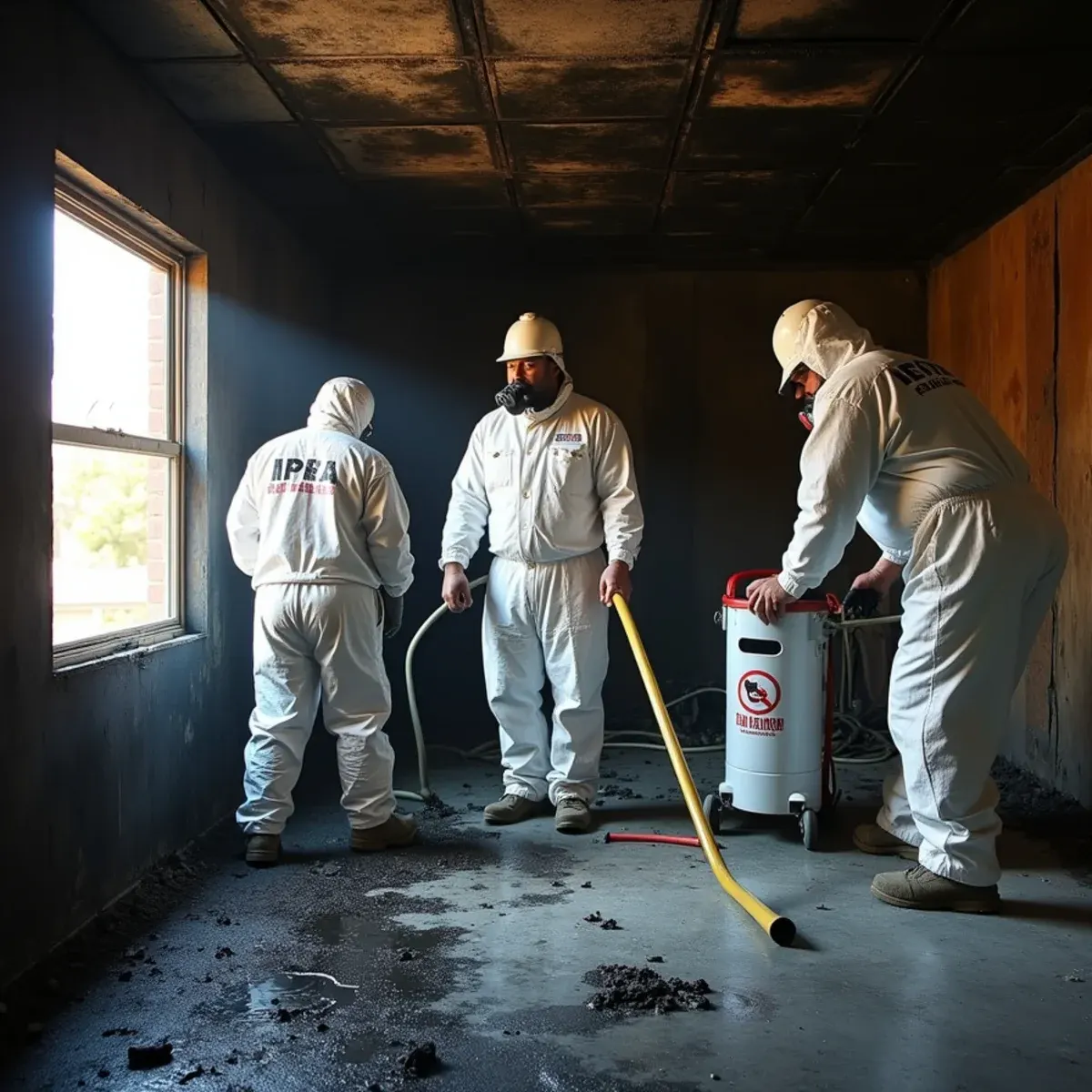
Here is something Eastside homeowners learn the hard way: you cannot air out a fire in Costa Mesa. Open the windows on a June morning and you are pulling in marine air at high humidity, which does nothing for odor and works directly against the drying we have to do after suppression. The 1920s to 1940s cottages east of Newport Boulevard sit on raised foundations under a heavy canopy that keeps sun off the ground most of the day. Ventilation on its own is not a plan in this city.
The rest of the housing mix makes every job its own. Mesa Verde is 1960s slab tract. The Westside puts industrial buildings next to housing, so a commercial fire there can leave plastics and solvent residue on homes that never saw flame, which is a different residue and a different cleaning method than a kitchen grease fire. With a shallow water table and the Santa Ana River along the western edge, crawl spaces that take on suppression water here stay wet far longer than the same crawl space would inland.
What Costa Mesa Changes About Fire & Smoke Damage
1Humidity works against odor control
Smoke odor is residue reacting with moisture and heat. On a coastal-flat city with strong marine influence, humidity indoors climbs every night, and odor that seemed handled comes back by morning. We run dehumidification alongside air scrubbing rather than relying on open windows and fans, and we hold the building at controlled conditions until residue removal is finished, not just until surfaces look clean.
2Crawl spaces under Eastside cottages
Raised-foundation cottages have a dirt crawl space that catches soot-laden suppression water, and vents that are frequently painted shut or blocked by decades of landscaping. Under a mature canopy that space gets almost no solar drying. We inspect the subfloor and joists from below, dry mechanically with containment in place, and check that the vents are actually open before we call the structure done.
3Westside industrial residue on homes
The Westside's mix of industrial buildings and housing means a nearby commercial fire can deposit burned plastics, adhesives and solvent residue on homes with no fire damage of their own. That residue is not household soot and does not clean the same way. We identify what burned before choosing a method, and we use appropriate protection, because guessing here risks both your finishes and our crew.
How the Work Runs
The method is the same one we use on every fire & smoke damage job, documented to the IICRC S500:2025 standard. Here it is in short — the full fire & smoke damage restoration process explains each stage in detail.
- Secure the structure
- Water extraction and drying first
- Assess residue type room by room
- Remove non-salvageable material and clean the rest
- Deodorize at the source
- Contents restoration and rebuild
The Costa Mesa Background Worth Knowing
Under a raised Eastside cottage there is bare soil, and that soil is supposed to stay dry because the foundation vents exchange air with the outside. That system depends on the outside air being drier than the space under the house. For a good part of the year in Costa Mesa it is not. The marine layer holds humidity high through the night and well into the morning, so the crawl space never gets the dry stretch it needs, and moisture that arrives from a plumbing drip, a downspout, or an irrigation line just accumulates.
There is more on the housing stock, drainage and plumbing history of this city on our water damage restoration in Costa Mesa page.
Costa Mesa at a glance
- Dominant construction era
- 1920–1980
- Foundation type
- mixed on grade
- Supply piping found here
- original 1920s–1940s piping on the Eastside, galvanized steel, under-slab copper
- Drain line materials
- cast iron, clay
- Terrain and water table
- coastal-flat, shallow water table
- Most common local failure
- crawl-space moisture under Eastside cottages, held in by a marine layer that slows every natural drying process
- Highest-value local prevention
- confirming crawl-space vents are actually open and that the ground under the house is dry
What It Costs in Costa Mesa
We do not quote a number over the phone before seeing the property — anyone who does is guessing. The variables that actually move the price on a fire & smoke damage job are extent of structural burn, how far the smoke traveled, residue type, and they are broken down in full on the fire & smoke damage restoration page. The assessment and the written estimate are free anywhere in Costa Mesa, day or night, with no obligation.
Fire & Smoke Damage Questions from Costa Mesa Homeowners
Because residue is still in the building. Smoke particles are hygroscopic, so when marine humidity rises overnight they take on moisture and release odor compounds again. That is why the smell seems to disappear on a warm afternoon and return by six the next morning. Fogging and sealers mask it briefly and then it comes back. The permanent fix is removing residue from the cavities, insulation and ductwork where it is sitting, then drying the structure properly.
Fire suppression uses enormous volumes of water in a short time — often thousands of gallons. That water saturates ceilings, insulation, walls, and floors well beyond the burned area, and it has to be extracted and dried like any other water loss, on top of the fire work.
Yes, when the residue is removed completely — including inside wall cavities, ductwork, attic insulation, and behind cabinetry. Odor that returns later always means residue was left somewhere. Masking agents and ozone alone do not solve it.
Almost always the crawl space. On these raised 1920s to 1940s houses the soil under the floor stays damp when the foundation vents are blocked and the marine layer keeps outside air humid overnight. That moisture moves up through the subfloor and into the rooms above it. Before assuming anything, walk your perimeter and see whether a planter, a poured patio or landscaping has covered the vents that are supposed to be breathing.