
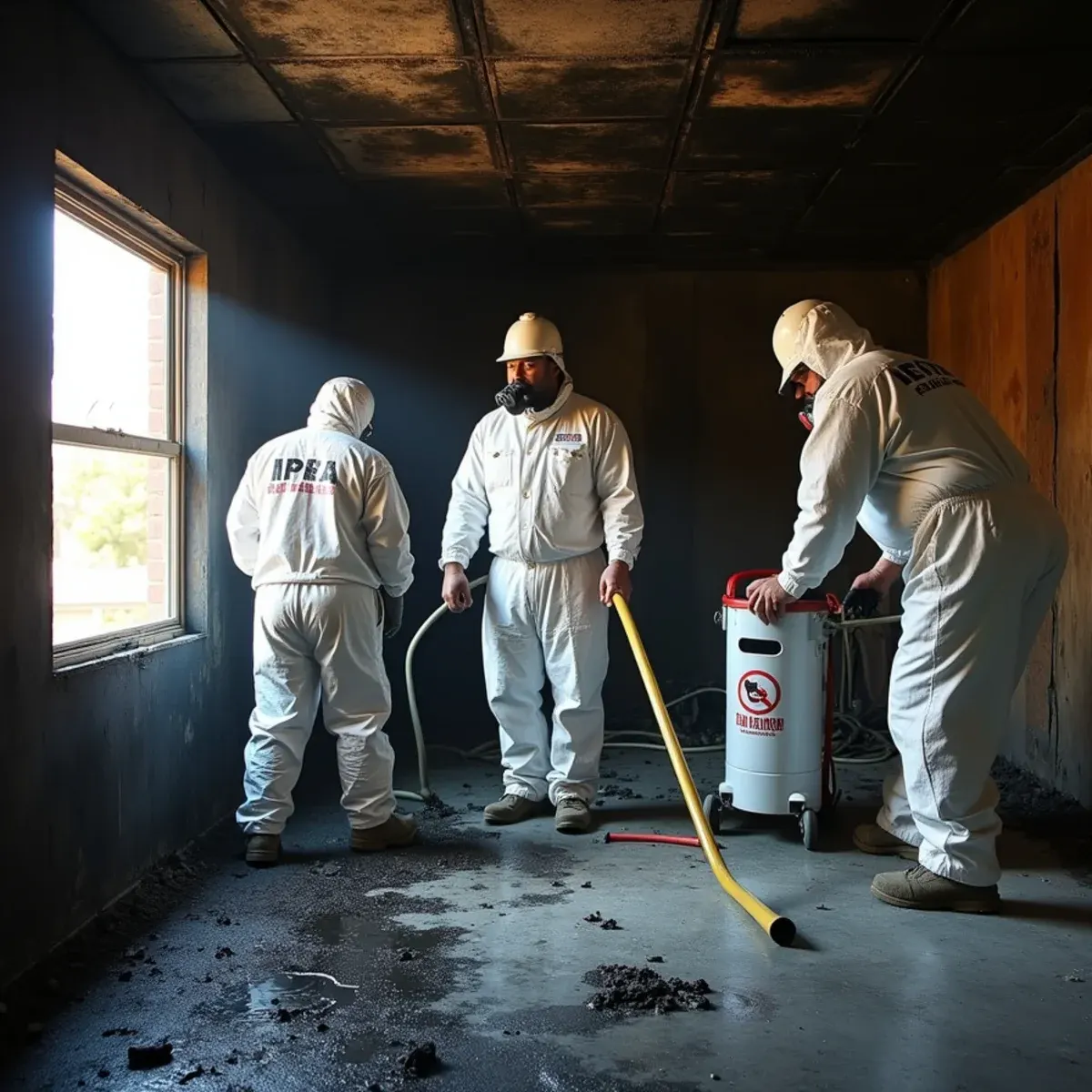
Plaster and drywall are not the same material with a different name, and after a fire the difference decides everything. In Floral Park, French Park and Washington Square, walls are three coats of lime or gypsum plaster pushed through wood lath, and the keys that squeeze out behind the lath form an open cavity that smoke fills and holds. Then suppression water loads that plaster with several times the moisture drywall would carry, the keys soften, and sections start releasing from the lath under their own weight.
That's why we push hard for aggressive drying within hours on a Santa Ana plaster loss — desiccant dehumidification, not just air movers — because plaster you dry fast is plaster you can keep. It matters here more than most places. The original wood windows, old-growth fir trim and hardwood floors in these houses have no modern equivalent, and historic preservation review applies to exterior and some interior work, so a demolition-first approach can cost you both the material and the approval. Downtown and the Artists Village bring older commercial buildings with the same construction.
What Santa Ana Changes About Fire & Smoke Damage
1Plaster keys release when they stay wet
The plaster that squeezed through the wood lath a century ago is what holds the wall on. Wet it long enough and those keys soften and let go, and the wall comes off in sheets. Drying starts within hours on a plaster loss, with desiccant capacity rather than air movers alone, because there is no restoring it once the keys have failed.
2Preservation review shapes what gets replaced
In Floral Park, French Park and Washington Square, historic preservation review applies to exterior work and some interior work. A demolition-first approach can cost you the original material and the approval to replace it with something modern. We plan around cleaning and restoring original windows, trim and floors, and we document condition before anything gets removed.
3Old-growth wood looks worse than it is
Charred old-growth fir framing and trim is often sound under a shallow layer of char that can be removed and sealed. Newer lumber wouldn't be. It's worth measuring char depth before writing off framing or trim in one of these houses, because the replacement material simply doesn't exist at the same grade or dimension anymore.
How the Work Runs
The method is the same one we use on every fire & smoke damage job, documented to the IICRC S500:2025 standard. Here it is in short — the full fire & smoke damage restoration process explains each stage in detail.
- Secure the structure
- Water extraction and drying first
- Assess residue type room by room
- Remove non-salvageable material and clean the rest
- Deodorize at the source
- Contents restoration and rebuild
The Santa Ana Background Worth Knowing
Lath and plaster is wood strips nailed across the studs with several coats of plaster troweled over them. The plaster that squeezes through the gaps between lath forms keys that hook over the wood and hold the whole wall in place. That construction is why plaster walls last a century — and why they behave so differently from drywall when wet.
There is more on the housing stock, drainage and plumbing history of this city on our water damage restoration in Santa Ana page.
Santa Ana at a glance
- Dominant construction era
- 1900–1970
- Foundation type
- mixed on grade
- Supply piping found here
- original early-century piping, galvanized steel, copper
- Drain line materials
- cast iron, clay
- Terrain and water table
- flat, moderate water table
- Most common local failure
- plaster key failure, where wet plaster softens and releases from the wood lath holding it to the wall
- Highest-value local prevention
- starting aggressive drying within hours on any plaster loss — waiting is the one thing that costs you the wall
What It Costs in Santa Ana
We do not quote a number over the phone before seeing the property — anyone who does is guessing. The variables that actually move the price on a fire & smoke damage job are extent of structural burn, how far the smoke traveled, residue type, and they are broken down in full on the fire & smoke damage restoration page. The assessment and the written estimate are free anywhere in Santa Ana, day or night, with no obligation.
Fire & Smoke Damage Questions from Santa Ana Homeowners
No, and gutting is usually the wrong first move here. Plaster in the fire room may be lost, but plaster elsewhere is generally cleanable — smoke gets into the key cavity behind the lath, so it needs proper cleaning and often ceiling access rather than replacement. What loses plaster is leaving it wet. We start desiccant drying within hours, because once the keys soften and let go of the lath there's nothing left to restore.
Fire suppression uses enormous volumes of water in a short time — often thousands of gallons. That water saturates ceilings, insulation, walls, and floors well beyond the burned area, and it has to be extracted and dried like any other water loss, on top of the fire work.
Yes, when the residue is removed completely — including inside wall cavities, ductwork, attic insulation, and behind cabinetry. Odor that returns later always means residue was left somewhere. Masking agents and ozone alone do not solve it.
Usually, if drying starts quickly. Plaster holds much more water than drywall and dries far more slowly, so it needs more equipment and often desiccant dehumidification. The risk is the plaster keys softening and releasing from the lath, which is why waiting is the one thing that genuinely costs you the wall.