
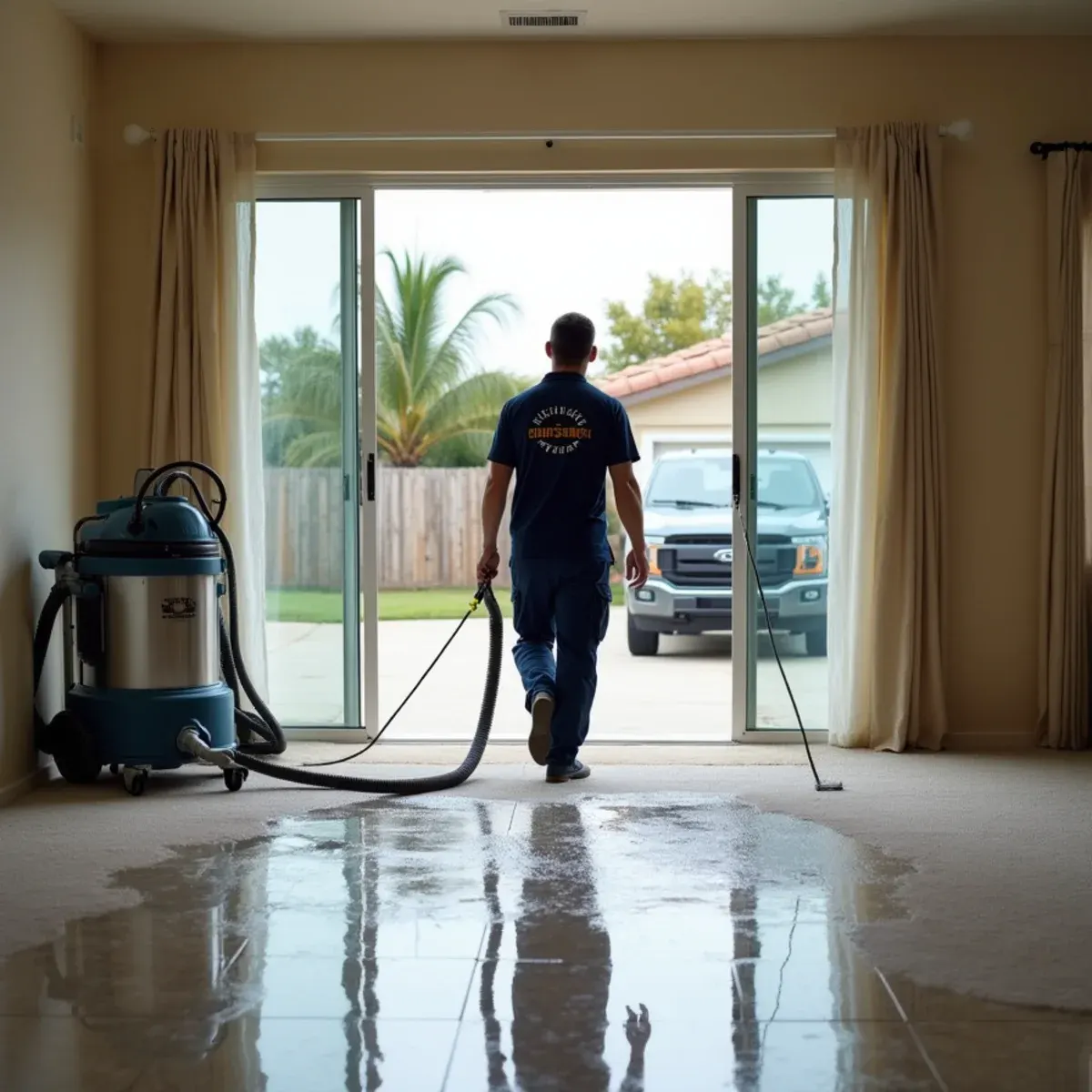
The houses in Floral Park, French Park and Washington Square are built out of materials nobody makes anymore: lath-and-plaster walls, original wood windows, old-growth hardwood floors with grain you can't buy today. That raises the stakes on extraction more than in any other city we serve. Standing water on an eighty-year-old oak floor doesn't need long to start wicking into the boards and lifting them off the subfloor. Every hour it sits is a decision being made for you about whether that floor gets dried or demolished.
Plaster is the other problem. It holds several times the water drywall does, and as it saturates the keys gripping the wood lath soften and let go, so the wall fails in sheets rather than in patches. We start aggressive extraction and airflow within hours on any plaster loss and plan for desiccant dehumidification rather than assuming refrigerant units will cope. Santa Ana also carries a lot of dense postwar apartment stock where losses run between units, and preservation review can apply in the historic districts, which shapes what we're willing to remove.
What Santa Ana Changes About Water Extraction
1Old-growth hardwood is worth the rush
Tight-grained flooring from the 1910s and 1920s has no modern equivalent, and once it cups badly, sanding it flat costs thickness you'll never get back. So on a hardwood loss here, standing water comes off first — before contents, before anything. Weighted extraction along and then across the boards, followed by specialty drying through the floor assembly. We'll say plainly when a section is past saving instead of drying it hopefully.
2Plaster holds more water than drywall
A plaster wall absorbs several times what drywall does and releases it much more slowly, so the extraction and drying plan has to account for a reservoir you can't see. We pull water from the base of the wall and the cavity, and watch for the softening at the keys that precedes a section releasing from the lath. Waiting to see how it looks tomorrow is how these walls end up on the floor.
3Historic review shapes what we remove
In the designated districts, exterior work and some interior work go through preservation review, so removing original material isn't a decision to make casually on site. We scope conservatively: dry in place wherever meters support it, remove in discreet and reversible locations where we must, and keep original trim and casings out of the debris pile. Documenting what was original matters as much as documenting what was wet.
How the Work Runs
The method is the same one we use on every water extraction job, documented to the IICRC S500:2025 standard. Here it is in short — the full water extraction & removal process explains each stage in detail.
- Bulk removal with submersible pumps
- Truck-mounted extraction on carpet and pad
- Hard-surface and specialty extraction
- Cavity and void extraction
- Removing what cannot be saved
- Post-extraction moisture reading
The Santa Ana Background Worth Knowing
Lath and plaster is wood strips nailed across the studs with several coats of plaster troweled over them. The plaster that squeezes through the gaps between lath forms keys that hook over the wood and hold the whole wall in place. That construction is why plaster walls last a century — and why they behave so differently from drywall when wet.
There is more on the housing stock, drainage and plumbing history of this city on our water damage restoration in Santa Ana page.
Santa Ana at a glance
- Dominant construction era
- 1900–1970
- Foundation type
- mixed on grade
- Supply piping found here
- original early-century piping, galvanized steel, copper
- Drain line materials
- cast iron, clay
- Terrain and water table
- flat, moderate water table
- Most common local failure
- plaster key failure, where wet plaster softens and releases from the wood lath holding it to the wall
- Highest-value local prevention
- starting aggressive drying within hours on any plaster loss — waiting is the one thing that costs you the wall
What It Costs in Santa Ana
We do not quote a number over the phone before seeing the property — anyone who does is guessing. The variables that actually move the price on a water extraction job are volume and depth of water, flooring type, contamination level, and they are broken down in full on the water extraction & removal page. The assessment and the written estimate are free anywhere in Santa Ana, day or night, with no obligation.
Water Extraction Questions from Santa Ana Homeowners
There's a real chance if we get the standing water off quickly and start drying through the assembly rather than only across the surface. Old-growth boards are dense, which cuts both ways — they absorb slower but release slower too, and cupping shows up before you'd expect. The honest variables are how long the water sat, whether it reached the subfloor, and the water's category. We'll meter it and give you a straight assessment before committing to a drying plan.
For a typical single-room residential loss, extraction runs one to three hours. Multi-room losses or Category 3 water can take most of a day because of containment setup and material removal. We will give you a realistic timeframe after the walkthrough, before we start.
Often we can save the carpet and only replace the pad, which is the cheaper and less disruptive path. The deciding factors are water category, how long it sat, and whether the pad is a moisture barrier type. Clean water caught quickly usually means the carpet stays.
Usually, if drying starts quickly. Plaster holds much more water than drywall and dries far more slowly, so it needs more equipment and often desiccant dehumidification. The risk is the plaster keys softening and releasing from the lath, which is why waiting is the one thing that genuinely costs you the wall.