
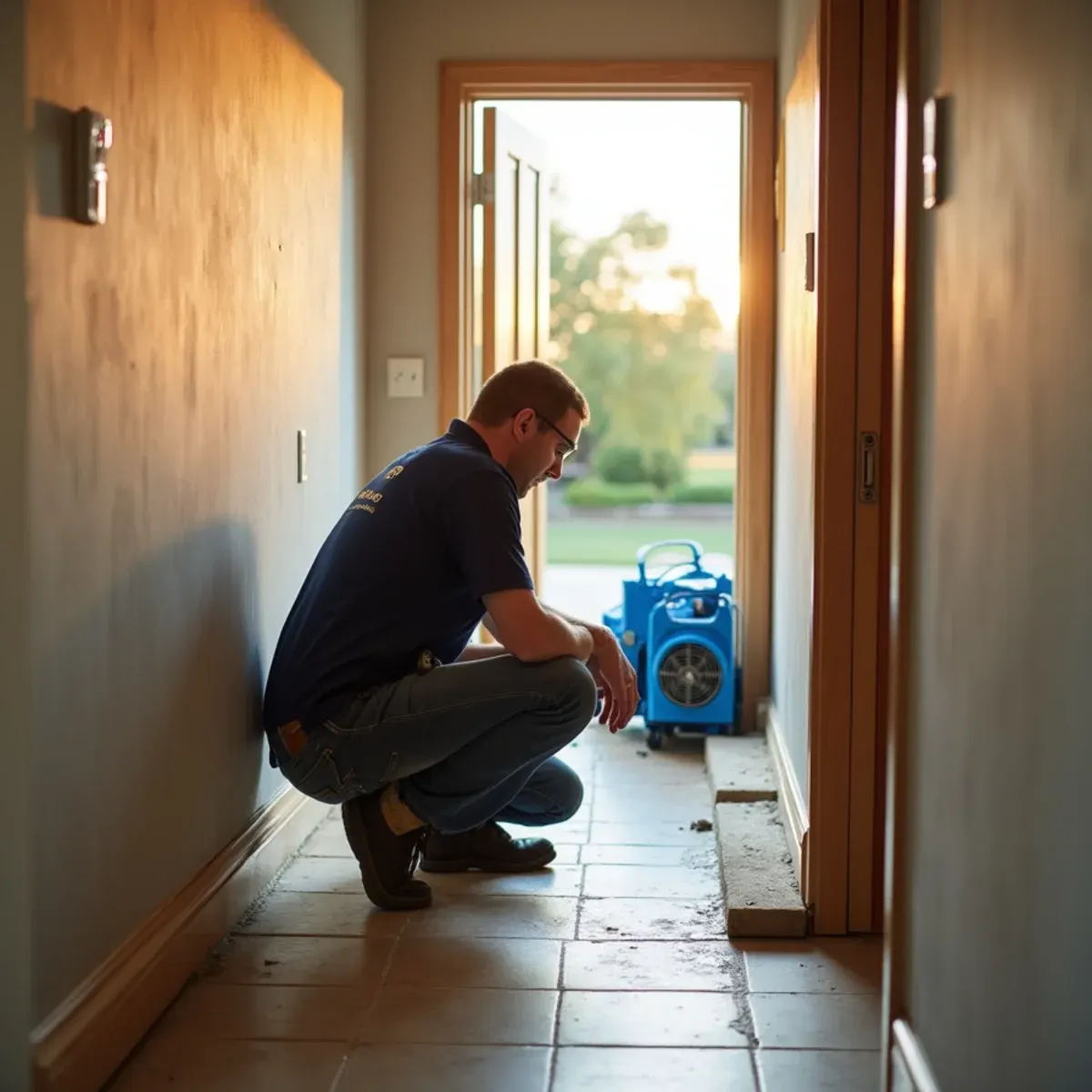
The walls in Floral Park, French Park and Washington Square cannot be bought back. Lath-and-plaster assemblies, original wood windows, old-growth hardwood floors with tighter grain than anything milled today. When a pressurized supply line fails inside one of those walls in the county's oldest city, what is at stake is not just drying time. It is whether a hundred-year-old wall survives as itself or gets replaced with drywall that will never match the rest of the room. That single fact shapes every decision we make on a Santa Ana historic-district job.
Plaster is the technical problem. It absorbs several times what drywall does and releases it far more slowly, and as it stays wet the keys gripping the wood lath soften and let go. Standard refrigerant dehumidification often cannot pull a plaster wall down fast enough, so desiccant equipment earns its place here. Santa Ana is not only its historic districts, of course. There are dense postwar apartment blocks and a commercial core where a burst line behaves completely differently, and we scope the address before assuming which Santa Ana we are working in.
What Santa Ana Changes About Burst Pipe Damage
1Plaster holds water drywall never could
A wet plaster wall can carry several times the moisture of the same square footage in drywall, and it gives it up grudgingly. Surface readings lag badly behind the interior of the assembly, so a wall that feels dry can still be saturated behind the lath. We meter into the assembly, not just across the face, and we keep drying until the interior numbers come down rather than until the paint looks right.
2Desiccant drying for historic assemblies
Refrigerant dehumidifiers stall at the low vapor pressures needed to pull water out of plaster and old-growth framing. Desiccant units keep working there. On historic Santa Ana losses we bring them when the assembly justifies it, because the alternative is weeks of slow drying while the plaster keys fail. It is more equipment and more setup, and it is the reason these walls can often stay in place.
3Preservation review shapes the rebuild
Homes in the designated historic districts are subject to review on exterior and some interior work, which affects how a burst pipe repair gets closed up. Access ports placed where trim will cover them, original materials retained where possible, and replacement profiles matched rather than approximated. Planning that in on day one avoids a rebuild that has to be undone because it was done in modern materials.
How the Work Runs
The method is the same one we use on every burst pipe damage job, documented to the IICRC S500:2025 standard. Here it is in short — the full burst pipe water damage repair process explains each stage in detail.
- Stop the source
- Locate the failure precisely
- Coordinate the plumbing repair
- Extract and open only what must be opened
- Cavity and structural drying
- Rebuild and finish
The Santa Ana Background Worth Knowing
Lath and plaster is wood strips nailed across the studs with several coats of plaster troweled over them. The plaster that squeezes through the gaps between lath forms keys that hook over the wood and hold the whole wall in place. That construction is why plaster walls last a century — and why they behave so differently from drywall when wet.
There is more on the housing stock, drainage and plumbing history of this city on our water damage restoration in Santa Ana page.
Santa Ana at a glance
- Dominant construction era
- 1900–1970
- Foundation type
- mixed on grade
- Supply piping found here
- original early-century piping, galvanized steel, copper
- Drain line materials
- cast iron, clay
- Terrain and water table
- flat, moderate water table
- Most common local failure
- plaster key failure, where wet plaster softens and releases from the wood lath holding it to the wall
- Highest-value local prevention
- starting aggressive drying within hours on any plaster loss — waiting is the one thing that costs you the wall
What It Costs in Santa Ana
We do not quote a number over the phone before seeing the property — anyone who does is guessing. The variables that actually move the price on a burst pipe damage job are how long the line ran before discovery, which floor it happened on, hot line versus cold line, and they are broken down in full on the burst pipe water damage repair page. The assessment and the written estimate are free anywhere in Santa Ana, day or night, with no obligation.
Burst Pipe Damage Questions from Santa Ana Homeowners
Often yes, if drying starts quickly. The threat is not the water itself but time, because saturated plaster keys soften and release from the lath, and once the face separates the wall is coming down. We drill small ports low on the wall where base trim will hide them, dry the cavity with desiccant capacity, and monitor inside the assembly. If the keys have already failed before we arrive, we will tell you straight rather than dry a wall that is finished.
We restore the water damage and coordinate the plumbing repair, working with your plumber or bringing in a licensed one from our network. Handling both under one schedule is what keeps a burst pipe from turning into two weeks of contractor coordination.
More than people expect. A half-inch supply line at typical residential pressure moves in the range of 8 to 10 gallons a minute. That is roughly 500 gallons in an hour — comparable to filling a small backyard pool inside your walls and floor.
Usually, if drying starts quickly. Plaster holds much more water than drywall and dries far more slowly, so it needs more equipment and often desiccant dehumidification. The risk is the plaster keys softening and releasing from the lath, which is why waiting is the one thing that genuinely costs you the wall.