
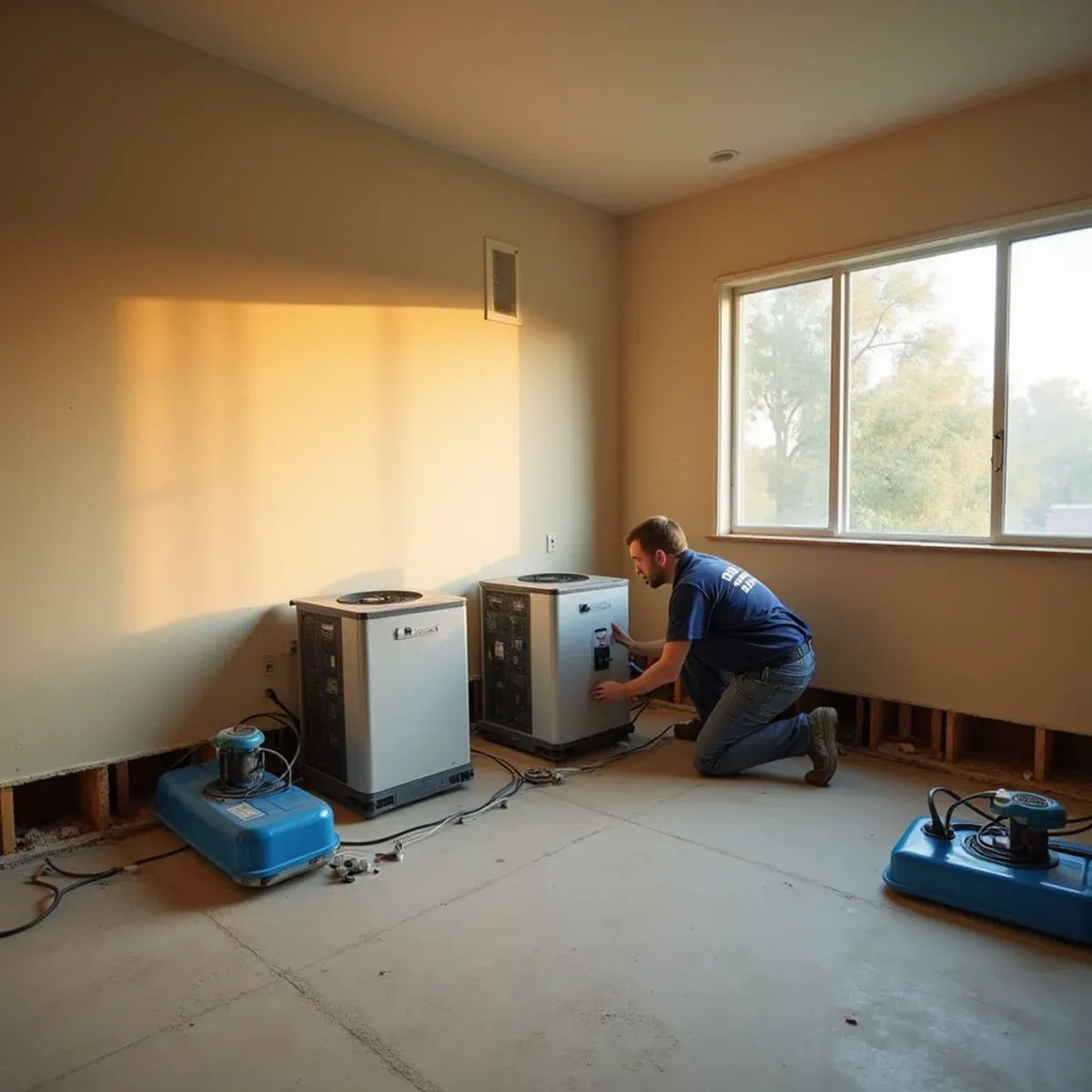
Plaster is a reservoir. Three coats over wood lath in a Floral Park or French Park house hold several times the water drywall does, hold it longer, and give it up on their own schedule no matter how many fans point at the wall. Worse, wet plaster softens at the keys, the beads squeezed through the lath that hold the whole wall in place. Once those let go, plaster comes off in sheets. That's why we push hard in the first hours on any plaster loss, and why speed matters more in this city than almost anywhere.
This is the county's oldest city, and the material in these houses has no modern equivalent: old-growth fir framing, original wood windows, hardwood in thicknesses nobody mills now. All of it is worth drying instead of replacing, which means low-grain dehumidification, gentle air movement rather than blasting, and daily readings so we can ease off if the wood starts moving. Historic preservation review applies to exterior work and some interior work in the designated districts, so we keep equipment, venting and temporary protection where they don't create a second problem.
What Santa Ana Changes About Structural Drying
1Desiccant capacity for saturated plaster
Refrigerant dehumidifiers lose efficiency at the low humidity levels dense plaster needs before it releases its last water. Desiccant equipment pushes vapor pressure lower and keeps the material giving moisture up. It costs more to run, and it's the reason a plaster wall can be saved rather than torn back to the lath. We add it when the readings call for it, not as a default.
2Old hardwood dries slower than you want
Thick old-growth flooring can be dried in place, but only at a controlled rate. Push it and you get cupping, checking and split boards that no refinish will hide. We use mats and monitored airflow, take readings through the boards rather than off the surface, and accept a longer schedule. On floors this hard to replace, patience is the whole technique.
3Historic district review shapes the work
In Floral Park, French Park and Washington Square, exterior changes and some interior work go through review. That affects where equipment and hoses run, how temporary protection gets attached, and what a repair after drying is allowed to look like. Knowing the constraint at the start keeps drying decisions from creating a repair that has to be undone later.
How the Work Runs
The method is the same one we use on every structural drying job, documented to the IICRC S500:2025 standard. Here it is in short — the full structural drying & dehumidification process explains each stage in detail.
- Establish the dry standard
- Calculate the load and build the chamber
- Place air movers for surface evaporation
- Run LGR dehumidification to capture the moisture
- Monitor and adjust daily
- Verify, document, and demobilize
The Santa Ana Background Worth Knowing
Lath and plaster is wood strips nailed across the studs with several coats of plaster troweled over them. The plaster that squeezes through the gaps between lath forms keys that hook over the wood and hold the whole wall in place. That construction is why plaster walls last a century — and why they behave so differently from drywall when wet.
There is more on the housing stock, drainage and plumbing history of this city on our water damage restoration in Santa Ana page.
Santa Ana at a glance
- Dominant construction era
- 1900–1970
- Foundation type
- mixed on grade
- Supply piping found here
- original early-century piping, galvanized steel, copper
- Drain line materials
- cast iron, clay
- Terrain and water table
- flat, moderate water table
- Most common local failure
- plaster key failure, where wet plaster softens and releases from the wood lath holding it to the wall
- Highest-value local prevention
- starting aggressive drying within hours on any plaster loss — waiting is the one thing that costs you the wall
What It Costs in Santa Ana
We do not quote a number over the phone before seeing the property — anyone who does is guessing. The variables that actually move the price on a structural drying job are size of the drying chamber, class of water intrusion, material types involved, and they are broken down in full on the structural drying & dehumidification page. The assessment and the written estimate are free anywhere in Santa Ana, day or night, with no obligation.
Structural Drying Questions from Santa Ana Homeowners
They can usually be dried if we start early. Plaster holds far more water than drywall and releases it slowly, so it needs low-grain dehumidification and days rather than hours, but the material itself is durable and worth saving. The deciding factor is the keys behind the lath. If they've already softened and the plaster is loose or bulging on the wall, that section is failing structurally and drying won't bring it back.
Three to five days covers most residential losses. Saturated hardwood, plaster, or a concrete slab can run seven or more. We will give you an estimated window after the first readings and update you daily — and equipment comes out when the numbers say so, not on a fixed schedule.
We would rather you did not. Drying is a continuous process, and every hour off extends the total run — which usually costs more than the sleep is worth. If noise is genuinely unmanageable we can often reconfigure the chamber or reposition units to reduce it. Talk to us instead of unplugging them.
Usually, if drying starts quickly. Plaster holds much more water than drywall and dries far more slowly, so it needs more equipment and often desiccant dehumidification. The risk is the plaster keys softening and releasing from the lath, which is why waiting is the one thing that genuinely costs you the wall.