
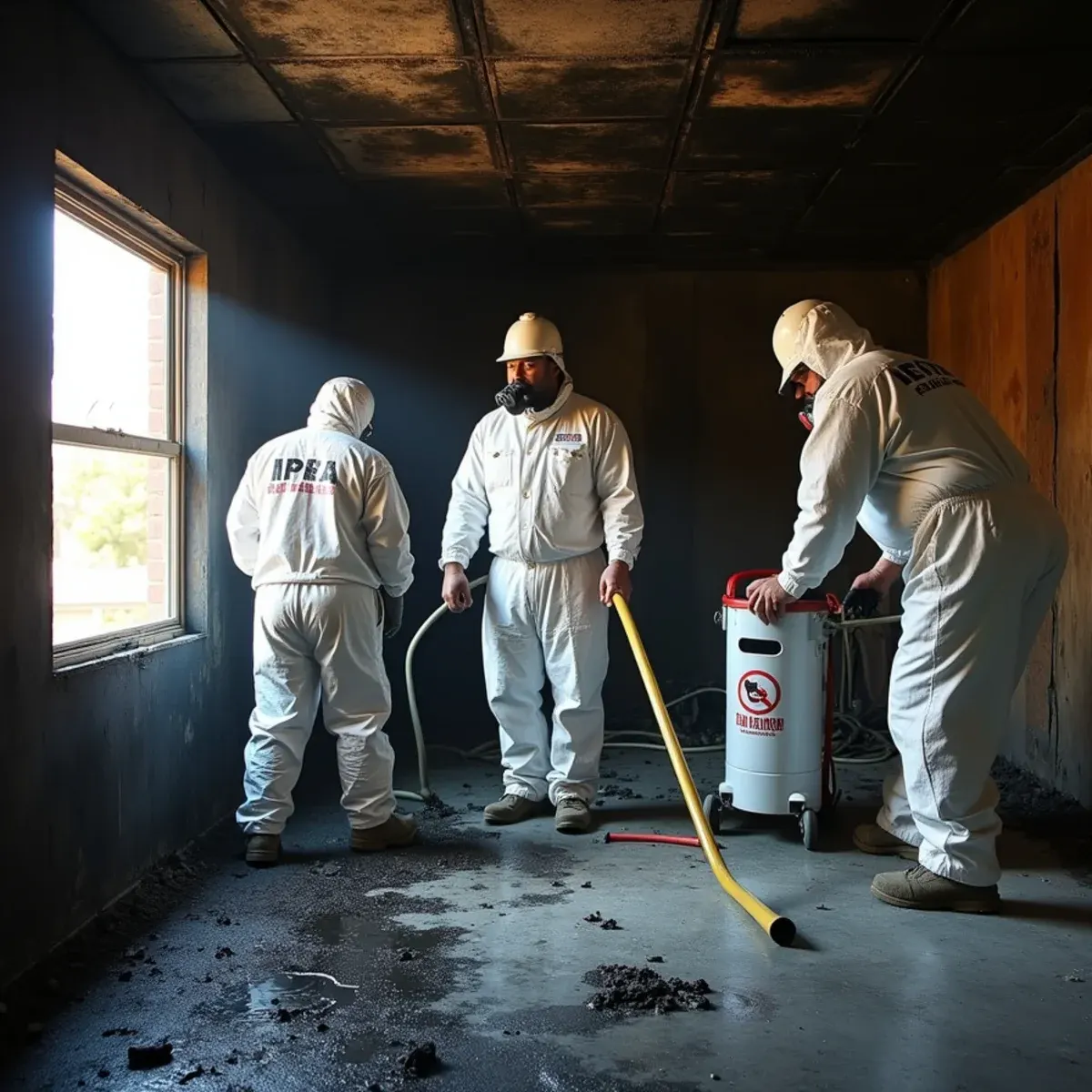
Here's the thing that catches Huntington Beach homeowners out: the smell comes back. A house can test clean and read fine in January, then the marine layer sits over it for a week in May and the odor is in every room again. It isn't the deodorizer wearing off. It's residue left in a wall cavity, attic insulation or a duct run, and humid coastal air pulling it back into the air you breathe. That's why we take contaminated attic insulation out instead of trying to seal odor into it.
Access shapes the work too. Downtown lots off Main Street are narrow with no driveway, so truck-mounted extraction runs long hose lines and equipment gets staged wherever we can find room. Out in Huntington Harbour, waterfront homes add tidal groundwater under the slab and salt in the air, which means soot corrosion moves faster on hardware, appliance finishes and exposed metal than it would inland — days, not weeks. Sustained humidity also means we bring more dehumidification than the same-size job would need a few miles up Beach Boulevard.
What Huntington Beach Changes About Fire & Smoke Damage
1Contaminated attic insulation comes out
Blown insulation is a sponge for smoke odor and it cannot be cleaned in place. Sealing the attic deck over it is a temporary answer that the first humid stretch undoes. If the attic took smoke, the affected insulation gets removed and replaced. That single decision accounts for most of the difference between a house that stays clean and one that doesn't.
2Narrow downtown lots limit equipment staging
Main Street area lots often have no driveway and tight street parking, so truck-mounted extraction runs long hose lines and drying equipment has to be placed with cords and hoses crossing walkways. We plan staging before we roll rather than working it out in front of your house, and we'll tell you honestly if access adds time to the schedule.
3Salt speeds soot corrosion on metal
Coastal air already loads every exterior fastener, flashing and fixture with salt. Acidic soot on top of that shortens the window before pitting becomes permanent, especially in Huntington Harbour where homes sit right on the water. Hardware, appliance faces, plumbing fixtures and electrical enclosures get cleaned early in the schedule, not after the structure is dry.
How the Work Runs
The method is the same one we use on every fire & smoke damage job, documented to the IICRC S500:2025 standard. Here it is in short — the full fire & smoke damage restoration process explains each stage in detail.
- Secure the structure
- Water extraction and drying first
- Assess residue type room by room
- Remove non-salvageable material and clean the rest
- Deodorize at the source
- Contents restoration and rebuild
The Huntington Beach Background Worth Knowing
Salt does not damage buildings directly. It damages the details that keep water out, and then water does the rest.
There is more on the housing stock, drainage and plumbing history of this city on our water damage restoration in Huntington Beach page.
Huntington Beach at a glance
- Dominant construction era
- 1960–1990
- Foundation type
- slab on grade
- Supply piping found here
- under-slab copper
- Drain line materials
- cast iron, ABS
- Terrain and water table
- coastal-flat, shallow water table
- Most common local failure
- wind-driven rain entering through salt-corroded window flashing and failed exterior sealant
- Highest-value local prevention
- renewing exterior caulking and flashing on a far shorter cycle than inland guidance suggests
What It Costs in Huntington Beach
We do not quote a number over the phone before seeing the property — anyone who does is guessing. The variables that actually move the price on a fire & smoke damage job are extent of structural burn, how far the smoke traveled, residue type, and they are broken down in full on the fire & smoke damage restoration page. The assessment and the written estimate are free anywhere in Huntington Beach, day or night, with no obligation.
Fire & Smoke Damage Questions from Huntington Beach Homeowners
The marine layer. Odor that seems gone in dry weather comes back when humidity climbs, because humid air pulls smoke compounds out of residue that was never actually removed — usually in attic insulation, a wall cavity or a duct run. A deodorizer masked it for a while. The fix isn't more sealer, it's finding and removing the residue, which normally means the affected attic insulation comes out and the ducts get cleaned.
Fire suppression uses enormous volumes of water in a short time — often thousands of gallons. That water saturates ceilings, insulation, walls, and floors well beyond the burned area, and it has to be extracted and dried like any other water loss, on top of the fire work.
Yes, when the residue is removed completely — including inside wall cavities, ductwork, attic insulation, and behind cabinetry. Odor that returns later always means residue was left somewhere. Masking agents and ozone alone do not solve it.
Ambient humidity near the coast stays high enough for long enough that materials dry slowly on their own, which widens the window in which growth can establish after any moisture event. Combined with salt-accelerated failures of exterior sealants and flashings, coastal homes simply get more moisture intrusion and dry from it more slowly.