
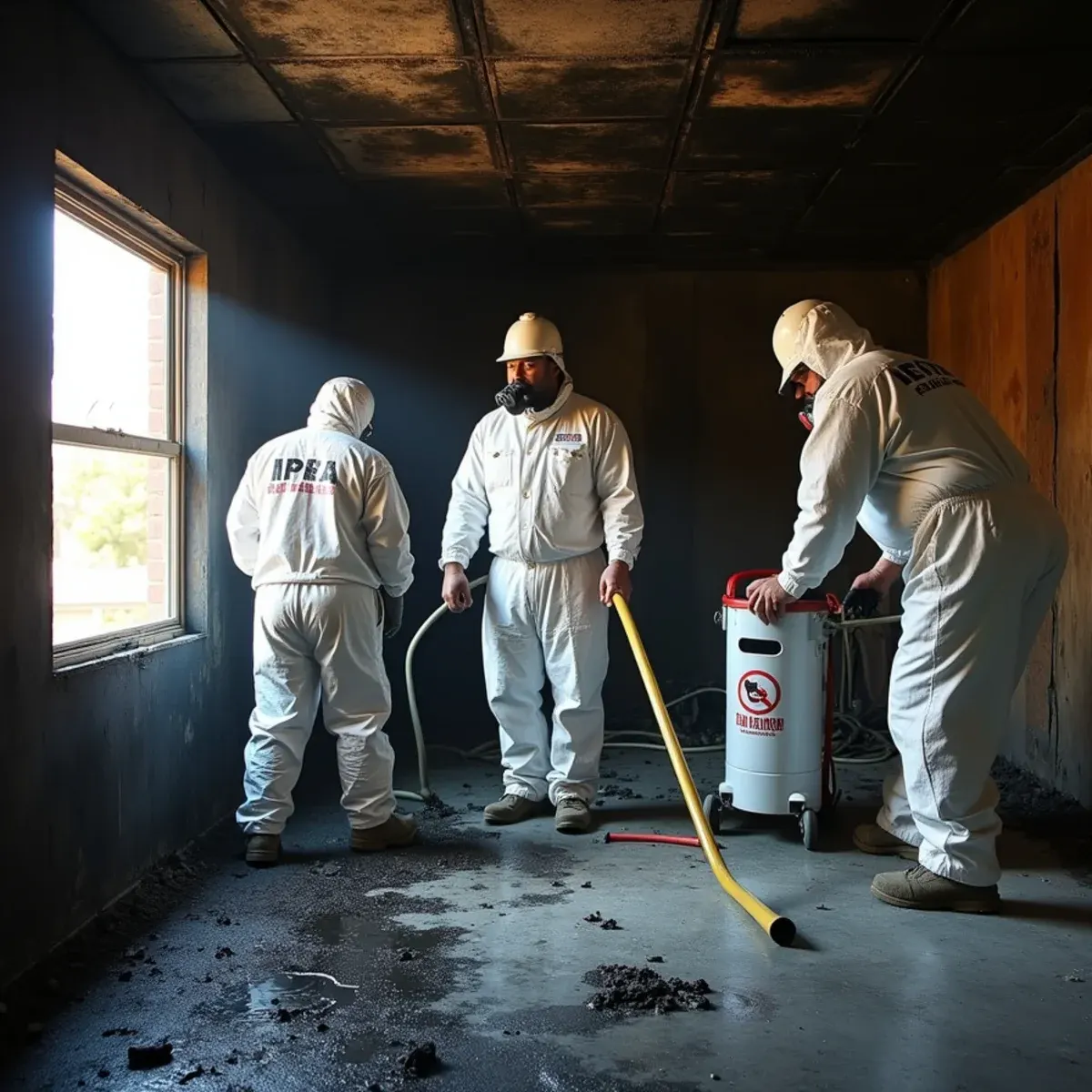
On a slab house, suppression water spreads sideways and you can see most of it. On the pre-war Craftsman and Spanish Revival homes near downtown Fullerton, it goes down. Thousands of gallons pass through the floor, through the joist bays and into the crawl space, carrying soot and whatever the fire released with it — then it sits on grade under the house with no sun and no airflow. Nobody smells it for a week. By then the underside of the subfloor and the joists are the problem, not the room that burned.
The upside is real: those crawl spaces make access easy, and the framing under these houses is old-growth Douglas fir that often cleans and dries better than newer lumber would. The original oak and fir flooring above it is usually worth saving. The other half of our Fullerton work looks nothing like that — student rentals around Cal State Fullerton and Fullerton College, where a stovetop fire gets reported late, the tenants move out, and the smoke sits in the building for days before anyone with authority calls. Late reporting costs more than the fire did.
What Fullerton Changes About Fire & Smoke Damage
1Crawl spaces collect the suppression water
Under a raised-foundation Craftsman, hose water drains straight through the floor and pools on grade beneath the joists, carrying soot with it. There's no sun and no airflow down there, so it stays. The upside is access — we can get under the house, extract, dry the joists and subfloor from below, and treat the underside properly rather than working blind through a slab.
2Old-growth fir and original floors are salvageable
The framing under these houses is dense old-growth Douglas fir and the floors are thick original oak or fir. Both take char and water better than modern equivalents, and both are worth measuring before anyone writes them off. Replacement material at that grade isn't really available, so we plan for cleaning and refinishing wherever the numbers support it.
3Student rentals report fires late
Around Cal State Fullerton and Fullerton College, a stovetop fire often gets reported days later, after tenants have moved out and nobody with authority has walked the building. Smoke that sits sets deeper into porous surfaces and costs more to remove. Posting a shutoff location and an emergency contact in every unit is a five-dollar fix for a five-figure problem.
How the Work Runs
The method is the same one we use on every fire & smoke damage job, documented to the IICRC S500:2025 standard. Here it is in short — the full fire & smoke damage restoration process explains each stage in detail.
- Secure the structure
- Water extraction and drying first
- Assess residue type room by room
- Remove non-salvageable material and clean the rest
- Deodorize at the source
- Contents restoration and rebuild
The Fullerton Background Worth Knowing
The pre-war homes around downtown Fullerton were built with materials that behave completely differently from modern construction. Lath and plaster walls hold several times the water drywall does. Old-growth Douglas fir framing is dense and dries slowly. Original oak and fir flooring is thick, high-quality material that is well worth saving.
There is more on the housing stock, drainage and plumbing history of this city on our water damage restoration in Fullerton page.
Fullerton at a glance
- Dominant construction era
- 1910–1980
- Foundation type
- mixed on grade
- Supply piping found here
- galvanized steel, copper, original pre-war piping
- Drain line materials
- cast iron, clay
- Terrain and water table
- rolling, moderate water table
- Most common local failure
- crawl-space leaks that run undetected for weeks because the water drips away instead of pooling on a floor
- Highest-value local prevention
- posting a shutoff location and emergency contact in every rental, since delayed reporting is the local failure mode
What It Costs in Fullerton
We do not quote a number over the phone before seeing the property — anyone who does is guessing. The variables that actually move the price on a fire & smoke damage job are extent of structural burn, how far the smoke traveled, residue type, and they are broken down in full on the fire & smoke damage restoration page. The assessment and the written estimate are free anywhere in Fullerton, day or night, with no obligation.
Fire & Smoke Damage Questions from Fullerton Homeowners
Yes. On a raised foundation, most of the water used on the fire went through the floor and is now sitting on the ground under your joists, with soot in it. There's no sun and no airflow down there, so it doesn't leave. Two weeks later you get odor, cupped floors and a wet subfloor from below. The good news is that crawl space is easy to work in — we can extract, dry and treat from underneath.
Fire suppression uses enormous volumes of water in a short time — often thousands of gallons. That water saturates ceilings, insulation, walls, and floors well beyond the burned area, and it has to be extracted and dried like any other water loss, on top of the fire work.
Yes, when the residue is removed completely — including inside wall cavities, ductwork, attic insulation, and behind cabinetry. Odor that returns later always means residue was left somewhere. Masking agents and ozone alone do not solve it.
Yes, and they need a different approach. Lath and plaster and old-growth framing hold far more water than modern materials and dry much more slowly, so we plan for seven to fourteen days with higher-capacity equipment. The original material is worth that effort — nothing sold today replaces it.