
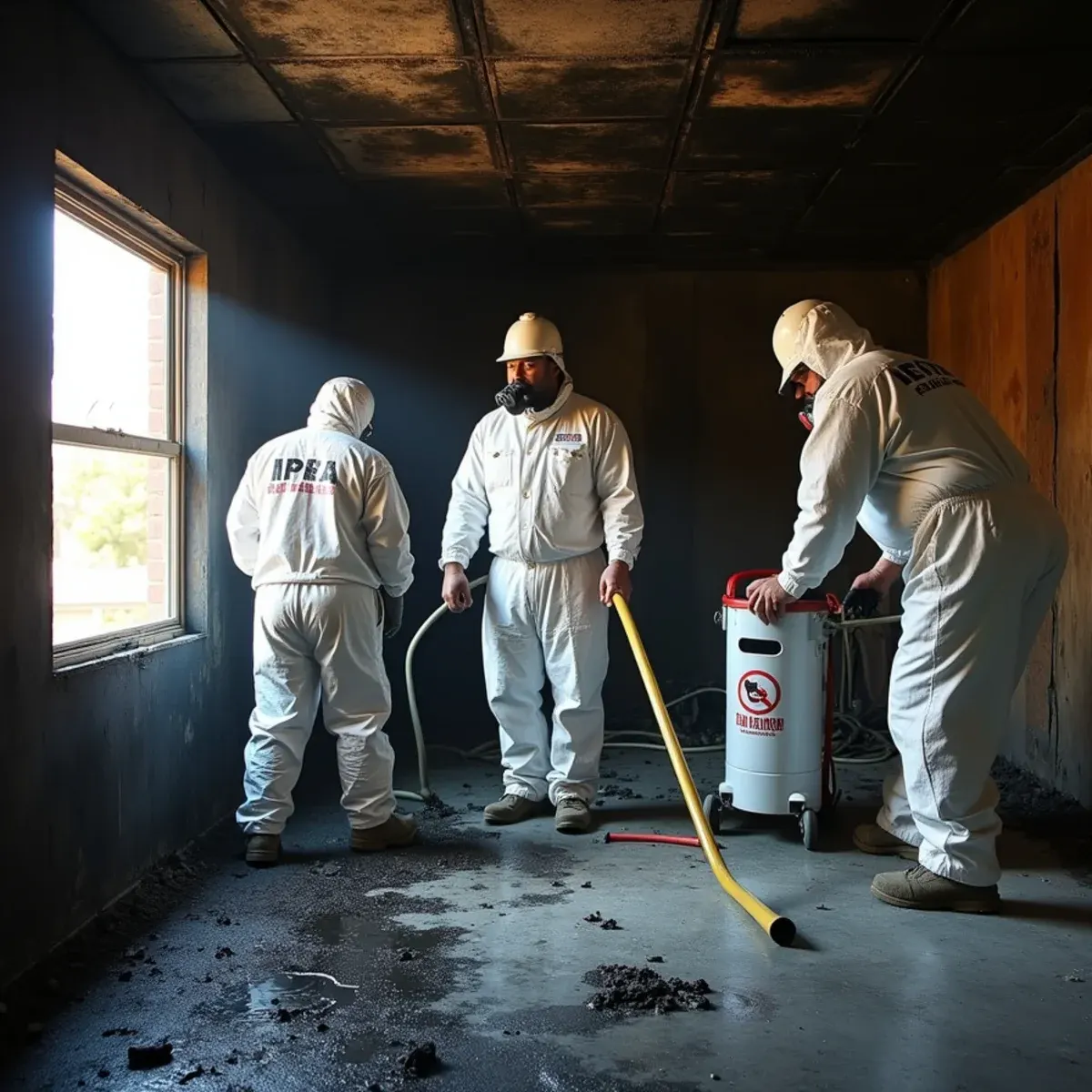
Whittier is old enough to show it. Uptown, around Greenleaf Avenue and Philadelphia Street, holds late-Victorian houses with bay windows, early-1900s Craftsman with deep porches, and 1920s Spanish Revival under clay tile, nearly all on raised foundations with original-era systems. Fire in these houses finds open framing, redwood and a crawl space that collects everything the hose lines put into the building. There is no attic-hatch shortcut on a house like this. You open it carefully, in the right places, and you put it back the same way.
College Hills, subdivided in 1923 as the city's first planned hillside development, works on entirely different rules, and Friendly Hills follows the same logic: steep grades, curving streets, narrow frontages and long driveways. Engines have a hard time up there and so do we. Equipment stages farther out, hose and power runs get long, and setup takes real time compared with flat postwar tract in East Whittier. The brush edge along Turnbull Canyon adds ash and ember exposure that the rest of the city simply does not deal with.
What Whittier Changes About Fire & Smoke Damage
1Uptown historic materials come apart carefully
Redwood framing, lath and plaster, clay tile roofing and original single-pane sash all reward patience and punish speed. Removing smoke-damaged plaster from the least visible side, salvaging trim before demolition and keeping tile intact during roof access are the difference between a repair and a permanent loss. We plan the sequence before anything is opened and label what comes off so it goes back where it belongs.
2Hillside access changes the setup
On the grades in College Hills and Friendly Hills we often cannot park a truck within reach of the structure. That means longer hose and cord runs, staged equipment, and extra time before the first air scrubber is running. We say this up front rather than quoting a timeline we cannot hold. It does not change the outcome, but it changes the first day.
3Turnbull Canyon brush exposure
Homes backing the canyon and the Whittier Hills take ash and ember intrusion during brush fires, often without any structural burn. Ash enters through attic vents and HVAC intakes and loads insulation. Where a house also has original-era single-pane windows and gaps in the envelope, more gets in than in a newer sealed home, and the cleanup has to include the attic rather than just the rooms.
How the Work Runs
The method is the same one we use on every fire & smoke damage job, documented to the IICRC S500:2025 standard. Here it is in short — the full fire & smoke damage restoration process explains each stage in detail.
- Secure the structure
- Water extraction and drying first
- Assess residue type room by room
- Remove non-salvageable material and clean the rest
- Deodorize at the source
- Contents restoration and rebuild
The Whittier Background Worth Knowing
A leak under a raised foundation does not announce itself the way a slab leak does. There is no puddle on the floor and no warm spot underfoot, because the water drips down into the soil and stays there. What you get instead is a smell that is stronger in the morning, a board that feels slightly soft, and eventually a floor that has been quietly feeding fungal growth for months. By the time an Uptown homeowner calls us about a crawl space leak, the question is rarely how to dry it. It is how much of the joist and subfloor is still doing its job.
There is more on the housing stock, drainage and plumbing history of this city on our water damage restoration in Whittier page.
Whittier at a glance
- Dominant construction era
- 1890–1980
- Foundation type
- mixed on grade
- Supply piping found here
- original turn-of-century piping, galvanized steel, under-slab copper
- Drain line materials
- cast iron, clay
- Terrain and water table
- hillside-mixed, moderate water table
- Most common local failure
- raised-foundation crawl-space leaks in Uptown, and slope drainage failures in the hillside tracts
- Highest-value local prevention
- an annual crawl-space or slope-drain check, depending which Whittier you live in
What It Costs in Whittier
We do not quote a number over the phone before seeing the property — anyone who does is guessing. The variables that actually move the price on a fire & smoke damage job are extent of structural burn, how far the smoke traveled, residue type, and they are broken down in full on the fire & smoke damage restoration page. The assessment and the written estimate are free anywhere in Whittier, day or night, with no obligation.
Fire & Smoke Damage Questions from Whittier Homeowners
Yes, though the setup takes longer than it would in East Whittier. We stage equipment where the truck can safely sit and run extended hose and power lines to the house, which is normal for these hillside streets. What we ask is a realistic conversation about parking and driveway grade when you call, so we bring the right configuration on the first trip rather than sending someone back for longer runs.
Fire suppression uses enormous volumes of water in a short time — often thousands of gallons. That water saturates ceilings, insulation, walls, and floors well beyond the burned area, and it has to be extracted and dried like any other water loss, on top of the fire work.
Yes, when the residue is removed completely — including inside wall cavities, ductwork, attic insulation, and behind cabinetry. Odor that returns later always means residue was left somewhere. Masking agents and ozone alone do not solve it.
It cuts both ways. A crawl space leak hides longer, because the water drips into soil instead of pooling on your floor, so it often runs for months and reaches the framing before anyone notices. The upside is real though: the plumbing is accessible, so locating and repairing it does not mean breaking concrete. On balance, detection is your weak point in Uptown, which is why an annual look under the house is worth doing.