
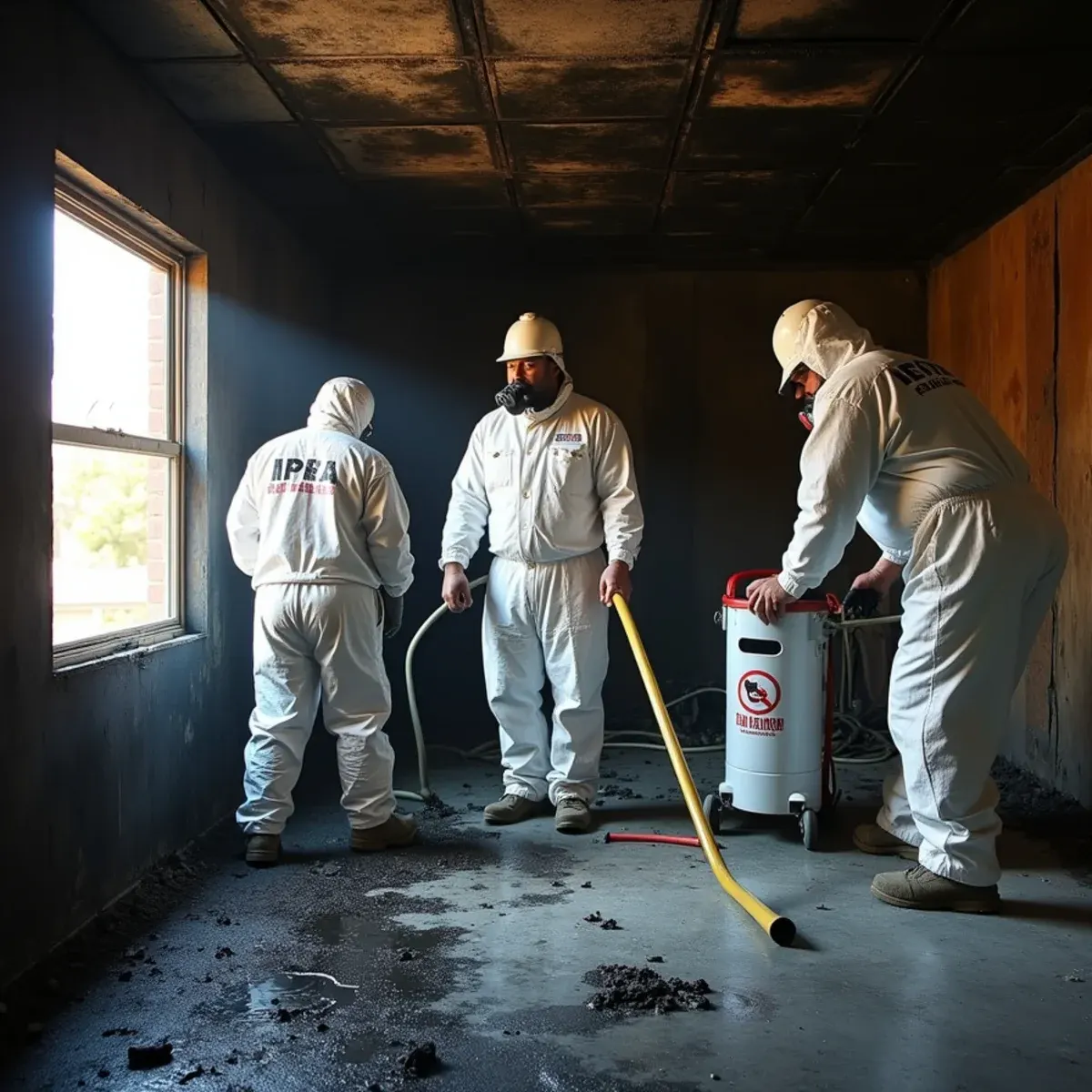
Pico Rivera occupies a strip of ground between two flood-control channels, the San Gabriel River on one side and the Rio Hondo on the other, and the shallow water table under it changes how a fire job runs. Suppression water that would percolate away in Yorba Linda does not do that here. It stands in the yard, works under the slab edge, and keeps bottom plates and framing damp long after the visible water is gone. Drying takes longer in this city, and anyone who tells you otherwise has not dried a house here.
The housing is postwar tract, built out fast between 1945 and the mid-1960s after Pico and Rivera merged, uniform enough that we recognize the floor plans on sight. What is not uniform is what people added later. Enclosed patios, converted garages and bedroom additions built across decades leave hidden cavities and dead spaces where smoke settles and sits. Those are the areas we probe first through the Rivera district and North Pico Rivera, because they are what brings the odor back three weeks after everyone agreed the job was finished.
What Pico Rivera Changes About Fire & Smoke Damage
1Shallow ground water lengthens drying
With the water table high between the two channels, the soil around and under a slab holds moisture that keeps feeding the structure. Dehumidification has to run longer and equipment counts go up, particularly on ground-contact framing and any wall that took hose-line water. We set drying goals from readings on your building rather than a standard number of days, and we document them so nobody closes the file early.
2Additions hide smoke in dead spaces
Patio enclosures, garage conversions and room additions on these tracts created furred walls, boxed soffits and voids behind finished surfaces, and permits do not always tell the story. Smoke finds those voids and stays. We inspect with a borescope and thermal imaging before deciding where to open a wall, since guessing wrong here means either unnecessary demolition or a smell that never leaves.
3Soot wash water and the channels
Rinsing soot off a driveway sends it into the area drain, and the area drains here go to the San Gabriel River or the Rio Hondo. We contain and capture exterior wash water rather than letting it run. It is also better for you, because soot that sits or spreads across concrete stains it permanently and is far harder to remove after a week of sun.
How the Work Runs
The method is the same one we use on every fire & smoke damage job, documented to the IICRC S500:2025 standard. Here it is in short — the full fire & smoke damage restoration process explains each stage in detail.
- Secure the structure
- Water extraction and drying first
- Assess residue type room by room
- Remove non-salvageable material and clean the rest
- Deodorize at the source
- Contents restoration and rebuild
The Pico Rivera Background Worth Knowing
On a hillside, storm water leaves. In Pico Rivera it soaks in, and when the soil is already near capacity it stops soaking in and simply stands. That is why a yard here can hold water two days after the rain stops while a yard up in the Whittier hills is dry by morning. The lawn is not draining badly. The ground underneath it is full. Once that happens, every path water can take toward your house becomes the path it takes: the garage threshold, the slider track, the gap where a patio slab has settled back toward the wall.
There is more on the housing stock, drainage and plumbing history of this city on our water damage restoration in Pico Rivera page.
Pico Rivera at a glance
- Dominant construction era
- 1945–1965
- Foundation type
- slab on grade
- Supply piping found here
- original galvanized steel, copper
- Drain line materials
- cast iron
- Terrain and water table
- flat, shallow water table
- Most common local failure
- ground saturating fast during sustained storms because the water table between two channels sits high
- Highest-value local prevention
- clearing area drains and confirming downspouts discharge well away from the foundation
What It Costs in Pico Rivera
We do not quote a number over the phone before seeing the property — anyone who does is guessing. The variables that actually move the price on a fire & smoke damage job are extent of structural burn, how far the smoke traveled, residue type, and they are broken down in full on the fire & smoke damage restoration page. The assessment and the written estimate are free anywhere in Pico Rivera, day or night, with no obligation.
Fire & Smoke Damage Questions from Pico Rivera Homeowners
Please do not. Rinsing soot into the area drains sends it straight to the Rio Hondo or the San Gabriel River, and it also drives residue deep into the concrete pores where it sets as a permanent stain. Soot is acidic and reacts fast on masonry and metal. We use containment, capture the wash water and clean with agents matched to the residue, which gets the surface actually clean rather than gray in a different pattern.
Fire suppression uses enormous volumes of water in a short time — often thousands of gallons. That water saturates ceilings, insulation, walls, and floors well beyond the burned area, and it has to be extracted and dried like any other water loss, on top of the fire work.
Yes, when the residue is removed completely — including inside wall cavities, ductwork, attic insulation, and behind cabinetry. Odor that returns later always means residue was left somewhere. Masking agents and ozone alone do not solve it.
Not in the way people picture it. The channels are engineered, and what we actually see is a groundwater and surface drainage problem rather than a channel overtopping. Because the water table between the two runs high and the ground is flat, soil here reaches saturation faster than it does a few miles inland. Once it does, storm water stops soaking in and starts looking for the lowest opening in your house, which is almost always the garage.